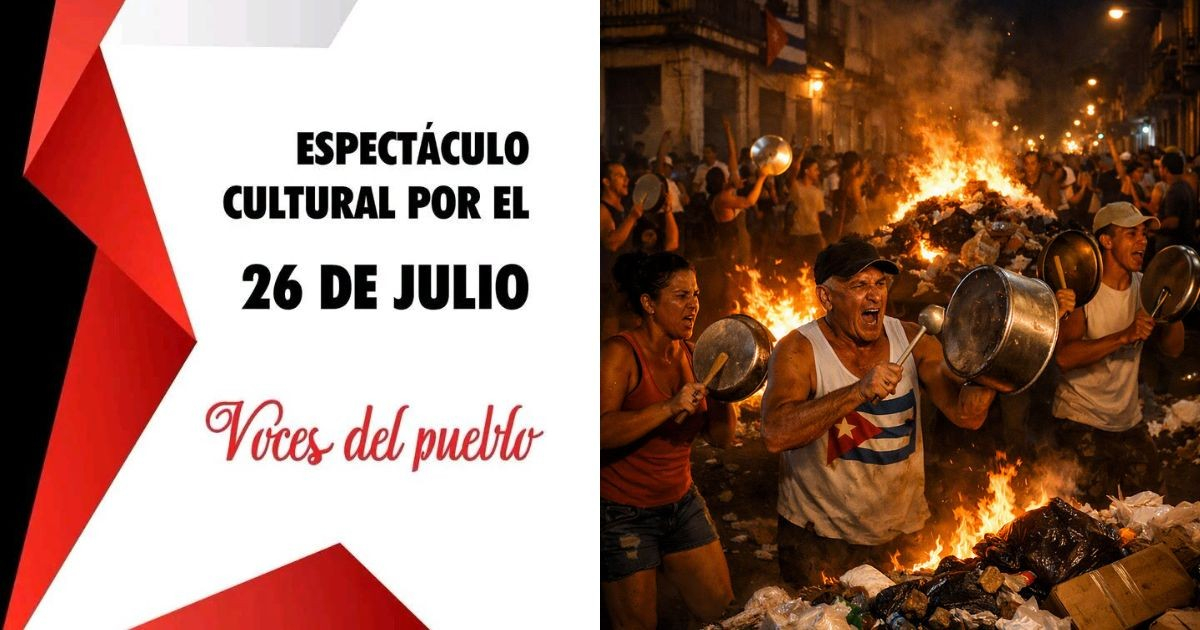
This evening at 9:00 p.m., Cuban state television will broadcast live the cultural spectacle "Voices of the People" from the Milanés Theater in Pinar del Río. This event is part of the official celebrations marking the 73rd anniversary of the Moncada Barracks assault, as reported by the state-run newspaper Guerrillero.
The publication described the event as "a production where music, poetry, and dance merge into an aesthetic concept inspired by the actions of July 26, 1953, highlighting the cultural, patriotic, and heritage values of Cuban and Pinar del Río identity," under the direction of creator Doris Méndez.
For the fourth time in history, the regime has selected Pinar del Río as the location for the national central event—following the years 1976, 2000, and 2017. This year, the officials are also commemorating the centenary of Fidel Castro's birth under the slogan "Mi Moncada es la Patria."
To ensure the Milanés Theater was camera-ready, the regime ordered an emergency restoration beginning June 30 with a deadline of July 20. This followed nearly nine years without significant maintenance, during which the building suffered from damaged floors, broken seats, compromised ceilings, and a damaged mirror bust due to Hurricane Ian in 2022.
Contrasts Amidst Celebrations
The irony was not lost on Cubans active on social media: while the regime hurriedly refurbished a theater for the July 26 photo op, Pinar del Río and the entire island continued to suffer from power outages lasting between 20 and 50 consecutive hours, food shortages, lack of medicine, and streets strewn with garbage. Phrases like “The country is falling apart” and “Pinar del Río without water but plenty of July 26” circulated widely as expressions of public discontent.
The "voices of the people" promised by state television stand in stark contrast to the real voices ringing out nightly across Cuba. The Assembly of the Cuban Resistance called for a nationwide pot-banging protest on July 24 precisely at 9:00 p.m.—the same time the televised show is set to begin—and reports indicated simultaneous protests in Havana, Santiago de Cuba, and Cienfuegos.
Growing Unrest and Government Crackdown
On Friday night, just before the central event, residents of Lawton clashed pans and fire extinguishers in another pot-banging protest in Havana, while chants like "Down with the dictatorship!" and "Homeland and Life!" echoed through several neighborhoods in the capital.
The Cuban Conflict Observatory recorded a historic high of 107 street protests in June 2026, with 82 concentrated in Havana. In May, the monthly total reached 1,311 protests, complaints, and critical actions across the country, the highest ever documented by the organization. The electrical generation deficit rose to 2,341 MW in July, with some provinces experiencing blackouts exceeding 70 hours.
The regime has responded to this wave of dissent with police operations, neighborhood militarization, and internet blackouts. The organization Cubalex documented at least 38 arrests connected to the June 2026 pot-banging protests.
As the state television invites viewers tonight "to enjoy a unique experience where art becomes a bridge of unity and national pride," millions of Cubans face blackouts, hunger, and repression. Many on social media are questioning whether the regime's cameras will be loud enough to drown out the sound of the banging pots.
Understanding the Current Cuban Crisis
What is the significance of the July 26 celebrations in Cuba?
The July 26 celebrations commemorate the assault on the Moncada Barracks in 1953, a pivotal event in the Cuban Revolution. It is marked by official events and festivities to honor Cuban revolutionary history.
Why is there unrest in Cuba at this time?
Cubans are facing severe economic hardships, including frequent power outages, food and medicine shortages, and poor living conditions, leading to widespread dissatisfaction with the government.
How is the Cuban government responding to protests?
The government has responded with increased police presence, militarization of neighborhoods, internet blackouts, and arrests of protestors.