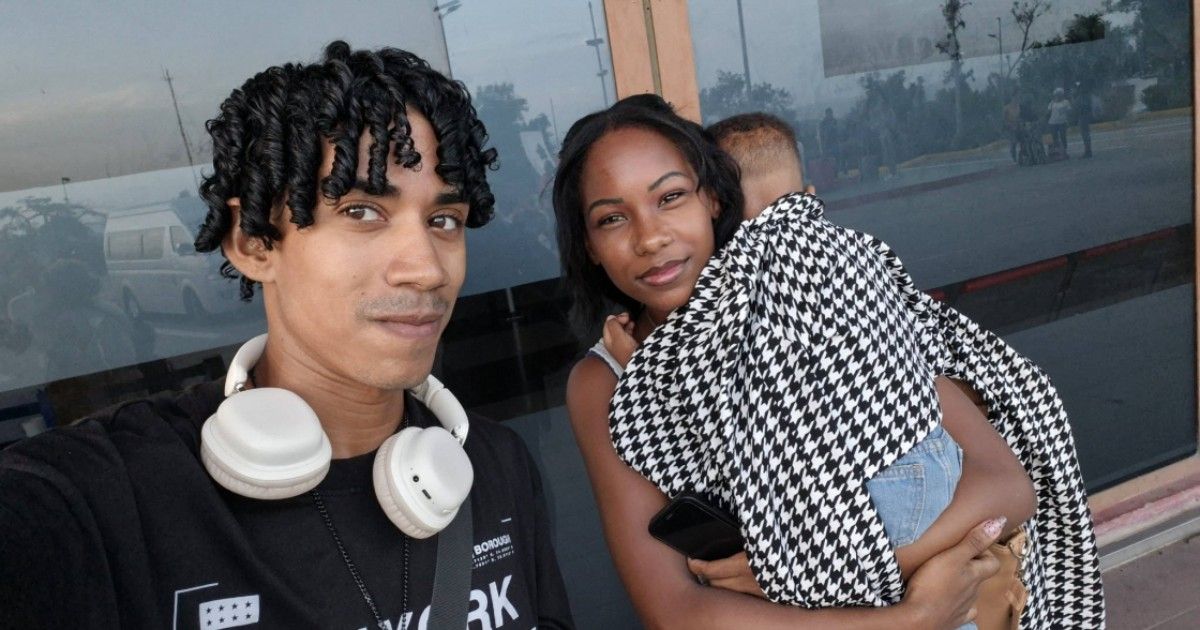
Roberto Blanco, a Cuban doctor, shared a heartfelt account on Facebook detailing his family's escape from Cuba to Brazil. He paints a vivid picture of the stark contrast between the life he left behind and the uncertainty he faced upon arrival. His story encapsulates the plight of countless compatriots: while material possessions were lost, freedom was gained.
The Life Left Behind
Blanco recounted that in Cuba, he owned his home, practiced medicine, and had access to dollars through family remittances. However, upon reaching Brazil, that world vanished.
"In Cuba, I was a doctor, had my own house, left family behind, and was among the fortunate who could touch dollars thanks to the 'blessing' of remittances; I never lacked food," he explained.
A New Reality in Brazil
"Here, I'm nobody in a foreign land. Here, I don't own a home. Here, I'm not a doctor. Here, I only have the money I brought," he acknowledged. But he concluded, "However, my family and I have everything essential for a human being to live: health and freedom."
A Moral Obligation
The decision to emigrate, he explained, was not a dream but a moral obligation that arose with the birth of his son.
"Becoming a father changed my worldview, and it also birthed a commitment larger than anything I had dreamed of until then—a commitment to my son's happiness and future. A strict duty to his health, education, and full development, and an even greater obligation to ensure he remains free," he expressed.
The Journey to Freedom
The journey was far from easy. The family departed Cuba on July 14, as evidenced by the Cubana de Aviación tickets shown in the post's photos, and made a stopover in the Dominican Republic before venturing into South America.
"We crossed through Suriname, French Guiana, and much of Brazil... by plane, boats, cars, buses... at dawn, during the day, in the afternoon, or at night. We made it," he described.
A New Beginning
Upon reaching Brazil, the emotion overwhelmed the doctor. "I looked in the mirror and questioned if I could reinvent myself. Looking at these photos, I convinced myself I could," he admitted.
Blanco acknowledged his fortune and ended his post with a poignant reflection of both pain and hope: "Many people in Cuba, though it's not how it should be, dream of leaving. I wholeheartedly wish for their lives to improve, for the political situation to change, and for them to one day dream of traveling for pleasure and not out of necessity, safety, or for the chance to keep dreaming. It seems utopian, but I have faith."
The story is not an isolated case. Cuba saw a loss of nearly 30,800 doctors between 2021 and 2024, with numbers dwindling from 106,131 to 75,364 practitioners in the public healthcare system, according to the National Office of Statistics and Information.
The regime classifies doctors as "regulated population" under Decree-Law 306 of 2012, requiring them to obtain authorization from the Ministry of Public Health to emigrate—a process that can take years and has been deemed oppressive by Human Rights Watch. Despite these barriers, thousands choose to leave.
Brazil has emerged as a primary destination for this exodus. In 2025, there were 41,919 Cuban asylum requests in the country, accounting for 55.4% of the national total, surpassing Venezuelans for the first time in a decade.
Between January and April of 2026, an additional 13,414 Cubans sought refuge there.
Cuban Exodus to Brazil: Key Facts
Why do Cuban doctors choose to leave the country?
Many Cuban doctors leave due to oppressive regulations, lack of freedom, and better opportunities abroad. The regime's strict control over emigration further compounds the desire to seek a more secure and liberated life elsewhere.
What challenges do Cuban migrants face upon arriving in Brazil?
Cuban migrants in Brazil often face the challenge of starting anew, including finding employment, housing, and adapting to a new culture. Despite these hurdles, many value the newfound freedom and opportunities.