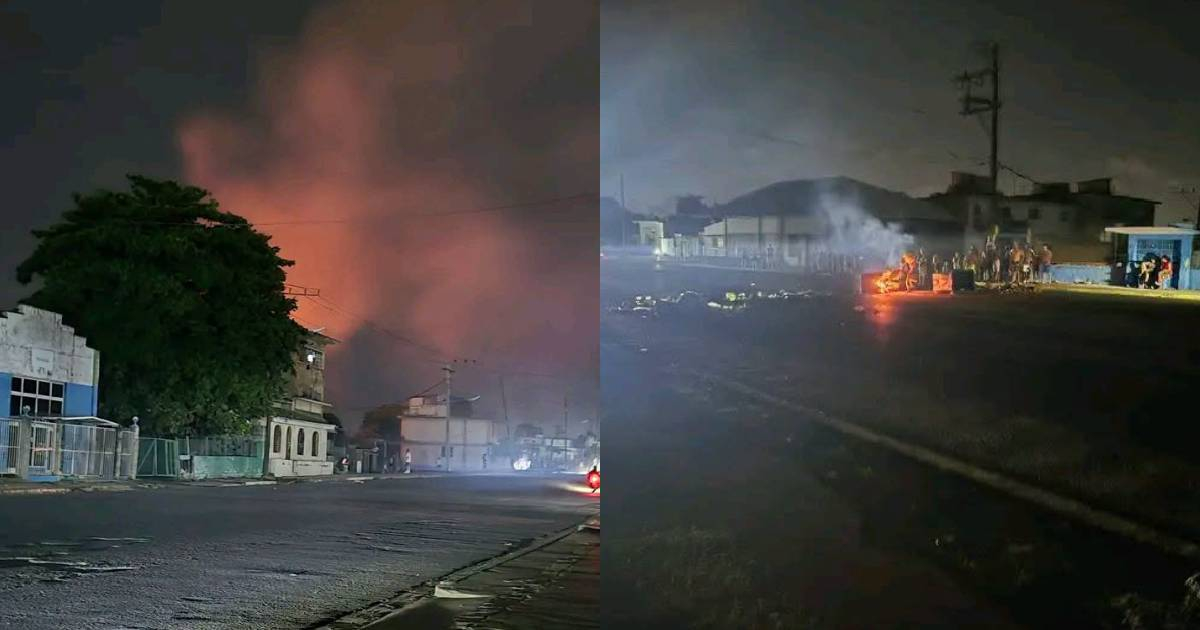
On Friday night, the community around Dolores Park in Havana's Lawton neighborhood made their voices heard by banging pots and clanging fire extinguishers. This noisy protest was part of a widespread cacerolazo, or pot-banging demonstration, that erupted not only in various parts of Havana but also in Santiago de Cuba and Cienfuegos, all on the eve of July 26th.
The protests were in response to a call from the Cuban Resistance Assembly, urging citizens to join a nationwide cacerolazo starting at 9:00 p.m. The frustration has been mounting as power outages in some areas have lasted more than 24 consecutive hours.
Yuriel Fernández took to Facebook to comment, "Lawton is heated, Dolores Park is echoing with the sound of pots and extinguishers, turn the power back on." This sentiment was echoed by many, underscoring the widespread exhaustion. "People are tired; these blackouts are unbearable, with the heat and the mosquitoes," he added, sharing images of the protest.
Another resident from La Cumbre in San Miguel del Padrón reported, “We've been without electricity for over 40 hours.”
The unrest wasn't limited to Lawton. In the areas bordering San Agustín and La Coronela, also in Havana, witnesses described the scene as an intense pot-banging protest.
Developing story...
Understanding Cuba's Recent Protests
What triggered the recent protests in Cuba?
The protests were mainly triggered by prolonged power outages, with some areas experiencing blackouts lasting over 24 hours, adding to the public's frustration with ongoing issues like heat and mosquito infestations.
Who organized the nationwide cacerolazo?
The Cuban Resistance Assembly called for the nationwide cacerolazo, encouraging citizens to protest against the persistent power outages and other grievances.