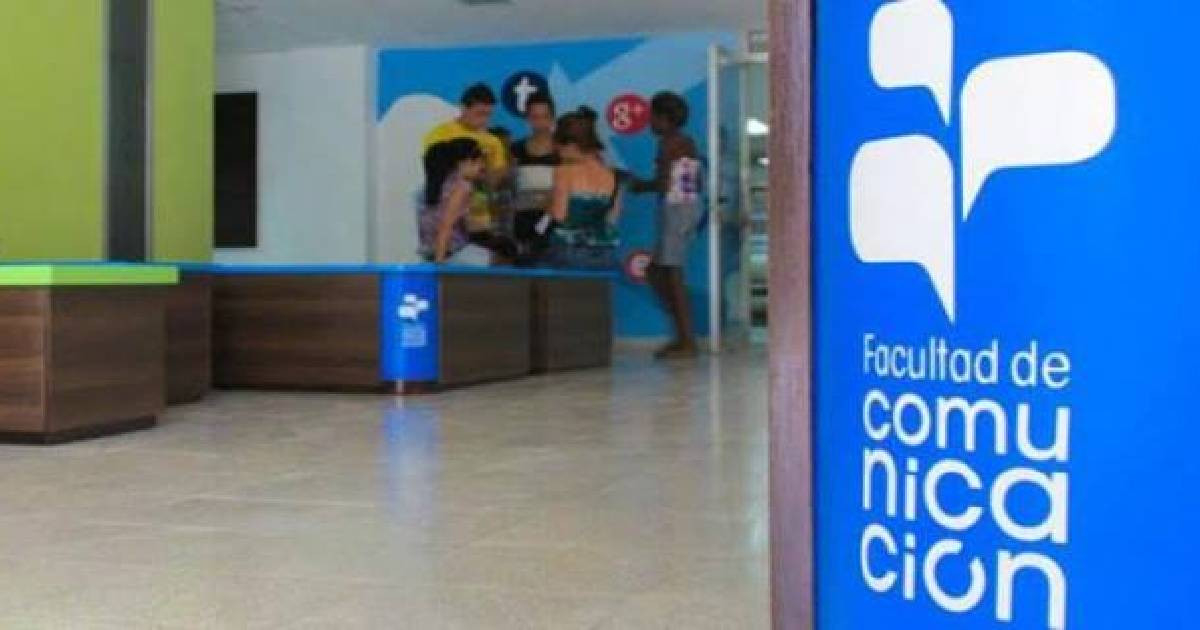
The sixth plenary session of the National Committee of the Union of Cuban Journalists (UPEC), held via videoconference on Tuesday, openly acknowledged a declining interest among young Cubans in studying journalism. Despite this, the regime remains determined to "win over" the few graduates to champion the "truth of the Revolution."
The meeting was led by Luis Morlote Rivas, deputy head of the Ideological Department of the Communist Party's Central Committee, and Ricardo Ronquillo Bello, president of UPEC. They discussed the low enrollment in the Faculty of Communication and the poor turnout for aptitude tests for journalism courses, as reported by the Cuban News Agency.
Rather than challenging the existing system, Morlote urged efforts to "win them over with a commitment to defend the truth," referring to the young graduates entering state-run newsrooms.
In 2025, only two eleventh-grade students attended the aptitude test at the Manuel Ascunce Domenech campus of the University of Ciego de Ávila. Furthermore, merely 49% of enrolled students manage to graduate, with many dropping out due to economic hardships.
The Economic Reality Behind the Apathy
The lack of interest is largely driven by financial concerns. In late May, the once-prominent Channel Havana, a provincial TV station in the Cuban capital, issued a Facebook call for new journalistic talent amidst an unprecedented structural crisis in state media struggling to attract and retain professionals.
In April, state-run media outlet Cubadebate advertised for web journalist-editor positions offering a base salary of 5,060 Cuban pesos per month, equivalent to less than 10 dollars on the informal market, provoking widespread ridicule. In contrast, hotel construction workers can earn between 32,000 and 40,000 pesos.
Additional Barriers for Aspiring Female Journalists
Starting in the 2024-2025 academic year, women pursuing journalism will be required to complete a year of compulsory military service, an unprecedented demand not seen in other Cuban university programs.
The plenary also acknowledged that the energy crisis exacerbates the regime's communication challenges. Ronquillo warned that "without electricity, people can't access newscasts on radio or television, leading to disconnection, and gaps cannot be allowed."
The Reality of Press Freedom in Cuba
Disillusionment is evident among current journalism students. In June, student Gabriel Hernández expressed his frustration: "When I graduate, my country's own laws will prevent me from practicing free journalism without following the dotted line."
The broader context is equally telling. Cuba ranks 171st out of 180 countries in the 2025 World Press Freedom Index by Reporters Without Borders, categorized as a "very serious" situation.
The 2024 Social Communication Law legally recognizes only state-affiliated media, the Communist Party, and mass organizations, rendering independent journalism illegal.
The Tuesday plenary took place just a week after UPEC marked its 63rd anniversary amid online ridicule with the phrase "there is no journalism here," summarizing what the official body itself can no longer hide in its internal meetings.
Understanding the Decline in Journalism Interest in Cuba
Why are fewer students interested in studying journalism in Cuba?
The declining interest is largely due to economic challenges and the perception that journalism in Cuba does not allow for independent reporting, as well as unattractive salaries compared to other professions.
What challenges do journalism students face in Cuba?
Journalism students face economic hardships, low graduation rates, and new requirements such as compulsory military service for women, which are not common in other academic fields.
How does the energy crisis affect journalism in Cuba?
The energy crisis limits access to news broadcasts on radio and television, leading to a disconnection from state media and hindering effective communication from the regime.