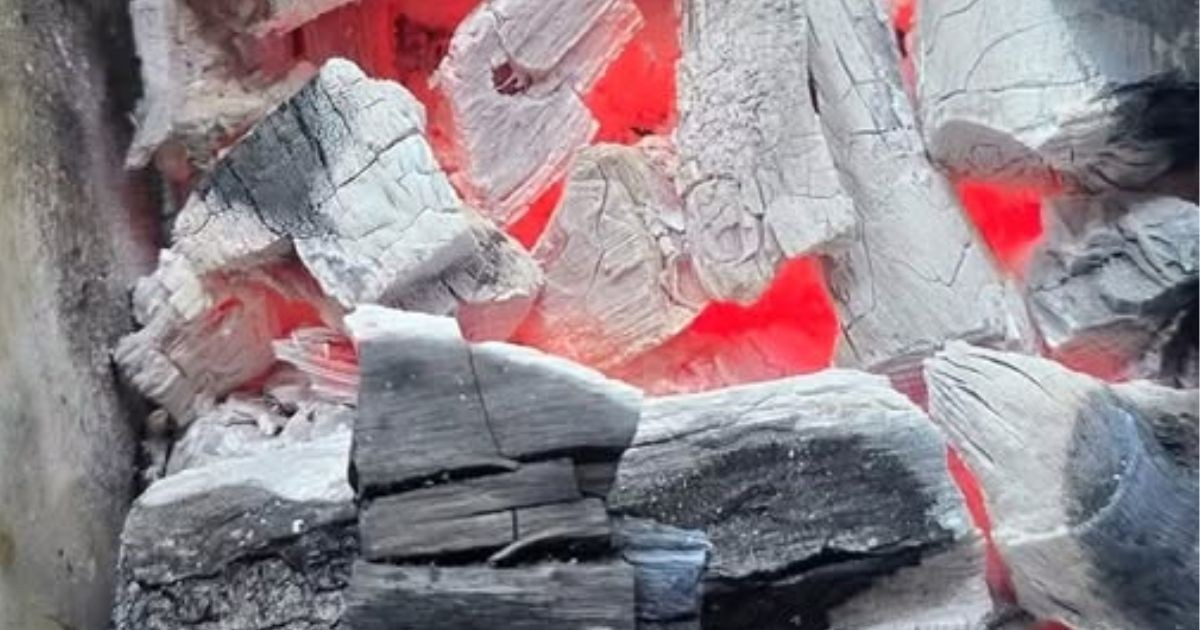
Photographer and entrepreneur Mikely Arencibia Pantoja from Pinar del Río shared a stark reflection on Facebook this Tuesday, painting a grim picture of Cuba's energy situation. Once merely a choice for countryside cooking or outdoor barbecues, charcoal has now become an essential fuel for millions of Cuban households. A single bag can set back a professional nearly half of their monthly earnings.
Under the heading "Our Daily Charcoal," Arencibia noted, "There was a time when charcoal was for farmers, outdoor gatherings, or those seeking a special flavor in their meals. Today, in Cuba, charcoal is the backbone of home cooking for countless families."
The Unifying Fuel
Charcoal has become an equalizer, a fuel that does not discriminate based on social status or housing type: "It doesn't matter if you live in an apartment or a house, if you're a doctor, a teacher, or retired. When electricity and liquefied gas are scarce, it's always there, ready to do the job others can't."
The Financial Strain
This reliance, however, comes with a heavy financial burden. "Ironically, it's not cheap. One bag can cost nearly half of a professional's monthly salary. Still, thousands of families make the sacrifice because eating cannot be postponed," Arencibia pointed out.
Numbers reflect this harsh reality. The average salary in Cuba is about 6,930 CUP per month, with newly graduated doctors earning only 5,060 CUP. Meanwhile, the price of a charcoal bag ranged from 3,200 to 5,000 CUP across various provinces in June 2026, exceeding 4,000 CUP in Sancti Spíritus. One online commenter lamented, "Food cooked with charcoal now tastes bitter... 2000 CUP a sack, and I know it costs more elsewhere... I don't know where this will end."
Energy Crisis and Economic Paradox
The shift to charcoal and firewood is a direct result of the island's energy collapse. The state company CUPET indefinitely halted liquefied gas distribution in Santiago de Cuba and eastern provinces since January 10, 2026, with 834,000 out of 1.7 million liquefied gas customers unable to purchase it from state distributions by April that year.
Compounding the issue is the electricity crisis: by March 2026, the system's capacity was a mere 1,145 megawatts against a demand of 3,000, with blackouts exceeding 20 hours daily in interior provinces. On July 16, the regime set the official price of liquefied gas at 35 CUP per kilogram—a 55% increase—while the informal market priced a 10 kg cylinder between 24 and 50 dollars.
Ironically, while the Cuban people struggle with shortages, the country exported 61.8 million dollars worth of charcoal in 2023, ranking as the ninth-largest global exporter. In the first quarter of 2026, a company in Camagüey exported over 150 tons to Europe, earning more than 55,000 dollars with a yearly target of 4,000 tons.
Health Concerns and Daily Struggles
Alongside economic woes, health issues arise. One commenter cautioned, "Charcoal was never meant for daily, mandatory use. It can send an asthmatic to the hospital, and without medication, that's fatal. Today, besides being the only option for the poor, it’s becoming more expensive and unattainable." Another user described the exhaustion of starting and ending the day with soot-covered hands: "A sad reality to start and finish the day with your hands full of soot."
Arencibia's post is part of a series of reflections he has shared in July 2026 about Cuba's everyday crisis, including "Surviving 24 Hours in Cuba" and "Normalizing the Abnormal," which also garnered significant attention.
Arencibia concluded his message with a poignant statement that echoes the sentiment of many Cubans: "How sad it is that it was charcoal, not progress, that ended up supporting the kitchens of an entire country."
Understanding Cuba's Charcoal Reliance
Why has charcoal become essential for Cuban households?
Charcoal has become crucial due to severe shortages of electricity and liquefied gas, making it a reliable alternative for cooking in many homes.
What is the impact of charcoal costs on Cuban families?
The high cost of charcoal, which can be nearly half of a professional's monthly salary, places a significant financial burden on families, forcing them to make sacrifices to afford basic cooking needs.
How does the energy crisis affect health in Cuba?
The reliance on charcoal for daily cooking poses health risks, particularly for individuals with respiratory issues, as it can exacerbate conditions like asthma without access to necessary medication.