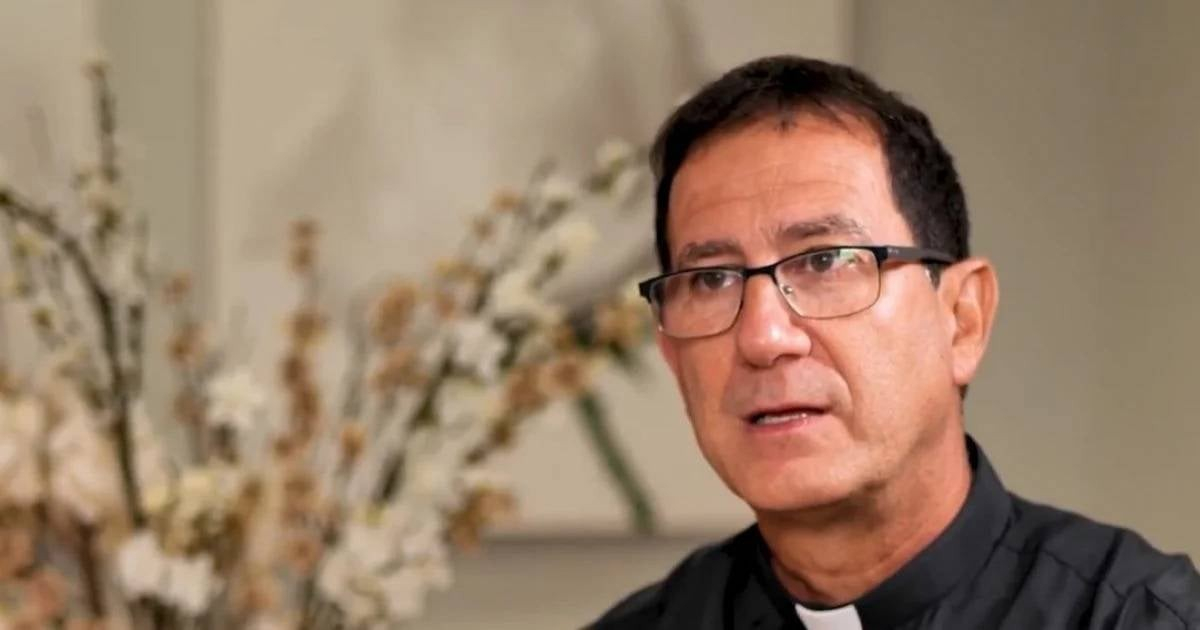
Cuban priest Alberto Reyes Pías has released the 167th entry of his weekly Facebook column, titled "I've Been Thinking About the Fears of Those Who Govern Us," where he flips the usual narrative about fear in Cuba. Instead, he emphasizes that those in power are also gripped by fear.
"Our people are fearful: afraid of change, the unknown, and the new. But it's not just the people who are afraid; the government lives in fear as well," writes the Esmeralda parish priest from Camagüey.
Reyes asserts that the ruling powers, who seized control of the nation, have built over decades a system of absolute impunity, evading accountability for finance, properties, foreign travel, and overseas education for their children. This very system, he argues, has become a trap for them.
"Those who once took over this island and turned it into their personal fiefdom have made it a prison that has ultimately ensnared them," he contends.
The Regime's Fear of Transparency
In his reflection, Reyes meticulously lists the fears that, in his view, paralyze the regime: fear of economic scrutiny and financial transparency, fear of freedom of thought and expression, fear of losing their media monopoly, fear of social media, and fear of an independent judiciary that could judge the guilty without directives "from above."
Reyes also dismantles what he sees as a government maneuver: "Hence their shift in discourse, talking about 'dialogue,' 'negotiation,' but always from their side, from the clan that insists on remaining in control. This explains their interest in presenting new yet secure faces, fresh images that ensure the continuity of power."
Fear of the People They Oppressed
Reyes identifies the deepest fear of the dictatorship as being towards the Cuban people themselves: "the people they impoverished, manipulated, deceived; the people they used to seize power and then reduced to slavery. They are afraid of that people, who may not yet know how to bring about change but will not stop until they achieve it."
"None of this exists anymore. Times have not only changed but demand change, and having played God, it is terrifying to feel like a mere human again," the priest concludes in his reflection.
Continued Pressure and Resistance
The 167th reflection is part of a thematic pattern that Reyes has developed over months. The 166th installment, published on July 17, already addressed fear as the regime's foundation, albeit from the people's perspective. This latest entry shifts the focus to the rulers.
Reyes writes these reflections under mounting pressure from State Security. In January, regime agents summoned him and fellow priest Castor José Álvarez Devesa, issuing a formal warning, threatening to treat their criticisms as punishable offenses.
In February, he reported "harassment, surveillance, and veiled death threats," and in June, he revealed that he had been summoned by State Security twice under the threat of legal prosecution.
Despite this, Father Reyes has continued to write his column regularly. In March, he warned that generations of Cubans have grown up "in lies, double standards, simulation, and fear."
The repressive context surrounding the priest is extensive: according to the Cuban Observatory for Human Rights, there were 873 recorded violations of religious freedom in Cuba in 2025, and the United States Commission on International Religious Freedom included the island in 2026 among countries with "severe and ongoing violations" in this area.
Insights into Cuba's Political Climate
What fears does Alberto Reyes identify within the Cuban government?
Reyes identifies fears of economic scrutiny, financial transparency, freedom of thought and expression, losing media control, social media, and an independent judiciary.
Why does Reyes believe the regime fears the Cuban people?
Reyes argues that the regime fears the Cuban people because they have been impoverished, manipulated, and deceived. Despite not knowing exactly how to bring about change, the people are determined to achieve it.
How has State Security responded to Alberto Reyes' columns?
State Security has responded by summoning Reyes, issuing formal warnings, and threatening legal prosecution. Reyes has also reported harassment, surveillance, and death threats.