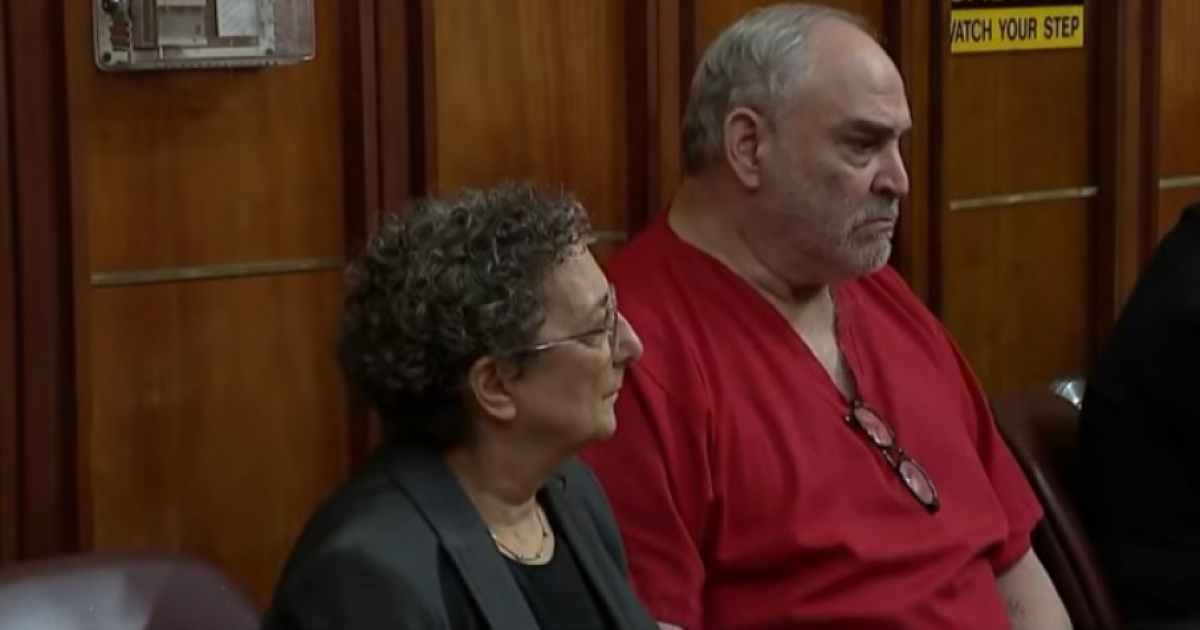
In a Miami-Dade courtroom, 61-year-old Cuban Rafael Andres received a death sentence this past Friday for the murder of Ivette Fariñas, a 31-year-old waitress, also Cuban, who worked at La Carreta restaurant located at Miami International Airport. This heinous crime took place nearly two decades ago.
According to Telemundo 51, Miami-Dade Circuit Judge Zachary James upheld the jury's recommendation, which in November had voted 9 to 3 in favor of the death penalty after carefully examining all the evidence.
The jury described the act as "atrocious, heinous, or cruel," though they did not determine that it was executed in a cold, calculated, and premeditated manner.
During a Spencer hearing held in April, where the defense could present mitigating evidence following the verdict, two convicted murderers testified on behalf of Andres, speaking to his good conduct while incarcerated.
Meanwhile, the defense argued that his cocaine use in his youth had caused brain damage that should be considered. Nevertheless, these points failed to sway the jury or Judge James.
The Crime's Details and Aftermath
Andres and Fariñas were acquainted; she had hired him for renovations at her apartment on Southwest 74th Avenue. On January 24, 2005, he used a spare key he had as a maintenance worker to enter the apartment.
Once inside, he brutally assaulted her until she divulged her ATM card's PIN, stabbed her multiple times in the chest, struck her in the face and head, and ultimately strangled her with a rice cooker power cord.
Before fleeing, Andres set the apartment on fire to destroy evidence. Firefighters responding to the blaze discovered her body with both burn injuries and wounds from the attack.
Andres stole her bank card and spent over $1,600 on purchases at Home Depot and a stay at the Miccosukee Resort and Casino before being apprehended in March 2006, roughly 14 months after the crime.
Repeated Sentencing for the Same Crime
This marks Andres's second sentencing trial for this case. He was initially convicted in 2014 and first sentenced to death in 2015, a decade after the murder, also with a 9 to 3 jury vote.
Back then, Judge Dava Tunis encapsulated the crime's brutality, stating, "When you took the rice cooker cord and wrapped it around her neck, the evidence is clear. She was alive. She knew you were strangling her. She fought for her life."
In 2018, however, the Florida Supreme Court overturned that sentence following the Hurst v. Florida decision in 2016, where the U.S. Supreme Court found Florida's death penalty scheme unconstitutional as it allowed judges, not juries, to determine the facts necessary for imposing the death penalty.
Andres is currently serving a life sentence for other charges related to the murder. He will now return to Florida's death row, a place he had been a decade earlier.
Andres's Dark Past
The case's background is particularly grim: Andres was previously tried in 1988 for fatally stabbing Linda Azcarreta, a 32-year-old Cuban friend of his then-wife. This crime, which occurred in 1987, was motivated by the theft of $100.
He was sentenced to nine years in prison for that murder but was released after just 18 months due to good behavior and the early release policies in Florida at the time, which aimed to alleviate prison overcrowding by significantly reducing sentences.
This premature release allowed Andres to resume his life as a maintenance worker, ultimately giving him access to his new victim's apartment years later. In 2015, Judge Tunis, while delivering the sentence for Fariñas's murder, highlighted that Andres had served a very short sentence for the 1987 crime against Linda Azcarreta.
Profiles of Ivette Fariñas and Rafael Andres
Ivette Fariñas had moved to Miami from Cuba in 1999 and, at the time of her murder, was being considered for a federal security agent position at the airport.
Rafael Andres, meanwhile, had arrived from the Island in the 1980s with his wife.
Florida ended 2025 with a historic record of 19 executions, accounting for approximately 40% of all executions carried out in the United States that year—nearly double the previous high of eight in 2014.
Understanding the Implications of the Death Penalty in Florida
What led to Rafael Andres receiving the death penalty?
Rafael Andres was sentenced to death for the brutal murder of Ivette Fariñas, where he was found guilty of stabbing and strangling her in a premeditated manner, followed by setting her apartment on fire to cover his tracks.
How did Florida's legal system handle Andres's case?
Andres faced two sentencing trials for the murder of Ivette Fariñas. The first resulted in a death sentence, which was overturned after the Hurst v. Florida ruling deemed the state's death penalty scheme unconstitutional. A second trial reaffirmed the death penalty with a 9 to 3 jury vote.
What were the consequences of early release policies in Florida during the 1980s?
The early release policies aimed at alleviating prison overcrowding allowed Rafael Andres to be freed after serving only 18 months of a nine-year sentence for a previous murder, enabling him to commit further crimes, including the murder of Ivette Fariñas.