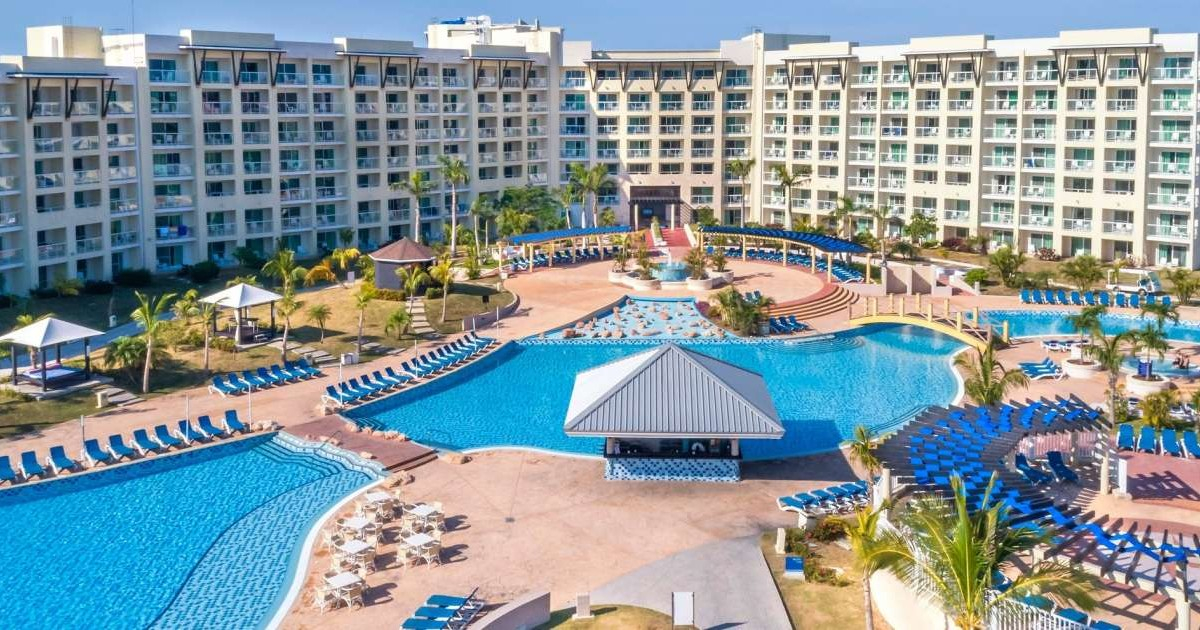
Meliá Hotels International has officially ended its 36-year continuous presence in Cuba this Friday by ceasing operations at the 34 hotels it managed on the Island, as confirmed by the company to Reuters.
The Spanish hotel group cited operational, legal, and economic-financial challenges as the key reasons for withdrawing from a market where it had been a trailblazer since May 1990.
The management of these establishments—all owned by the Cuban state—was conducted through the company’s Portuguese subsidiary, Ilha Bela Gestão e Turismo, which formally notified the Spanish National Securities Market Commission of the cessation.
In its statement, Meliá warned that the circumstances in Cuba make it "practically impossible" to achieve even "minimal operational stability."
Challenges Leading to Withdrawal
The exit process began on June 3, when the chain announced it would halt operations at 15 of its hotels associated with the military conglomerate GAESA. This followed Executive Order 14404 signed by President Donald Trump on May 1, which designated the group as a sanctioned entity and set June 5 as the deadline for foreign companies to sever ties with it.
The decisive blow came on July 13, when the Trump administration expanded sanctions to include Cuba's Ministry of Tourism and nine additional state entities. This marked the first time in history that an entire ministry of the Cuban regime was blacklisted by the U.S. Treasury Department.
This measure eliminated any legal space for Meliá's remaining hotels to continue operating.
Wider Impact on Spanish Hotel Chains
Meliá's CEO, Gabriel Escarrer Jaume, succinctly summarized the situation on July 14: "I don't know; honestly, we don't know what's going to happen. We are following the instructions of the U.S. State Department."
Meliá's departure is not an isolated incident; it signifies the conclusion of three decades of dominance by major Spanish hotel chains in Cuban tourism.
Iberostar, which opened its first hotel on the island in 1993, confirmed the complete cessation of operations on July 21 after stopping management of 12 out of its 18 hotels since June 1.
Barceló ended its contracts in Varadero prematurely, which were set to last until 2027. Canadian Blue Diamond Resorts exited on May 31, affecting 62 hotels and over 12,900 rooms. Other companies like Minor Hotels (NH) and Archipelago International also left the Island in preceding months.
Among all the departing Spanish chains, total losses are estimated between 80 and 100 million euros, based on a cumulative investment of 465 million from 1993 to 2024.
Future Prospects and Legal Challenges
The Cuban regime has threatened lawsuits for contractual breaches, but Meliá relies on the European Union's Blocking Statute, which prohibits European companies from complying with U.S. extraterritorial sanctions.
This hotel exodus coincides with the most challenging period for Cuban tourism in over two decades.
The Island received only 1.81 million visitors in 2025, compared to 4.7 million in 2018, with hotel occupancy plummeting to 18.9%.
In the first five months of 2026, the decline accelerated: just 359,491 tourists arrived, a 58.4% decrease compared to the same period in 2025, with May recording just 30,883 visitors.
The chains leaving the Island controlled more than 30,000 of the 86,559 available hotel rooms in Cuba, about 35% of the total. The gap they leave might be filled by American chains like Marriott, Hilton, Hyatt, and Wyndham, should there be a political shift in the country.
Meliá will assess the full financial impact of its withdrawal when it releases its first-half accounts on July 30.
Key Questions About Meliá's Departure from Cuba
Why did Meliá decide to leave Cuba?
Meliá cited operational, legal, and economic-financial difficulties as the primary reasons for exiting the Cuban market.
How did U.S. sanctions affect Meliá's operations in Cuba?
U.S. sanctions, particularly those targeting the Cuban military conglomerate GAESA and the Ministry of Tourism, eliminated the legal framework for Meliá to continue its operations on the Island.
What impact does Meliá's departure have on Cuban tourism?
Meliá's exit, along with other Spanish hotel chains, significantly reduces the number of available hotel rooms in Cuba, potentially opening opportunities for American hotel chains if political conditions change.