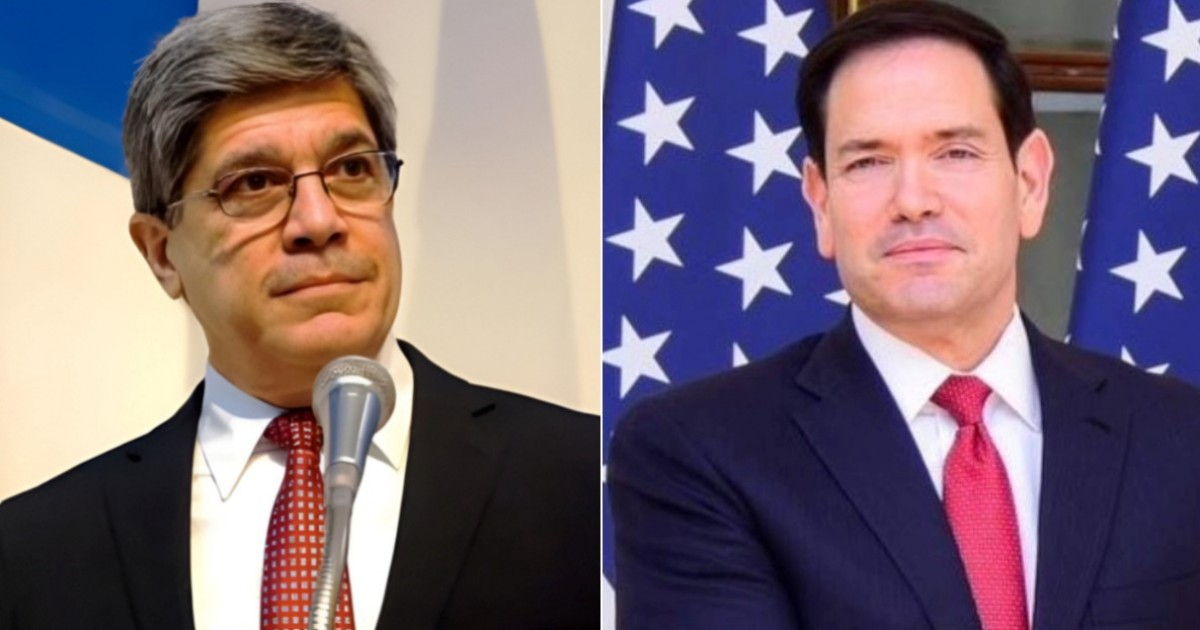
On Thursday, Cuban Deputy Foreign Minister Carlos Fernández de Cossío responded to the latest sanctions announced by U.S. Secretary of State Marco Rubio, labeling them as "an open war against the entire Cuban population." In a social media post, Fernández de Cossío described Rubio as having a "deeply twisted spirit."
These remarks came shortly after Rubio unveiled a new series of sanctions targeting nine Cuban entities and two senior officials under Executive Order 14404, which was signed by President Donald Trump on May 1, 2026.
The sanctions list includes entities such as CEINPET, ENERSA S.A., EINARBO S.A., CSMC, and UCCM, all of which are associated with Cuba's energy sector and its international medical missions program.
The measures also targeted José Ángel Portal Miranda, the Minister of Public Health, and Gretza Sánchez Padrón, marking the first instance where these actions directly impacted the medical missions infrastructure.
Escalating Rhetoric Against U.S. Sanctions
Throughout 2026, Fernández de Cossío has emerged as a prominent voice for the Cuban regime in response to escalating U.S. pressure, with his rhetoric intensifying each week.
In May, he accused Rubio of deliberately lying to justify a "cruel and ruthless assault" on the Cuban people. In June, he condemned the sanctions against the state oil company CUPET as a "collective punishment" that deprived Cuba of essential fuels, and later in the month, he characterized the economic pressure as "unbelievable" and "extraterritorial" in scope.
By July 2, he blamed the United States for the chaos facing Cubans and accused Washington of pressuring third-party countries to terminate agreements with Cuba's medical missions.
Official Response from Cuban Leadership
On July 17, Fernández de Cossío accused the United States of being the "main source of terrorism" in the Western Hemisphere, and just last Wednesday, he labeled Rubio's policies as a "dirty political business."
Foreign Minister Bruno Rodríguez Parrilla echoed these sentiments, attributing the sanctions to "conquest ambitions" and "vengeful sentiments" within the political elite backing Rubio's career.
Since January 2026, the Trump administration has imposed over 240 sanctions on Cuba, progressively targeting the regime's economic pillars: the military conglomerate GAESA, the banking system, the tourism sector, and now the medical missions program.
Rubio, speaking at a press conference in Manila on Wednesday, denied setting a timeline for regime change in Cuba before 2026 concludes, though he did describe the island as a "failed state" and warned in July that Cuban leadership still had time to implement "real reforms" before it was "too late."
Understanding the Impact of U.S. Sanctions on Cuba
What are the recent U.S. sanctions against Cuba?
The recent U.S. sanctions announced by Marco Rubio target nine Cuban entities and two senior officials, focusing on Cuba's energy sector and international medical missions program.
How has the Cuban government responded to these sanctions?
Cuban Deputy Foreign Minister Carlos Fernández de Cossío has criticized the sanctions as an attack on the Cuban people and described Marco Rubio's actions as "deeply twisted." The Cuban leadership, including Foreign Minister Bruno Rodríguez Parrilla, has condemned the sanctions as driven by conquest ambitions and vengeful sentiments.