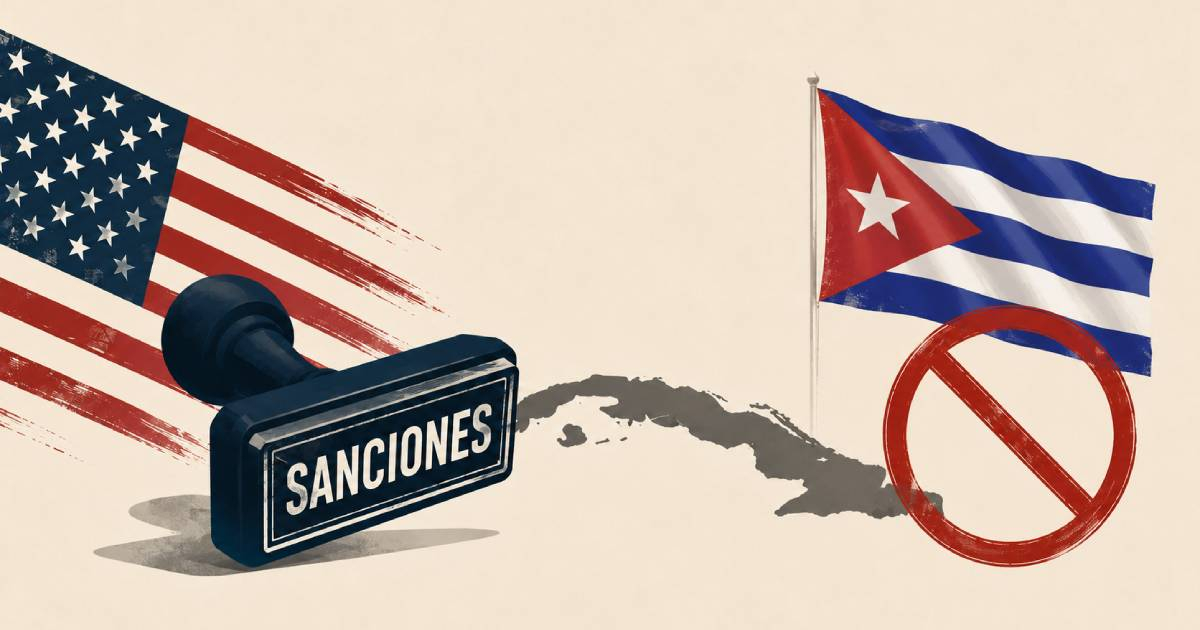
The U.S. Department of State announced on Thursday a new wave of sanctions targeting nine entities and two individuals associated with the Cuban regime. This round focuses on the energy sector, the evasion tactics of the military conglomerate GAESA, and the international medical missions system.
The sanctions are implemented under Executive Order 14404, signed by President Donald Trump on May 1, 2026, which authorizes penalties against individuals and entities linked to repression in Cuba and threats to U.S. national security.
Energy Sector Under Scrutiny
In the energy field, Washington has imposed sanctions on the Research Center for Petroleum S.A. (CEINPET), the research and development arm of the already sanctioned Cuba-Petroleum Union (CUPET); Empresa de Energía S.A. (ENERSA), an importer of gas and lubricants; and EINARBO S.A., which imports similar products from Mexico and India.
GAESA's Evasion Tactics
Addressing sanctions evasion, the Department of State highlighted that GAESA "continues to shield its assets and income from U.S. sanctions through corporate restructuring and third-party intermediaries."
A significant maneuver involved transferring the Port of Mariel to Coral Marítima S.A. in mid-June, a move Washington explicitly described as an attempt to circumvent sanctions.
Additionally, CEIBA Investments Limited, based in Guernsey and involved in Cuban real estate, and its Panamanian subsidiary, which took over a former GAESA joint venture, were designated. ORBIT S.A., a remittance processor purportedly controlled by the military conglomerate, was also targeted.
Medical Missions Criticized
The third aspect of the sanctions directly impacts the medical missions program, which Washington labels as forced labor and a form of human trafficking.
The Cuban Medical Services Marketer S.A. (CSMC), described as "Cuba's main source of foreign currency, generating more revenue than any other sector of the Cuban economy," and the Central Medical Cooperation Unit (UCCM), responsible for recruiting professionals for these missions, were sanctioned.
Individually, the Minister of Public Health, José Ángel Portal Miranda, and UCCM Director, Gretza Sánchez Padrón, were also sanctioned.
Impact of the Sanctions
The Department of State emphasized that the regime confiscates between 50% and 95% of the salaries paid by host countries to Cuban medical workers, who number in the tens of thousands across more than 50 nations.
This latest round of sanctions adds to a series of designations that began in May 2026. In the week of July 13, Washington had already sanctioned 10 additional entities, including GEMAR, the Ministry of Tourism, the Rapid Response Brigades, and the Territorial Troops Militias.
The sanctions entail the immediate freezing of all assets and interests of the designated parties under U.S. jurisdiction and warn foreign businesses and financial institutions that engage with those sanctioned about the risk of facing restrictive measures themselves.
"The ultimate aim of the sanctions is not to punish, but to foster positive behavioral change," the Department of State concluded in its statement.
Frequently Asked Questions about U.S. Sanctions on Cuba
What is the goal of the new U.S. sanctions on Cuba?
The new sanctions aim to address the Cuban regime's involvement in repression, sanctions evasion, and human trafficking, while promoting positive behavioral changes.
Which sectors are affected by these sanctions?
The sanctions target the energy sector, GAESA's evasion tactics, and the international medical missions system.
How do these sanctions impact Cuban medical missions?
The sanctions label the missions as forced labor and human trafficking, highlighting the regime’s confiscation of a large portion of the salaries of Cuban medical workers abroad.