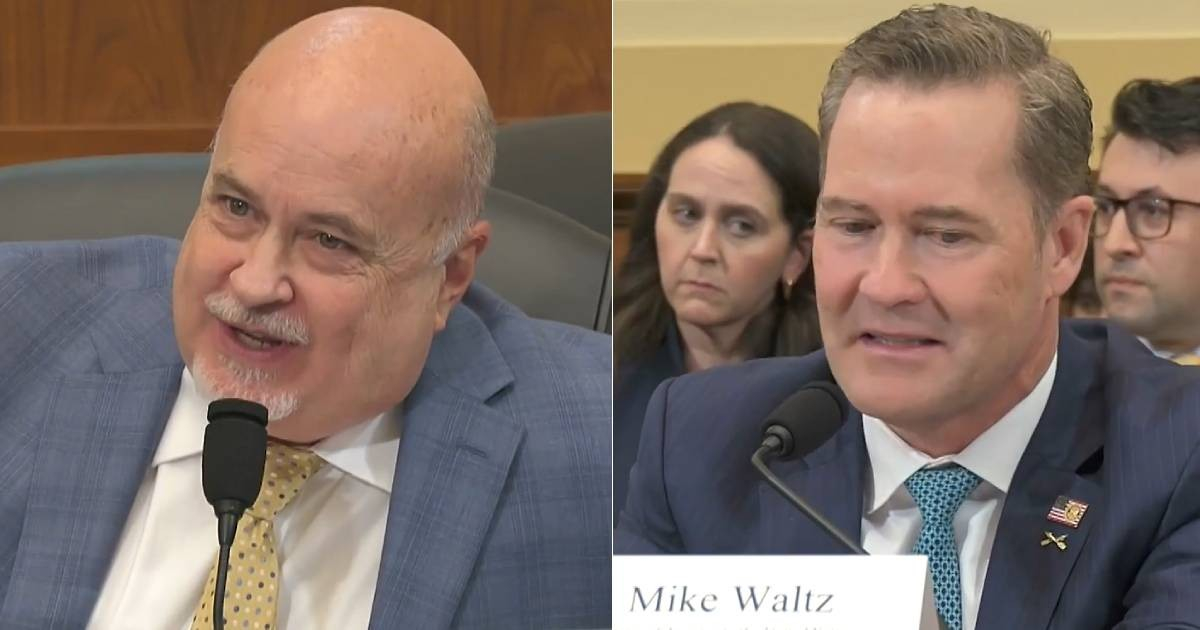
During a House Foreign Affairs Committee hearing, tensions flared between U.S. Ambassador to the UN Mike Waltz and Democratic Congressman Mark Pocan over Washington's stance on Cuba and the State Department's recent report on the island.
Waltz faced a challenging moment when he conceded that he had not fully read the 95-page document released on July 20, titled "Cuba: The Capital of 21st Century Communism."
"I haven't read the full report, but as a Florida native, I'm well aware of the Cuban regime's adversarial actions," Waltz admitted.
Pocan seized the moment. "I did read it. I highlighted it. It felt like I should have put on The Kinks and The Who in the background, because it's all from the 60s and 70s, then there's a massive leap to the present," he quipped. Pocan reiterated these sentiments in an official statement.
The Democratic representative, who visited Cuba from July 9 to 13 with three other congress members, sharply criticized both the report and the U.S. sanctions policy toward Cuba.
Concerns Over Cuba's Condition
During the hearing, Pocan described finding "a country without electricity or basic necessities" and recounted hospitals where surgeons reportedly completed operations using phone lights due to extended blackouts.
He questioned the effectiveness of the embargo lasting over six decades. "Have we moved closer to democracy? Improved human rights? The definition of insanity is doing the same thing repeatedly and expecting a different result," Pocan argued.
Additionally, he claimed that U.S. restrictions hinder the delivery of medical supplies to Cuba and partly blamed Washington for the humanitarian crisis he observed.
Defense of U.S. Policy
Waltz countered the criticisms, supporting the sanctions as a means to curb the Cuban regime's international influence.
He also contested the term "blockade." "A blockade is a ring of warships," Waltz stated, denying that this describes U.S. policy towards Cuba.
Waltz maintained that the sanctions have played a role in preventing the regime from "spreading its revolution, communism, and anti-Americanism throughout the Western Hemisphere."
In another part of the exchange, Waltz cautioned Pocan that he hoped Pocan's visits to Cuba would not be used "as Cuban regime propaganda."
Debate Intensifies in Washington
The clash occurred just two days after the State Department's report on Cuba was released, a document that has sparked mixed reactions both inside and outside Congress.
Prior to the hearing, Pocan labeled the report as "the most ridiculous, fantastical, and biased thing" he has read from a U.S. government agency, arguing that it aligns with the political agenda of Secretary of State Marco Rubio.
Cuban Foreign Minister Bruno Rodríguez dismissed the report, calling it a "slanderous pamphlet."
Meanwhile, Congresswomen Delia Ramírez and Maxine Dexter, who also joined the recent trip to Cuba, announced plans to promote legislative initiatives aimed at lessening the humanitarian impact of U.S. sanctions on the Cuban populace.
Understanding U.S. Sanctions on Cuba
What was the main criticism of the U.S. sanctions on Cuba by Congressman Pocan?
Congressman Pocan criticized the U.S. sanctions for their ineffectiveness in promoting democracy and improving human rights in Cuba, suggesting that they have not yielded different results over decades.
How did Ambassador Waltz defend the U.S. sanctions policy?
Ambassador Waltz defended the sanctions as a tool to limit the Cuban regime's influence and prevent its ideological spread across the Western Hemisphere.
What did Pocan observe during his visit to Cuba?
Pocan reported witnessing severe shortages, including power outages and hospitals where surgeries were performed using cellphone lights due to power failures.