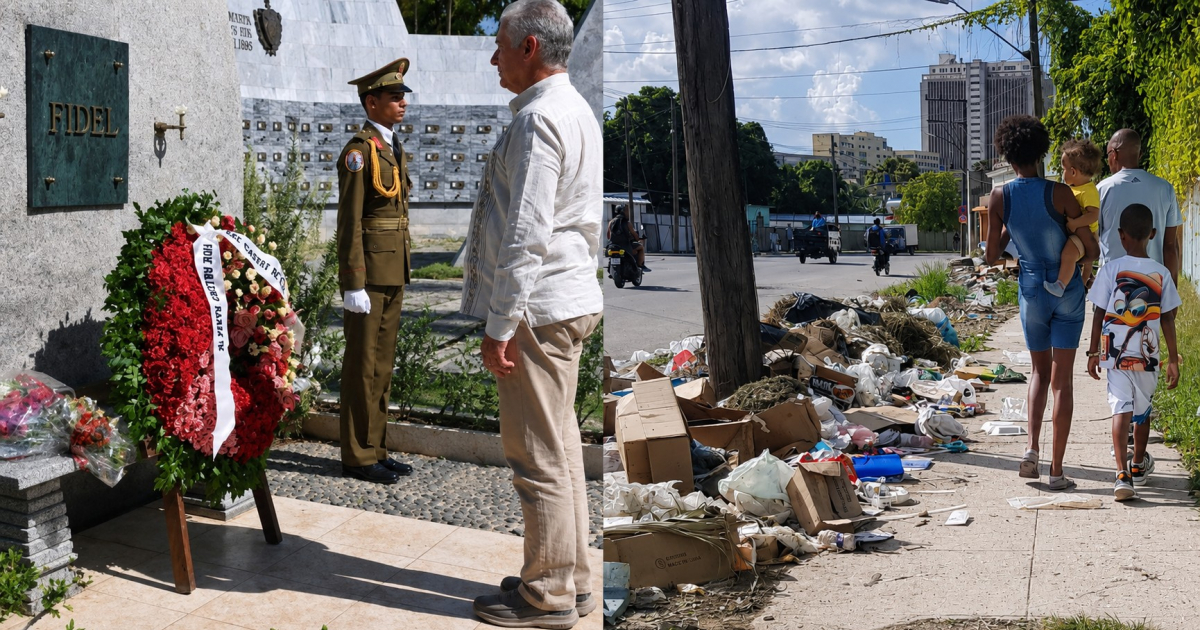
Democracies are upheld by institutions, whereas dictatorships revolve around individuals. This is one of the critical insights from Cuba's historical journey.
No country loses its freedom overnight. Before the rule of law vanishes, a more insidious and hazardous phenomenon often occurs: the replacement of institutions with the leader's persona. Gradually, the Constitution ceases to be the ultimate authority, and the strongman takes its place.
Since the 19th century, Latin America has been no stranger to the concept of caudillismo. Numerous leaders have built their legitimacy on military prestige, personal charisma, or promises of national redemption. However, when a nation's fate hinges on a single individual, freedom starts to erode.
Cuba's so-called 'Revolution' epitomized this trend in one of its most extreme forms. For decades, Fidel Castro's image became the absolute emblem of the state. His words turned into law, his speeches replaced political discourse, and any dissent was branded as betrayal.
This wasn't mere propaganda. It was the deliberate crafting of a political culture where citizens echoed slogans rather than engaged in independent thinking. Schools prioritized admiration over critical thinking, media outlets constantly glorified the leader, and social organizations existed to applaud rather than question.
The Fallacy of the Strongman
When the leader embodies the nation, any criticism is framed as an attack on the state itself. This erodes pluralism and fosters obedience.
History shows that charismatic leaders often promise quick fixes. They claim to speak for the people, represent the underprivileged, and have solutions to every problem. Yet, once they consolidate power, they begin to undermine courts, parliaments, free press, and any institution capable of curbing their authority.
Lessons from Cuba's Experience
This process isn't confined to the past. It remains a significant threat to Latin American democracies today.
The path to authoritarianism is paved when the public places more trust in a leader than in the rule of law.
Truly free countries do not rely on providential figures. They require robust institutions, a separation of powers, independent media, fair elections, and citizens who can question even those they admire.
Cuba's experience underscores that no leader should be idolized. Presidents are public servants, not saviors. They are temporary stewards of power, not the proprietors of a nation's destiny.
The second crucial lesson Cuba offers Latin America is unmistakable: leader worship gradually dismantles the Republic. Where one man is deemed more valuable than the Constitution, liberty is invariably the first casualty.
Strong nations are not built around a strongman. They are constructed on institutions that endure beyond any ruler. Leaders come and go. The Republic must endure.
The Dangers of Caudillismo in Latin America
What is caudillismo and how has it affected Latin America?
Caudillismo refers to a political system where a single leader holds significant power, often based on military prestige or personal charisma. In Latin America, it has historically undermined democratic institutions by concentrating power in the hands of one individual.
How did Fidel Castro's leadership impact Cuba's political landscape?
Fidel Castro's leadership transformed Cuba by centering the state around his persona. His words became law, political discourse was replaced by his speeches, and dissent equated to betrayal, thereby stifling political plurality and fostering a culture of obedience.
Why are strong institutions important for democracy?
Strong institutions are vital for democracy because they provide checks and balances on power, ensure the rule of law, and protect individual freedoms. They are essential for maintaining democratic governance and preventing authoritarianism.