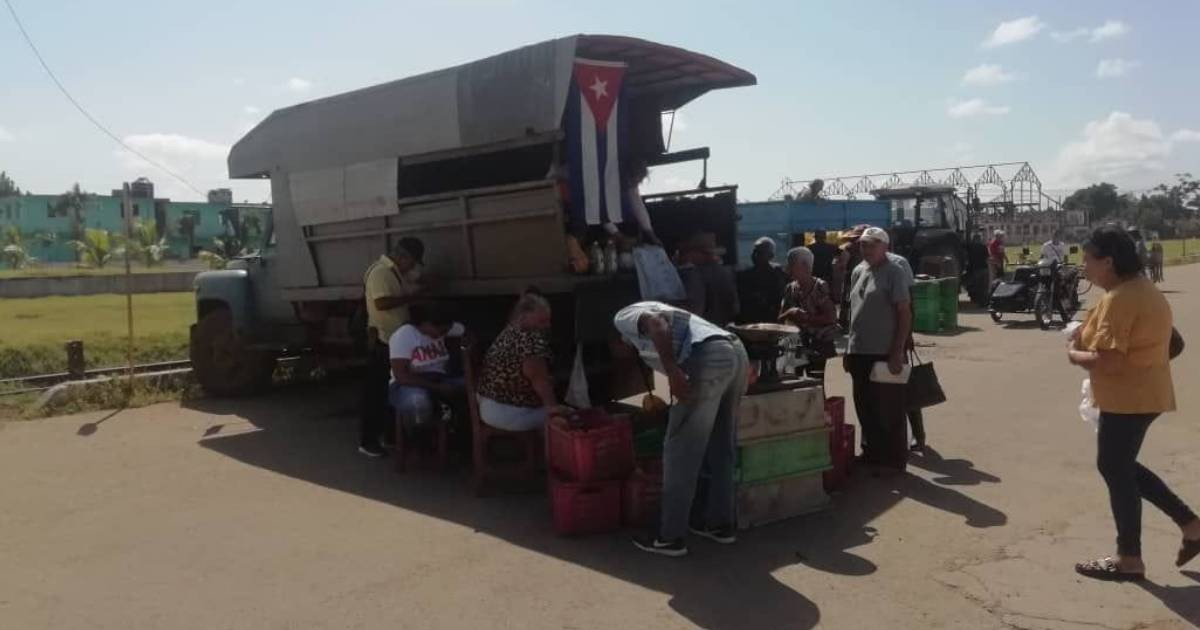
A recent sale of agricultural products held on Wednesday in front of the Unión de Reyes terminal in Matanzas province sparked discontent among customers after sellers firmly refused to accept electronic payments.
This incident was highlighted on Facebook by journalist Hanoi Moreno Enríquez, who recounted being met with a firm "no" when attempting to pay digitally.
According to Moreno Enríquez, this refusal not only inconveniences consumers but also contradicts the Cuban government's official policy aimed at digitalization and modernization of services.
He pointed out that the Cuban government has been advocating for digital transaction methods as part of its economic strategy, and rejecting electronic payments sends a "contradictory message that undermines public confidence in modernization efforts."
Regulatory Framework and Its Challenges
In his post, Moreno Enríquez reminded readers of the Central Bank of Cuba's Resolution 111/2023, revised in 2026, which governs digital payments and promotes their use within the national banking strategy.
This regulation ensures real-time crediting of electronic transactions and offers incentives for businesses and consumers utilizing online payment methods.
A Struggle to Implement Digital Policies
The incident in Unión de Reyes is not an isolated one. Despite the Cuban government's push for banking and electronic payment systems over the years, most commercial transactions in the country still rely on cash.
Data from July 2026 reveals that a mere 3.77% of transactions in Cuba occur via digital means. In provinces like Sancti Spíritus, less than 10% of private businesses regularly accept transfers, while in Matanzas, many establishments only allow digital payments for large amounts or impose illegal surcharges ranging from 10% to 30%.
Reality Versus Regulations
This situation starkly contrasts with existing regulations. The Central Bank's Resolution 111/2023 sets a 5,000 peso cash transaction cap among economic entities; the Ministry of Domestic Trade's Resolution 93/2023 mandates agricultural cooperatives to offer electronic payment options, and the Ministry of Agriculture's Resolution 16/2026 requires agricultural marketing operations to use banking instruments.
In practice, many vendors claim they need cash to purchase goods from suppliers who also don't accept transfers, fostering a parallel economic system that challenges the implementation of official policies.
Recent Adjustments and Ongoing Contradictions
Even the state-run media Cubadebate acknowledged the scale of the issue, admitting on July 14 that "the streets have developed their own parallel financial system."
In light of the ineffectiveness of coercive measures, the Central Bank recently adjusted its strategy. Effective July 20, Resolution 74/2026 indefinitely suspended the 5,000 peso cash transaction limit and introduced incentives to encourage electronic payments.
These measures include reducing merchant commissions from 1.5% to 0.8%, eliminating cash deposit fees, and offering a 4% bonus to consumers making purchases over 5,250 pesos through digital channels.
Despite these changes, the implementation of the policy remains inconsistent.
While Guantánamo authorities warned on July 21 that sanctions might be imposed on vendors rejecting electronic transfers, in Unión de Reyes, buyers were still unable to use mobile devices to pay for agricultural products this past Wednesday.
Moreno Enríquez argued that such inconsistencies ultimately weaken the credibility of the government's own strategy.
"The state, which promotes informatization, should lead by example by accepting digital payments. Otherwise, it undermines its own policy and limits citizens' rights," he concluded.
Understanding Cuba's Digital Payment Challenges
Why are electronic payments being rejected in Matanzas?
Sellers in Matanzas rejected electronic payments, citing the need for cash to purchase supplies from providers who also do not accept digital transactions.
What is the Cuban government's stance on digital payments?
The Cuban government has been promoting digital payments as part of its strategy to modernize and digitize the economy, encouraging the use of electronic transactions through policies and incentives.
How do current regulations support electronic payments in Cuba?
Regulations such as the Central Bank's Resolution 111/2023 and others mandate the use of electronic payment methods and offer incentives for businesses and consumers to transition away from cash.