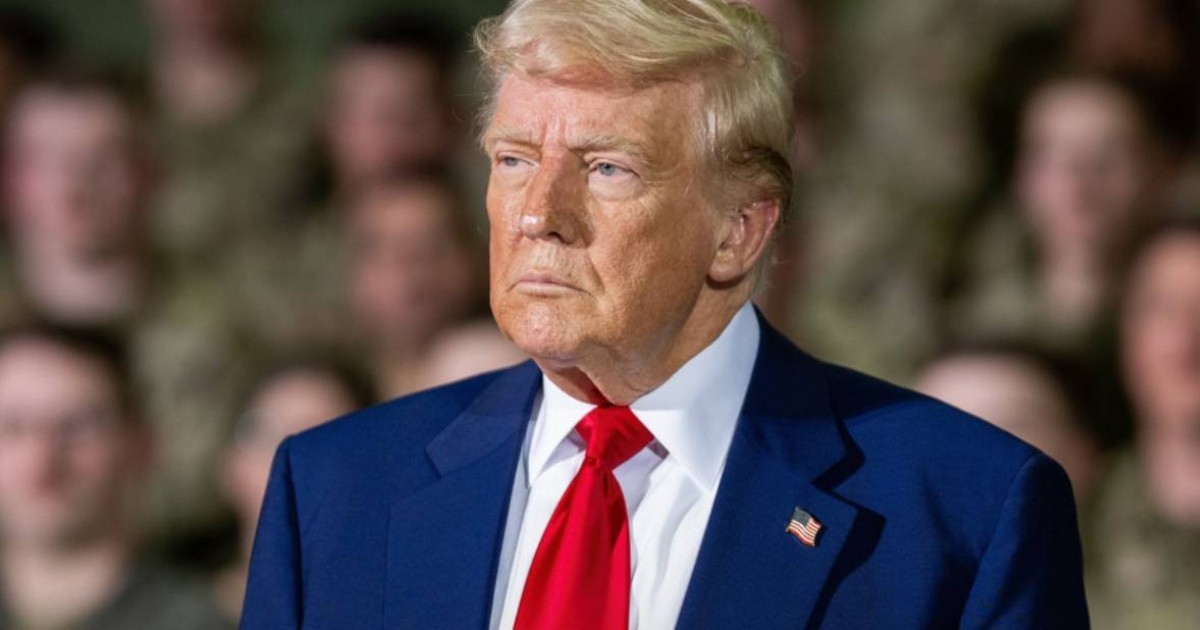
On Wednesday, President Donald Trump took to his social media platform, Truth Social, to deliver a direct warning to Iran. In this message, he announced that any future aggression by Iranian forces against vessels in the Strait of Hormuz would result in the United States retaliating by targeting and destroying an Iranian bridge or power plant, including those near or within Tehran.
"From this moment on, whenever the Islamic Republic of Iran fires upon a vessel in the Strait of Hormuz, whether with missiles, rockets, drones, or any other device or weapon, the U.S. will strike and demolish an Iranian bridge or power facility, including those near the capital, Tehran, or within it," wrote Trump at 8:56 am.
This declaration was made as Trump was en route to the Dover Air Force Base in Delaware to honor the remains of American soldiers who perished in Iranian attacks in Jordan and Iraq.
Intensifying Tensions and Military Losses
Before boarding Air Force One, Trump was unequivocal: "They will pay a very steep price and are being decimated."
The situation is dire for Washington. On Tuesday, the Pentagon confirmed the death of Sergeant Angel S. Rampersad, aged 28, who had been reported missing following the Iranian assault on the Muwaffaq Salti Air Base in Jordan on July 17.
This confirmation brings the total number of American military casualties to 18 since the conflict began on February 28, 2026.
As reported by EFE from Washington, U.S. forces have completed their eleventh consecutive night of retaliatory strikes against Iran, targeting military command centers, drone facilities, maritime capabilities, and logistics.
Global Implications and Strategic Concerns
According to the Central Command (CENTCOM), the Strait of Hormuz remains "open" for commercial passage despite Iranian assaults on over 30 vessels in the past three months, facilitating the transit of approximately 900 commercial ships and 450 million barrels of crude since early May.
Iran claimed on Wednesday to have attacked two U.S.-used military bases in Jordan, destroyed eight MQ-9 drones, and inflicted casualties on American soldiers.
The clash of hostilities follows the collapse of a ceasefire signed on June 18, which had prompted negotiations regarding Iran's nuclear program. Hostilities resumed roughly two weeks ago, stalling any diplomatic solutions.
Escalation and Future Military Actions
Previously, Trump had indicated that the U.S. might "very soon" target Pico Mountain, an underground complex linked to Iran's nuclear ambitions. "We will likely attack that area very soon. And there is nothing they can do about it," he stated during a meeting with Lebanese President Joseph Aoun at the White House.
Defense Secretary Pete Hegseth informed the Senate that the conflict with Iran has cost $37.5 billion and requested nearly $70 billion more to fund operations and replenish armaments.
From Manila, where he attended the ASEAN Foreign Ministers' Summit, Secretary of State Marco Rubio cautioned against allowing Tehran to control the strait, warning that such a precedent could have dire consequences: "If we allow a nation to decide whether to control an international waterway, charge a toll, and blow up ships if not paid, we set a very dangerous precedent."
Rubio also mentioned that Washington is open to negotiations, but accused Iran of failing to uphold its commitments from the June ceasefire: "The issue is they are not taking negotiations seriously. If they become serious, so will we."
Meanwhile, a Politico survey of 2,061 Americans released this Wednesday shows that 36% believe the U.S. should not continue its involvement in the conflict, a 14-point increase since May, while only 16% support maintaining active engagement in the war.
Key Aspects of the U.S.-Iran Conflict in the Strait of Hormuz
What prompted President Trump to issue a warning to Iran?
President Trump issued a warning to Iran following increased attacks on vessels in the Strait of Hormuz by Iranian forces. He announced that such actions would result in U.S. retaliation against Iranian infrastructure.
How has the U.S. responded to recent Iranian attacks?
The U.S. has conducted consecutive night strikes against Iranian targets, including military command centers and logistics, in response to Iranian aggression.
What are the financial implications of the U.S.-Iran conflict?
The conflict has cost the U.S. $37.5 billion, with additional funding requested to continue operations and replenish military resources.
How does the American public view the ongoing conflict with Iran?
A Politico survey indicates that a growing percentage of Americans, 36%, believe the U.S. should withdraw from the conflict, while only 16% support continued involvement.