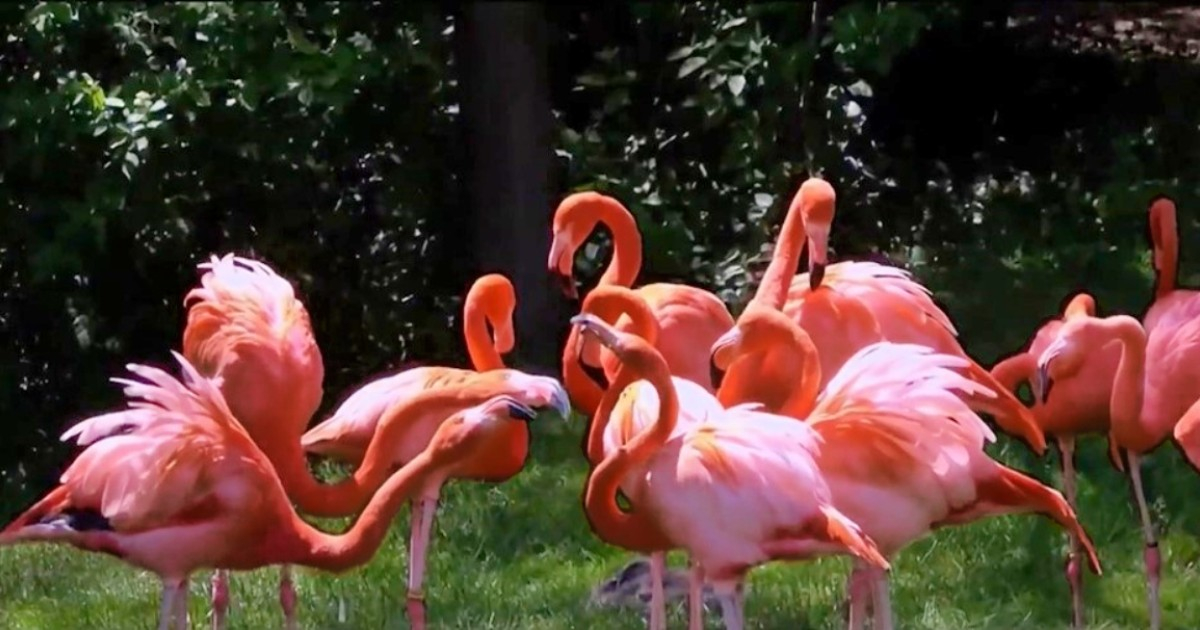
This Tuesday, the Miami-Dade County Commission unanimously passed legislation naming the American flamingo as the county's official bird, marking the first time this species has been institutionalized as a symbol of the county.
District 6 Commissioner Natalie Milian Orbis spearheaded this initiative, according to Telemundo 51.
In her statement, Commissioner Milian Orbis expressed, "The American flamingo has become one of the most recognizable symbols of Miami-Dade County, featured in art, tourism, branding, and popular culture for decades. By making it our official bird, we're honoring a species that has long been part of our history."
Following the vote, the commissioner shared her excitement on X, stating, "As the sponsor of this unanimously approved legislation, I am proud to celebrate one of South Florida's most iconic native species. More than a beautiful bird, the American flamingo symbolizes the natural beauty, history, and vibrant spirit that make our community unique."
In a subsequent post, she elaborated on the identity aspect: "The American flamingo is part of Miami-Dade County's history, our identity, and the image we proudly share with the world. For generations, the flamingo has represented the beauty, character, and uniqueness of our community."
"The American flamingo is now officially Miami-Dade County's bird, a lasting symbol of the natural beauty, rich history, and unique heritage of South Florida," summarized the official graphic released by Commissioner Milian Orbis after the vote.
Conservation Advocate Ron Magill Speaks Out
Conservationist Ron Magill, former spokesperson for Zoo Miami and current goodwill ambassador for the Zoo Miami Foundation, appeared before the commission to support the designation with arguments that extend beyond symbolism.
"It represents how nature can come back, can recover, when given the chance," Magill stated to the commissioners.
"If Florida wants to celebrate its great natural heritage, I can't think of a better ambassador than the greater flamingo," he added, noting that a state designation would bring additional environmental protections for the species.
A Native Species That Nearly Vanished
The American flamingo has a tumultuous history in Florida: it was common in the wetlands of the southern state in the early 20th century, but indiscriminate hunting for its feathers during the 19th century nearly drove it to extinction.
This history also includes a historical link with Cuba.
In 1931, businessman Joseph Widener imported the first specimens from the Island to Hialeah Park Race Track, where they began nesting successfully in 1937. By 2023, a count recorded 96 flamingos at that racetrack.
The most recent return came unexpectedly: in August 2023, Hurricane Idalia scattered flamingos—likely from Cuba, Mexico, and Yucatán—toward South Florida, and many stayed.
Audubon Florida counted at least 101 individuals in February 2024, leading researchers to discuss a possible population resurgence.
County Recognizes, State Yet to Follow
Despite local enthusiasm, the American flamingo is not Florida's official state bird, a title held by the northern mockingbird since 1927. A state bill passed by the Florida House of Representatives on February 11, 2026, with 112 votes in favor and only one against, sought to make this change, but it died in the Senate on March 13, 2026.
Common Questions About the American Flamingo in Miami-Dade
Why was the American flamingo chosen as Miami-Dade's official bird?
The American flamingo was chosen due to its longstanding representation in art, tourism, and culture in Miami-Dade, symbolizing the county's natural beauty and unique heritage.
What are the conservation benefits of this designation?
The designation raises awareness and could lead to increased environmental protections for the species, emphasizing the importance of preserving Florida's natural heritage.
Is the American flamingo the official bird of Florida?
No, the American flamingo is not Florida's official state bird. The northern mockingbird holds that title, and attempts to change it have not been successful in the state legislature.