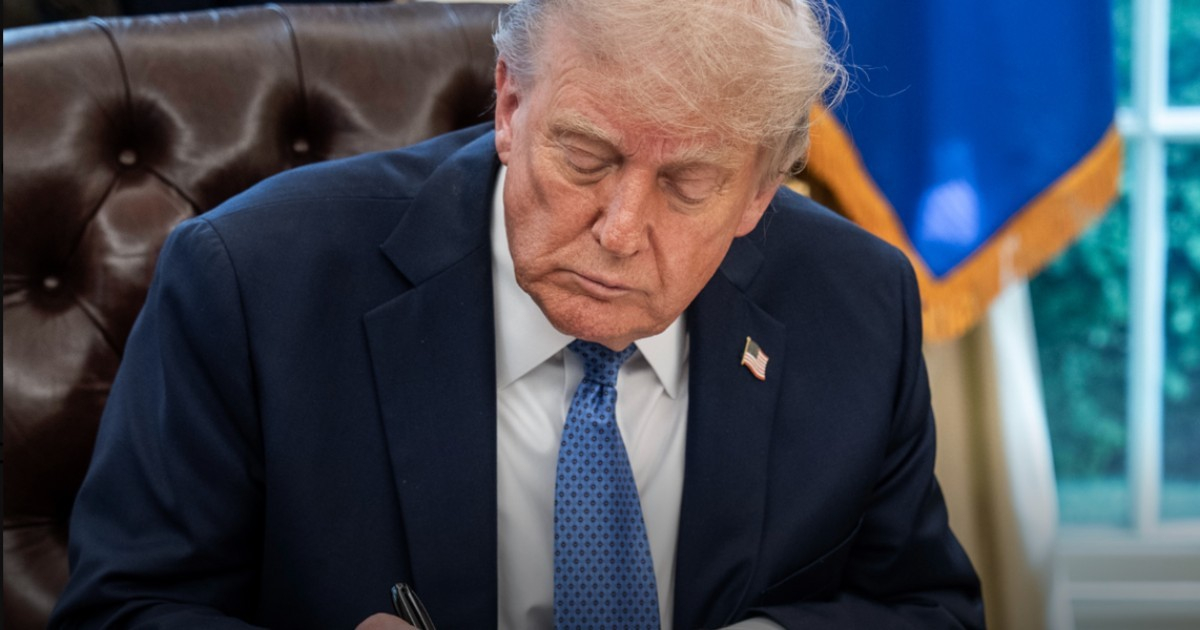
President Donald Trump has unveiled a new, phased plan to impose tariffs as high as 200% on imported generic drugs into the United States. This initiative is part of his broader strategy to encourage pharmaceutical manufacturing within the country's borders.
The plan's details were shared on Trump's social media platform, Truth Social, outlining the timeline for implementing these tariffs.
The proposed measures will not be immediate. "Starting August 1, 2026, all generic drugs imported into the United States will remain tariff-free for two years. After this period, the tariff will increase to 100% for one year and subsequently to 200%," Trump explained.
Thus, generic medications will continue to enter the U.S. without tariffs until August 2028, when the tariff escalation will commence.
Rationale Behind the Tariff Plan
Trump justified this move as a matter of national security and industrial sovereignty, aiming to "relocalize" the production of generics within the nation. He emphasized that companies failing to establish domestic production facilities within the specified timeframe would face penalties.
As Trump stated, "The purpose of this policy is to protect the American people."
Previous Tariff Measures and Industry Impact
This announcement extends Trump's pharmaceutical tariff strategy, initiated in April 2026 with a proclamation imposing tariffs up to 100% on imported patented drugs and active ingredients. Initially, generics were excluded, with a promise of reevaluation within a year. The new plan fulfills that promise.
Regarding patented medications, Trump confirmed that the April tariff framework would remain unchanged, maintaining up to 100% tariffs with exemptions for companies relocating production to the U.S. or entering price agreements with the government.
Potential Consequences and Industry Concerns
The potential impact of this measure is significant, considering that generics account for approximately 90% of all prescriptions filled in the U.S., but only 12% to 17% of total pharmaceutical spending.
The supply chain for these drugs heavily relies on India and China, with 87% of active pharmaceutical ingredient manufacturing plants located outside the U.S., primarily in Asia. India is particularly vulnerable, as nearly 90% of its pharmaceutical exports to the U.S. are generics.
Industry representatives warn that generic manufacturers operate on very tight margins, and any additional costs will likely be passed on to patients and payers, risking shortages of essential medications.
Broader Strategy to Lower Drug Prices
This tariff policy is part of a larger effort by the administration to reduce drug costs. In December 2025, 14 of the world's 17 largest pharmaceutical companies agreed to lower prices under the "Most Favored Nation" policy, offering discounts of up to 70% for Medicaid.
In February 2026, Trump introduced TrumpRx.gov, a platform for direct discounted drug sales. However, experts noted that this primarily benefits cash-paying customers, excluding most insured individuals.
Legal Challenges and Future Outlook
If implemented, the plan may face legal challenges. In February 2026, the Supreme Court struck down reciprocal tariffs imposed under the International Emergency Economic Powers Act, citing an overreach of authority. However, the pharmaceutical tariffs are based on Section 232 of the Trade Expansion Act of 1962, a legal foundation not addressed in the Supreme Court's decision, potentially providing the administration more leeway in defending the measure in court.
Frequently Asked Questions about Trump's Tariff Plan
What are the proposed tariffs on imported generic drugs?
The plan proposes a phased tariff starting at 0% for two years, increasing to 100% for one year, and reaching 200% thereafter.
Why is Trump imposing tariffs on generic drugs?
Trump aims to boost domestic production of generic drugs for national security and industrial sovereignty, penalizing companies that do not relocate manufacturing to the U.S.
What is the potential impact on the pharmaceutical industry?
The tariffs could significantly impact the industry, leading to higher costs for patients and potential drug shortages, as generic manufacturers operate on narrow margins.