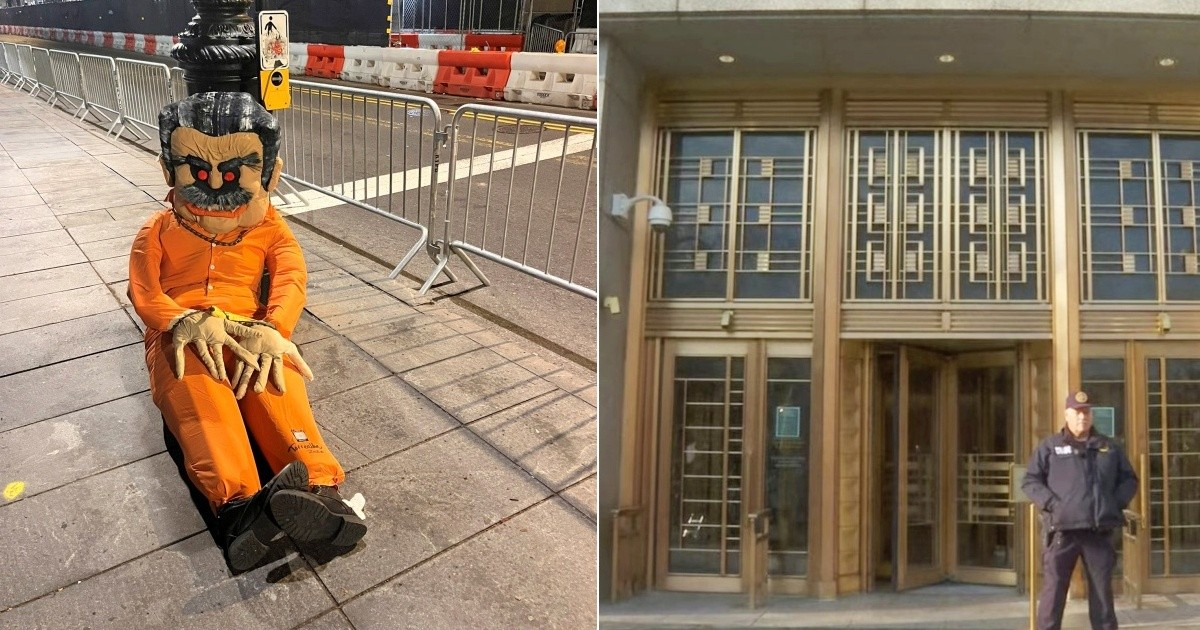
Nicolás Maduro and his wife, Cilia Flores, are scheduled to appear this Wednesday at the federal court in Manhattan for their third hearing since being apprehended in Caracas on January 3, 2026. Their capture was the result of a swift operation by U.S. military forces.
Since their detention, the pair has been held at a federal prison in Brooklyn, awaiting trial on charges that include drug trafficking conspiracy and cocaine importation—a combination of offenses that could lead to life imprisonment.
Procedural Hearing Without Trial Date in Sight
This session is strictly procedural, focusing on the classification of evidence and the submission of pretrial motions. There is no set timeline for the trial itself, and Judge Alvin Hellerstein, at 92 years old, is not expected to establish a trial date during this hearing.
Initially set for June 30, the hearing was postponed at the request of the prosecution due to security concerns. In documents submitted to the court, the government emphasized the necessity of the delay to avoid scheduling conflicts and logistical issues related to ensuring the defendants' safe transport and public safety.
During June and the first half of July, New York City's Police Department (NYPD) resources were focused on the 2026 World Cup, which concluded with Spain's victory. Given the need for both defendants to be physically present in Manhattan, the NYPD must arrange an extensive security operation for their transfer from Brooklyn.
Charges and Defense Strategy
Maduro faces four charges: drug trafficking conspiracy, cocaine importation conspiracy, possession of machine guns and destructive devices, and conspiracy to possess such weapons. Cilia Flores is charged with drug importation and weapons possession.
The former dictator pleaded not guilty in January 2026, claiming his status as a "prisoner of war" in court. His defense, led by attorney Barry Pollack, asserts his immunity as a head of state and questions the legality of his capture.
In April 2026, the U.S. government adjusted sanctions on Venezuela, allowing the Venezuelan government to fund the legal defense of both defendants, addressing a prior dispute where the defense argued that blocking funds violated their constitutional right to choose legal representation.
The 1922 Treaty: A Legal Game-Changer?
One of the most scrutinized elements is a 1922 extradition treaty between the U.S. and Venezuela. This treaty includes a clause mandating arbitration for disputes regarding the treaty's interpretation or execution.
As noted in a New York Times column on Tuesday, U.S. courts might lack jurisdiction if the Venezuelan government invokes this clause, arguing that the arrest violated international law. Legal expert David Sloss suggested that it wouldn't be surprising if the case were temporarily moved from the courts to arbitration.
The column warned that the trial cannot legally proceed without this step, and bypassing arbitration would render the operation flagrantly illegitimate under U.S. law.
Judge Hellerstein and the Diplomatic Context
Another point of interest is Judge Hellerstein himself, who exhibited signs of fatigue and minor lapses during the previous hearing on March 26, raising questions about his ability to manage such a complex case.
During that session, he refused to dismiss the case, stating, "I will not dismiss the case."
Simultaneously, the Trump administration requested on Tuesday that judicial immunity be recognized for interim Venezuelan President Delcy Rodríguez in a civil lawsuit in Florida, highlighting the intricate diplomatic relations between Washington and Caracas as the trial proceeds.
Secretary of State Marco Rubio confirmed on Monday the start of transition talks in Venezuela set for August 2026, adding a significant political dimension to what appears to be a procedural hearing.
Key Questions on Maduro's Legal Battle
What charges does Nicolás Maduro face?
Nicolás Maduro faces charges including drug trafficking conspiracy, cocaine importation conspiracy, possession of machine guns and destructive devices, and conspiracy to possess such weapons.
Why was the hearing postponed initially?
The hearing was postponed due to security concerns, as stated by the prosecution, to avoid scheduling conflicts and logistical issues related to ensuring the defendants' safe transport and maintaining public safety.
What could the 1922 treaty mean for Maduro's case?
The 1922 extradition treaty between the U.S. and Venezuela includes a clause for arbitration in disputes regarding the treaty's interpretation. If invoked, U.S. courts might lack jurisdiction, potentially moving the case to arbitration.
How is the U.S. handling diplomatic relations with Venezuela amid the trial?
The U.S. is engaged in complex diplomatic relations, as shown by the Trump administration's request for judicial immunity for Venezuelan interim President Delcy Rodríguez, and the initiation of transition talks in Venezuela set for August 2026.