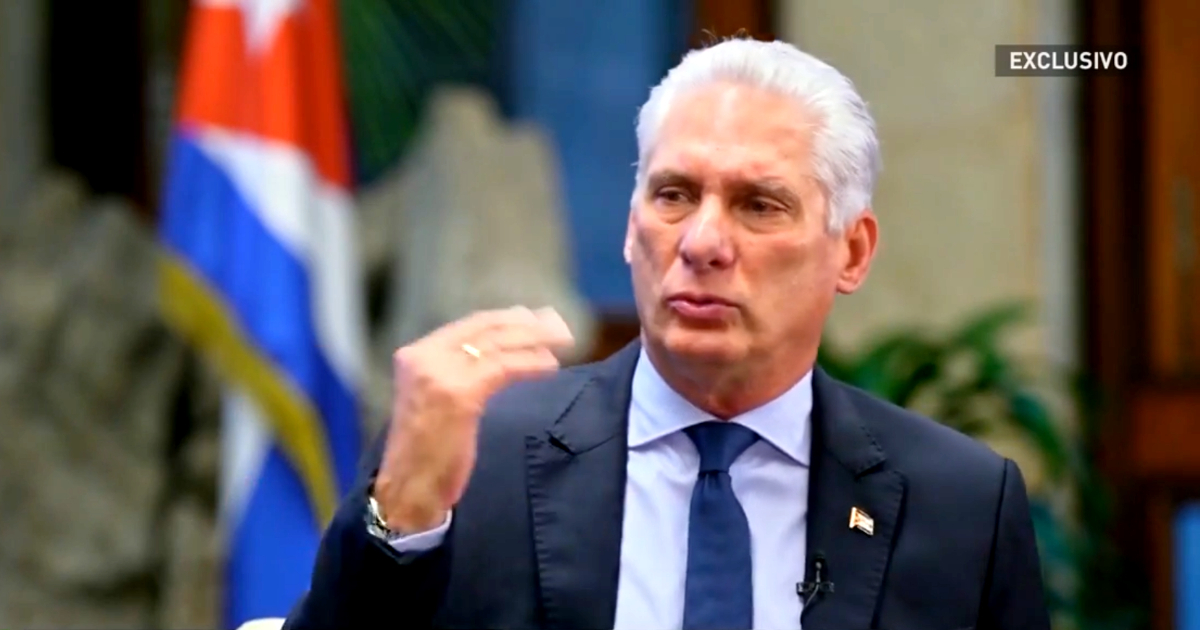
The recent announcement by Miguel Díaz-Canel regarding a fresh set of economic reforms has sparked a lively debate on Facebook, following a report by CiberCuba. The central theme of Díaz-Canel's statement—that the reforms will remain firmly under the control of the Cuban Communist Party (PCC) and will not entail political openness—elicited a predominantly critical response.
Among the myriad of comments, a shared sentiment emerged: many users are doubtful that the proposed measures will lead to any tangible change as long as the political system remains unchanged. The phrase "more of the same" echoed throughout the discussion, succinctly capturing the perception of numerous readers on the new economic plan.
One participant remarked, "Same dog with a different collar," while another summed up the official announcement with, "The movie is called: More of the Same." A significant portion of the feedback criticized the continued absolute control of the process by the Communist Party. Many readers asserted that any reform attempt is doomed if the party, which has steered the country for decades, retains its monopoly over decision-making.
One of the most supported comments declared, "Any reform under the PCC is stamped with FAILURE," while another concluded that Díaz-Canel had effectively "declared the failure of the reforms" even before their implementation.
Moreover, some readers emphasized that the issue extends beyond economic measures to include the lack of institutional and political changes. Calls for a plebiscite were made, allowing citizens to freely decide on their country's model.
Questions on Trust and Investment
Criticism also targeted the one-party system's continuity, questioning whether the new measures could instill confidence among potential investors. "With such premises, just keep waiting," one user quipped. Another added, "This is how you'll keep waiting for investors," casting doubt on whether foreign entrepreneurs would risk capital in a setting where the PCC holds total control over the rules.
The skepticism surrounding the announcement was also evident in interpretations of the reforms as an attempt to lure investment without altering the system's functioning. Some comments suggested that the new measures aim merely to attract economic resources without providing sufficient guarantees to those investing in the island.
Cultural and Political Critiques
Some participants directed their criticism at the government's continued defense of socialism despite the nation's deep crisis. "How many surnames will this socialism have?" one reader questioned, referring to Díaz-Canel's expression of building "Cuban-style socialism."
The same comment stated that the authorities persist in "decorating failure" with new definitions instead of acknowledging the errors accumulated over decades. Humor was also a popular tool for responding to the official discourse. One widely shared message compared the expression "Cuban-style socialism" to "a menu dish: without water, without light, without anything," alluding to the energy crisis and daily struggles faced by the population.
Other readers used brief, irony-laden phrases such as "I can already imagine the final result," "speechless," "not sure whether to laugh or cry," or simply "no more." Religious references appeared repeatedly, with several users imploring divine intervention to change the country's situation, reflecting a sense of despair among some participants.
Some readers recalled the famous quote attributed to Albert Einstein about the insanity of repeating the same actions expecting different results. One commenter adapted this idea, arguing that persisting with the same economic model is a sign of "shamelessness," while others agreed that the government continues to attempt formulas that have already proven ineffective.
Despite the overwhelmingly critical tone toward the regime, the conversation also included humorous takes, resigned comments, and even observations about the photograph used to illustrate the news, showcasing the usual diversity of social media discussions.
Overall, the reactions indicate that Díaz-Canel's announcement was met with little credibility among a significant portion of the readers who participated in the debate. Most comments not only questioned the economic reforms' content but also the fact that the government itself presents the Communist Party as the process's guarantor after more than six decades of directing the national economy.
Rather than instilling confidence, the leader's statements reinforced among many readers the perception that the new measures represent a limited economic loosening without any changes to the country's political structure. For many discussing the CiberCuba publication, the message can be summarized in a phrase that became the debate's recurring theme: "more market, but the same control."
Understanding the Reactions to Economic Reforms in Cuba
Why are readers skeptical about Díaz-Canel's economic reforms?
Readers doubt that the reforms will bring real change as long as the political system, controlled by the Communist Party, remains unchanged. The perception is that these measures represent "more of the same" and will not lead to significant improvements.
What concerns do potential investors have about the new reforms?
Potential investors are concerned about the lack of political changes and the absolute control maintained by the Communist Party, which could deter them from investing in a system where they feel the rules are rigid and unaltered.
How do cultural and historical references play into the public's reaction?
Readers often use historical and cultural references to express their frustration, such as quoting Einstein's views on repeating the same actions and making humorous comparisons to everyday hardships, highlighting their skepticism and disillusionment with the government's approach.