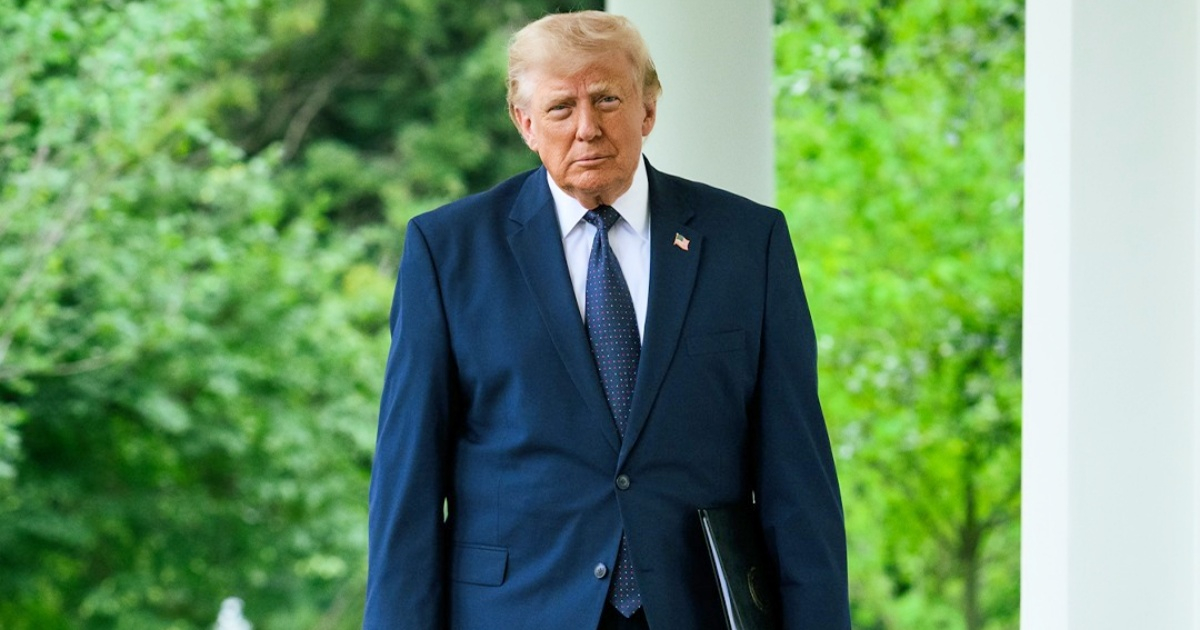
On Monday, Donald Trump signed an executive order mandating a 50% tariff on the bulk of imports from Canada, marking one of the most aggressive protectionist moves of his second term against a long-standing ally.
These new tariffs are set to take effect on August 19, 30 days following the presidential decree.
This action not only strains the bilateral relationship between Washington and Ottawa but also serves as a stark warning to the rest of the world: no U.S. trading partner is immune from similar tariff escalations.
The Legal Foundation: Reviving a 1930 Law
To justify these tariffs, the Trump administration leaned on Section 338 of the Tariff Act of 1930, a rarely invoked provision that allows the president to impose duties of up to 50% when another nation discriminates against American goods.
This statute had never been used for this purpose before, opening the door to potential legal challenges, but also providing a new legal pathway after Trump's setback in the Supreme Court, which in February 2026 struck down his broad tariffs based on emergency powers.
Stephen Brown, an economist at Capital Economics, suggested that the administration might be testing whether this law "could be used to impose tariffs on other countries in the future." Experts from the Cato Institute had previously warned that the statute could be "susceptible to abuse by a protectionist government."
Impacted Goods
The new tariffs build on a 10% general duty imposed by Trump in February 2026, increasing the overall burden on many Canadian products.
Exemptions include energy, potash, critical minerals, and fish.
However, the measure targets goods that were previously protected under the United States-Mexico-Canada Agreement (USMCA), such as automobiles, dairy products, wine, cement, and hockey sticks.
Additionally, goods rerouted through third countries to bypass the tariffs will incur an additional 40% duty.
Washington's Justification
The White House claimed that Canada maintains "harmful" trade practices against the U.S., including restrictions on dairy product access, high agricultural tariffs, digital service taxes, and prior trade reprisals.
U.S. Trade Representative Jamieson Greer encapsulated it in an interview with CNBC: "We have a tariff that is, once again, a natural consequence of Canada’s retaliations."
Although Trump had threatened Canada last Friday on Truth Social with new tariffs due to smoke from wildfires in Manitoba, Saskatchewan, and Ontario, the White House ultimately justified the decision on strictly commercial grounds.
Ottawa's Reaction
Canadian Prime Minister Mark Carney accused Washington of violating the USMCA.
"This is the latest in a series of unilateral trade actions by the United States that began with the imposition of a series of tariffs in direct violation of the Canada-United States-Mexico Agreement," Carney stated in a release, as reported by EFE.
Carney left the door open for negotiation: "Canada has put forth a series of detailed and comprehensive proposals to resolve this dispute and modernize the CUSMA. We are prepared to intensify those discussions in the coming weeks."
A Global Warning
The implications extend beyond this bilateral conflict.
According to CNN, if the U.S. government manages to broadly define what constitutes "discrimination" against American products, it would have a new legal avenue to impose steep tariffs on any country whose policies it deems unacceptable.
This escalation follows Trump's refusal to renew the USMCA in its current form on July 2, opting instead for a mechanism of annual reviews until 2036.
The agreement facilitates approximately two trillion dollars in annual trade among the three countries.
Trade lawyer Greg Husisian from Foley & Lardner was clear: "Other countries will continue to have to take these kinds of threats seriously. This confirms that President Trump will continue using the threat of tariffs to achieve foreign policy objectives for the remainder of his presidency."
Understanding Trump's Tariffs on Canada
What are the new tariffs imposed by Trump on Canada?
Trump has imposed a 50% tariff on most imports from Canada, effective August 19, as part of a protectionist strategy.
Why did Trump choose to impose these tariffs?
The tariffs are justified under Section 338 of the Tariff Act of 1930, claiming that Canada discriminates against American products.
How has Canada responded to the new tariffs?
Canadian Prime Minister Mark Carney accused the U.S. of violating the USMCA and is open to negotiations to resolve the dispute.
What products are affected by these tariffs?
The tariffs affect a range of products, including automobiles, dairy, wine, cement, and hockey sticks, but exclude energy, potash, critical minerals, and fish.