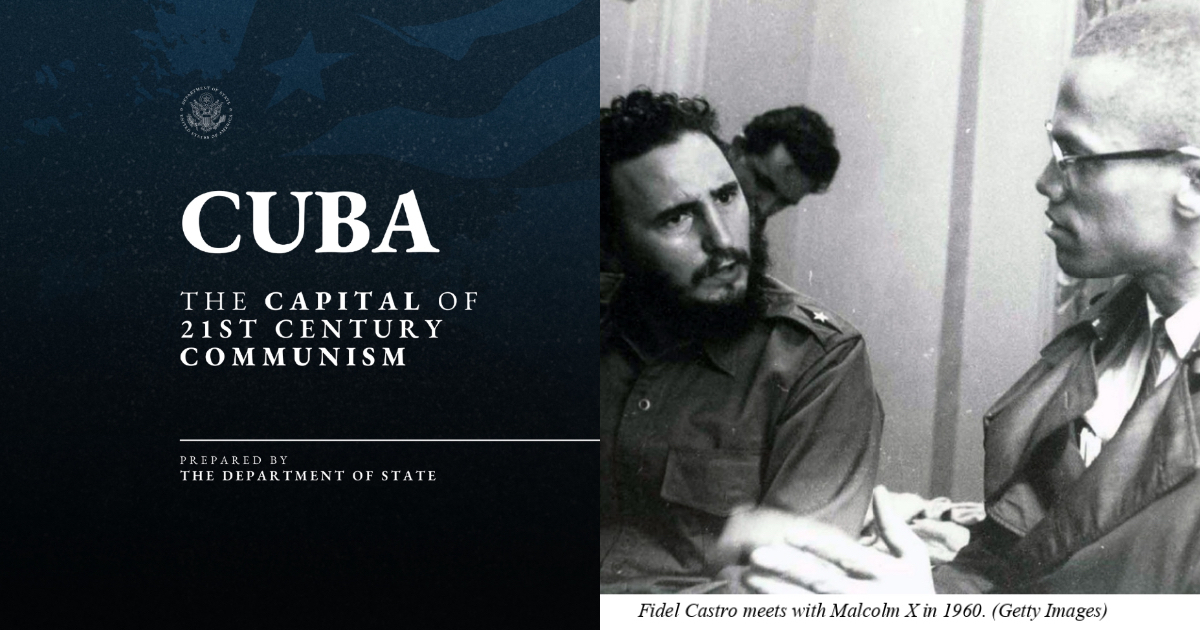
For decades, discussions about Cuba in the United States primarily revolved around topics such as the embargo, migration, human rights, and diplomatic relations. However, a new report titled "Cuba: The Capital of 21st Century Communism," released by the U.S. State Department on Monday, delves much deeper into the issue. It goes beyond merely condemning the Cuban dictatorship for its human rights violations. Instead, it positions the Cuban regime as a strategic actor that, for over six decades, has engaged in systematic espionage, infiltration, propaganda, and expansion of its influence against the United States and Western democracies.
This narrative precision carries significant implications. When the leading diplomatic body of the U.S. shifts from viewing the Cuban regime solely as a human rights issue to identifying it as a strategic national security threat, it reshapes the foundation of U.S. policy. The report diagnoses a danger that demands eradication.
Strategic Threat and International Influence
The report asserts that Havana has not only oppressed its own citizens but has also sought to exert influence over governments, institutions, universities, political organizations, and social movements in other countries. It links this strategy to the exportation of its authoritarian model to nations like Venezuela and Nicaragua, as well as cooperation with global powers such as Russia, China, and Iran.
Practically speaking, this could lead to increased sanctions against officials and state entities, intensified investigations into intelligence networks and influence operations, closer monitoring of organizations tied to the Cuban state apparatus, and stronger collaboration with international allies to curb the regime's ability to project power.
Implications for U.S. Policy
It is also likely and logical for political support to grow for independent civil society, human rights defenders, and media outlets not controlled by the Cuban state. The report carries historical significance as well. For years, there were significant divisions within Washington on how to interpret the Cuban regime. While some viewed it primarily as a bilateral issue or a vestige of the Cold War, this document places it within the context of 21st-century strategic competition between democracies and authoritarian regimes.
A Historical Shift in Perspective
From this viewpoint, Cuba is no longer seen as an isolated actor but as part of a network of alliances with governments opposed to the West. This perspective broadens the scope of the Cuban issue and allows U.S. policy toward the island to be integrated into a broader national security strategy.
The report combines historical background, documented cases, and strategic evaluations from the State Department. In foreign policy, the importance of an official report lies not only in the evidence it compiles but also in the conceptual framework it provides for guiding future decisions.
While administrations may change, strategic documents often influence public policy-making for years. In this context, the report could serve as a reference point for Congress, intelligence agencies, and U.S. foreign policy decision-makers.
Beyond any specific measures that might be adopted, the political message is clear: The U.S. government now views the Cuban regime not just as a dictatorship that oppresses its citizens, but as a structure capable of projecting influence, conducting intelligence operations, and collaborating with other authoritarian regimes to the detriment of U.S. interests.
A New Approach to Addressing the Cuban Regime
When a powerful nation redefines the nature of a threat, it typically redefines its response as well. That could be the most significant impact of this report. While it does not, by itself, announce a new policy, it establishes the intellectual and strategic foundations upon which Washington's future decisions regarding the Cuban regime could be built, including the long-awaited action to finally eradicate the destructive cancer of Castroism.
The current U.S. policy toward Cuba is the most intelligent, effective, and humane approach we've seen. While the disease is clinically defined and the best possible treatment is applied, aid to the oppressed people is increased and delivered through independent channels: today marked the first delivery of the $100 million humanitarian aid announced by the State Department.
The criminal Castro-communist tyranny must be sanctioned and dismantled, but the pro-democracy opposition, which is persecuted and repressed, and the people suffering from extreme oppression and poverty need solidarity and effective assistance.
Understanding the U.S. State Department's Stance on Cuba
Why does the State Department consider the Cuban regime a strategic threat?
The State Department views the Cuban regime as a strategic threat due to its long-standing policies of espionage, infiltration, and propaganda aimed at expanding its influence against the United States and Western democracies.
What are the potential consequences of the report for U.S.-Cuba relations?
The report may lead to increased sanctions, more investigations into Cuban intelligence operations, and stronger international cooperation to limit the regime's influence, as well as greater support for independent civil society and media in Cuba.
How does the report redefine Cuba's role in global politics?
The report redefines Cuba's role by placing it within the context of 21st-century strategic competition, portraying it as part of a network of alliances with governments opposed to Western interests.