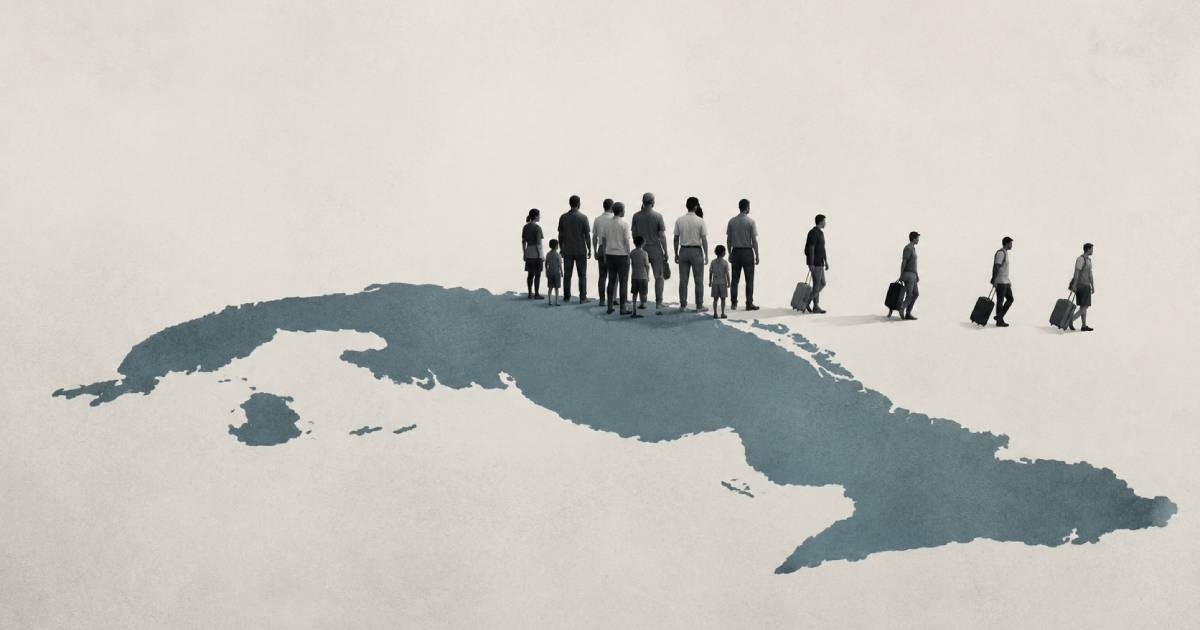
According to official figures disclosed by the National Statistics and Information Office (ONEI) on Tuesday, Cuba ended 2025 with just 9,434,593 inhabitants. This announcement confirms a significant demographic decline unprecedented in the country's modern history.
The data, shared by ONEI on social media, highlights that the island's population has dropped below 9.5 million, marking a stark reduction. Presenting these statistics to the press were Juan Carlos Alfonso Fraga, deputy chief of ONEI, and Diego Enrique González Galbán, director of the Center for Population and Development Studies.
Compared to 2024, when Cuba's population was 9,748,007, the island saw a decrease of 313,414 people in just one year.
The Alarming Birth Rate Decline
Birth rates have reached their lowest levels in over a century. In 2025, only 68,064 Cubans were born, marking the lowest number in decades and even fewer than in 1899, following the War of Independence.
Meanwhile, deaths totaled 136,214, nearly double the births, leading to a natural growth rate of -7.1 per 1,000 inhabitants. The total fertility rate remained at a historical low of 1.29 children per woman for the second consecutive year, far below the generational replacement level of 2.1.
Impact of Migration and Aging Population
Migration further exacerbates the demographic challenges. In 2025, Cuba experienced a negative migration balance of -245,264 people, indicating a population decline even before accounting for deaths.
Over five years, Cuba's population has plummeted from over 11 million in 2020 to the current 9.4 million, a loss exceeding 1.6 million individuals during this period.
Additionally, the aging population has reached a new peak: 26.7% of Cubans are now aged 60 or older, reinforcing Cuba's status as the most aged nation in Latin America and the Caribbean. In five years, the country also lost 1,259,894 working-age individuals, dealing a direct blow to its already struggling productive capacity.
Concerns Over Official Statistics
The official figures might even downplay the severity of the situation. Demographer Juan Carlos Albizu-Campos, in a 2025 study accessed by the EFE news agency, estimated that by the end of 2024, only 8,025,624 people lived in Cuba, 24% less than in 2020.
Albizu-Campos argues that the regime's statistics overlook tens of thousands of emigrants who do not head to the United States, describing the exodus as a "demographic drain" typical of wartime scenarios.
Alfonso Fraga himself admitted at a United Nations Population Fund (UNFPA) meeting in Havana on June 29 that "there is no similar experience" in any Global South country outside a war context. The international body reiterated its warning that, if current trends persist, Cuba could end the 21st century with just 5.6 million inhabitants.
Government's Response to the Crisis
Meanwhile, Díaz-Canel downplayed the exodus on June 25, describing migration as a "global problem" and attributing the departure of professionals to the allure of capitalist economies, sidestepping the regime's responsibility for the crisis emptying the island.
Cuba has not conducted a national census since 2012. The census operation that began in 2026 will not yield results until 2027, meaning current projections are derived from the compensatory equation, which combines births, deaths, and migration flows to estimate the population without direct counting.
Understanding Cuba's Demographic Crisis
What factors are contributing to Cuba's population decline?
Cuba's population decline is driven by low birth rates, high death rates, significant emigration, and an aging population.
How does the current fertility rate in Cuba compare to replacement levels?
Cuba's fertility rate is at 1.29 children per woman, significantly below the replacement level of 2.1 children needed to maintain the population size.
What warning has the UNFPA given regarding Cuba's population trends?
The UNFPA has warned that if current trends continue, Cuba could see its population drop to just 5.6 million by the end of the 21st century.