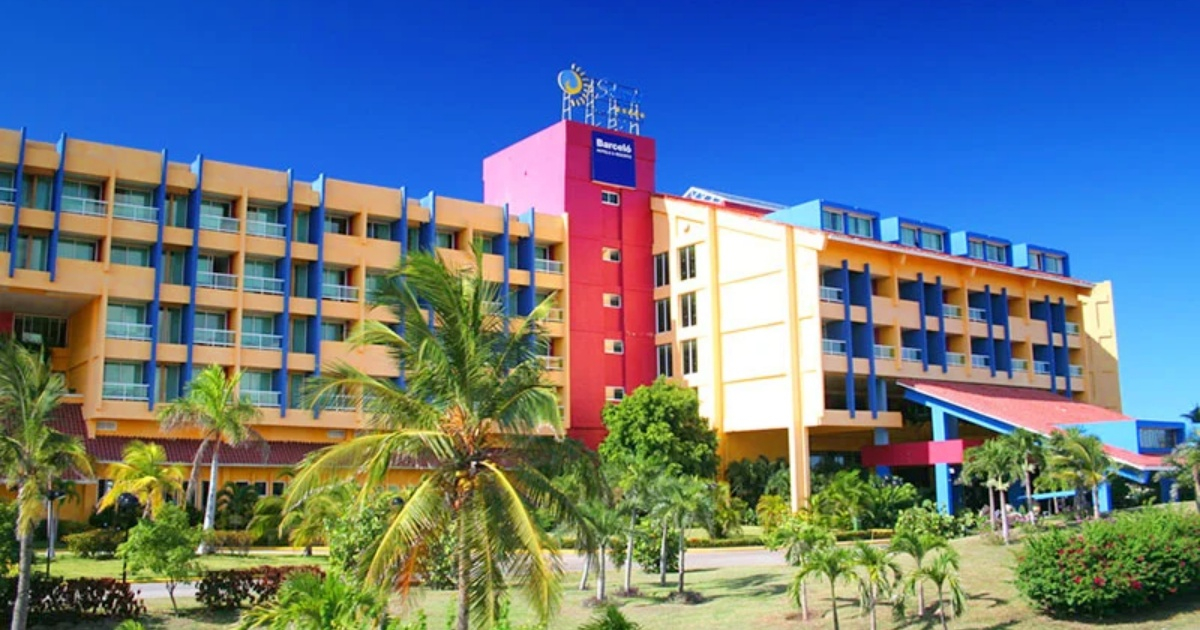
This past Tuesday, both Iberostar and Barceló announced the complete cessation of their operations in Cuba, joining Meliá, which on the same day informed the National Securities Market Commission of its definitive departure from the island effective Friday, July 24. According to the newspaper Expansión, these three major Spanish hotel chains are leaving simultaneously.
The Catalyst: U.S. Sanctions on Cuba's Ministry of Tourism
Last week, the Trump administration added Cuba's Ministry of Tourism (MINTUR) along with nine other state entities to the U.S. Treasury Department's list of Specially Designated Nationals. This unprecedented move marks the first time an entire ministry from the Cuban regime has been blacklisted.
This action eradicated any legal framework for maintaining contracts with groups like Cubanacán and Gran Caribe, which are under MINTUR's umbrella, thereby forcing the definitive exit of the chains that still had activities on the island.
Back in June, Meliá and Iberostar had already taken initial steps by withdrawing from 27 hotels associated with Gaviota, a subsidiary of the military conglomerate GAESA. The latest sanctions have now closed the door on the rest of their operations.
Iberostar: Ending Over Three Decades of Operations
Owned by the Fluxà family, Iberostar had ceased operations at 12 of its 18 Cuban hotels in June, all linked to Gaviota. The company continued to operate six other establishments in Havana, Varadero, Trinidad, and Cayo Guillermo. However, following the sanctions imposed on July 13, these hotels have been removed from availability for bookings.
Iberostar, which opened its first Cuban establishment in 1993, confirmed the end of its operations with a brief statement: "IberostarCuba Hotels & Resorts confirms that it no longer operates or markets any hotels in Cuba. The company continues to support its teams during this phase, maintaining its commitment to the country's future projection."
Barceló: Terminating Contracts Ahead of Schedule
Among the three, Barceló had the least exposure. The group managed only two hotels under the state-owned Gran Caribe in Varadero—the Barceló Solymar with 525 rooms and the Occidental Arenas Blancas with 358—under contracts valid until 2027. Despite this, Barceló chose to terminate these agreements prematurely and has not been present on the island since last week.
This decision marked a significant shift; as recently as June 17, Raúl González, CEO of Barceló Hotels EMEA, had expressed the intention to wait until the contract's end. "The message we receive from the United States is that we strictly comply with what is asked. Unless told otherwise, we will maintain the contract until its expiration," he had stated.
Meliá: Nearly Four Decades and 34 Hotels
Of the three chains, Meliá has been the most affected by the withdrawal. The company once managed 34 hotels, totaling 14,053 rooms on the island, opening its first location—the Sol Palmeras in Varadero—in May 1990. By the end of 2025, Cuba accounted for 14.65% of Meliá's room inventory.
In its communication to the CNMV, Meliá explained that the decision was due to the "significant operational, legal, economic, and financial difficulties that have persistently affected and continue to affect" Cuba, making it "legally and factually impossible" to maintain even a "minimal operational stability." The company plans to assess the full financial impact when it releases its first-half accounts on July 30.
A Collapsing Tourism Industry
The simultaneous exit of these three chains comes at a dire time for Cuban tourism. In 2025, the island received only 1.81 million international visitors, the lowest since 2002, with a hotel occupancy rate of 18.9%. During the first four months of 2026, just 328,608 tourists arrived, a drop of more than 55% compared to the same period the previous year.
The departure of international operators is not new. Earlier this year, Minor Hotels, formerly NH, left its two Havana locations. In May, Canadian company Blue Diamond Resorts also confirmed its exit, affecting 62 hotels and over 12,900 rooms.
Total losses for Spanish companies in Cuba are estimated between 80 and 100 million euros, on an accumulated investment of 465 million euros from 1993 to 2024. Meliá's CEO, Gabriel Escarrer Jaume, summed up the situation on July 14: "Honestly, we don't know what will happen. We are following the instructions of the U.S. State Department."
Impact of Spanish Hotel Chains Leaving Cuba
Why are Spanish hotel chains leaving Cuba?
The departure of Spanish hotel chains from Cuba is primarily due to U.S. sanctions that have targeted Cuba's Ministry of Tourism and related entities, making it legally impossible to maintain operations on the island.
How has the tourism industry in Cuba been affected?
Cuba's tourism industry is experiencing a severe downturn, with international visitor numbers at their lowest since 2002 and hotel occupancy rates plummeting. The exit of international operators has further exacerbated the situation.