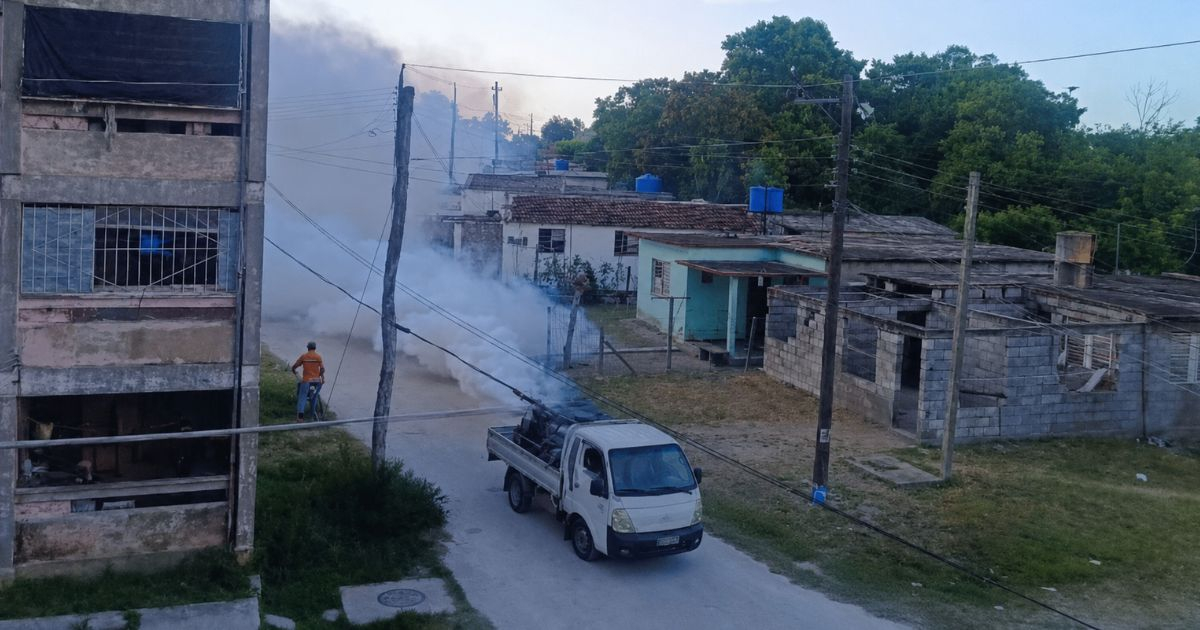
Health officials in Villa Clara have identified the simultaneous presence of dengue serotypes II and IV in Ranchuelo, a municipality in the province. This combination, deemed particularly hazardous by health authorities, can lead to rapid deterioration of the patient's condition, posing a serious threat to life.
The warning was issued during a session of a Temporary Group convened to address Ranchuelo's epidemiological challenges. The meeting was attended by provincial vice-governor Noel Cecilio Chinea Pérez, along with local political and governmental authorities.
Dr. Yarelyn Lorenzo Oyarzabal, who oversees Hygiene and Epidemiology in Villa Clara, reported that 12 patients remain in stable condition at a designated isolation center located at the Las Tecas motel in Ranchuelo.
For over two weeks, authorities have been actively responding to a surge in individuals exhibiting feverish symptoms. To date, over 10,300 screenings have been conducted across 114 affected blocks, encompassing a total of 5,286 households.
Comprehensive Measures to Combat Dengue
On Monday alone, 562 homes were fumigated, and abate was applied to stored water to curb the breeding of the Aedes aegypti mosquito, the virus's primary vector. Dr. Lorenzo emphasized the urgency of medical intervention, stating that all Ranchuelo residents will be screened to facilitate timely action. Due to geographical proximity, residents of Manicaragua, Santa Clara, Placetas, and Sagua la Grande are also advised to seek medical attention for any feverish symptoms.
An array of entities has been mobilized for the screening efforts, including Communales, ETECSA, TRANSMEC, the Electoral Commission, INDER, the Efraín Alfonso Agroindustrial Company, and both municipal and provincial health departments, among others.
Community Recommendations and Health Risks
Authorities have advised residents to scrub and cover water containers at home and to wear protective clothing against the mosquito vector, even in the face of summer's high temperatures.
The DENV-2 serotype, one of the strains now circulating in Ranchuelo, is noted for its severity due to its strong association with hemorrhagic dengue and shock syndrome, according to public health experts. The concurrent circulation of two different serotypes also heightens the risk of severe illness in individuals previously infected with dengue, as a secondary infection with a different serotype can provoke an immune response that worsens the clinical condition.
In June, the Ministry of Public Health issued an alert about a potential new dengue epidemic in Cuba, following the identification of all four virus serotypes across the country, with more than 2,800 cases reported in 134 municipalities spanning 14 provinces.
Villa Clara has a recent history of severe outbreaks. Last October, the provincial government activated its emergency plan in response to simultaneous surges in dengue, chikungunya, and Oropouche, during which 14 severe cases and at least one death from hemorrhagic dengue were reported in the Cifuentes municipality.
Addressing Dengue Concerns in Villa Clara
What serotypes of dengue are currently circulating in Ranchuelo?
Dengue serotypes II and IV have been confirmed to be circulating in Ranchuelo.
Why are these serotypes considered dangerous?
These serotypes are considered dangerous because they can cause rapid deterioration in patient condition and are associated with severe forms of dengue, such as hemorrhagic fever and shock syndrome.
What measures are being taken to combat the dengue outbreak?
Authorities are conducting screenings, fumigating homes, applying abate to water reserves, and mobilizing various entities to address the outbreak.