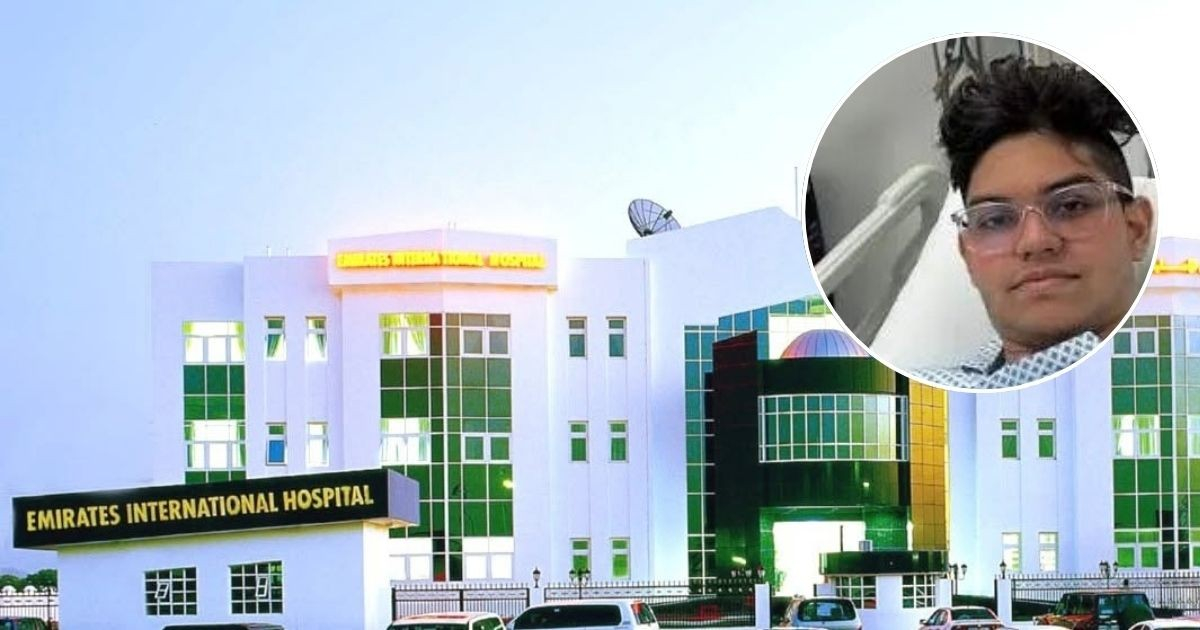
Alejandro Montoya, a young Cuban who had recently traveled to Dubai with hopes of starting anew by working at a restaurant, is currently hospitalized after suffering a massive pulmonary embolism that nearly claimed his life. While he fights to recover, his family is confronted with a hefty medical bill of 47,000 dirhams—approximately $12,800—that they are unable to pay.
This situation was first highlighted by El Correo del Golfo in a report published on July 18.
Montoya began his new job on June 22. However, shortly thereafter, he experienced severe fatigue, difficulty breathing, and intense heart palpitations. Initially diagnosed with severe anemia and a vitamin B12 deficiency, his condition continued to deteriorate.
The crisis reached a tipping point when he collapsed at work and was rushed to the hospital by ambulance.
Critical Health Emergency Unveils Immigration Challenges
Medical professionals discovered that Montoya was in a critical state due to clots that had blocked his lungs and heart simultaneously. He was admitted to the Coronary Care Unit, where he was intubated and placed on life support.
After several days of treatment, Montoya passed the most critical phase and was moved to a regular hospital room, though he remains under specialized medical care.
This emergency also highlighted another issue: Montoya had not yet completed the necessary paperwork to obtain his work visa and was staying in the United Arab Emirates on a tourist visa.
This status barred him from accessing public healthcare or benefiting from subsidized rates. According to the report, his family attempted to arrange a transfer from the start of the crisis, but their requests were denied due to his immigration status.
Healthcare Costs and Immigration Status: A Dual Challenge
In the United Arab Emirates, health insurance is mandatory for foreign workers and must be provided by the employer once residency is established. Until then, those on a tourist visa are without healthcare coverage and must bear the full cost of any medical care.
Montoya's situation typifies a reality faced by many Cubans arriving in Dubai, hoping to regularize their employment status shortly after entering the country.
The tourist visa, which typically costs between $1,500 and $2,200, allows legal entry into the UAE, but working under this visa is a violation that could result in fines up to 50,000 dirhams, deportation, and a permanent ban from obtaining a work permit, as stated by immigration experts.
Community Support and Broader Implications
Montoya's family, also Cuban residents in Dubai, has called for solidarity and understanding from the Spanish-speaking community as they navigate this emergency.
Although they have not initiated a formal fundraising campaign, those wishing to assist can contact Alejandro Montoya's mother at +971 56 927 5732.
This case is not isolated. According to El Toque, Dubai's Cuban community continues to grow, drawn by job opportunities, yet many migrants face challenges from lack of documentation or medical coverage during the regularization process. While the Cuban consulate records over 500 residents in the UAE, various sources suggest the actual number is significantly higher.
Meanwhile, the private hospital bill keeps rising, and the family remains uncertain about when Montoya will be discharged, a crucial step toward rebuilding the life he left Cuba to pursue.
Understanding the Healthcare and Immigration Issues in the UAE
What led to Alejandro Montoya's hospitalization in Dubai?
Alejandro Montoya was hospitalized due to a severe pulmonary embolism caused by clots blocking his lungs and heart, which nearly led to his death.
Why can't Alejandro Montoya access subsidized healthcare in the UAE?
Montoya cannot access subsidized healthcare because he was staying in the UAE on a tourist visa and had not completed the process to obtain a work visa, which is required for accessing public healthcare services.
What are the potential consequences of working on a tourist visa in the UAE?
Working on a tourist visa is considered a violation and can result in fines up to 50,000 dirhams, deportation, and a permanent ban on obtaining a work permit.