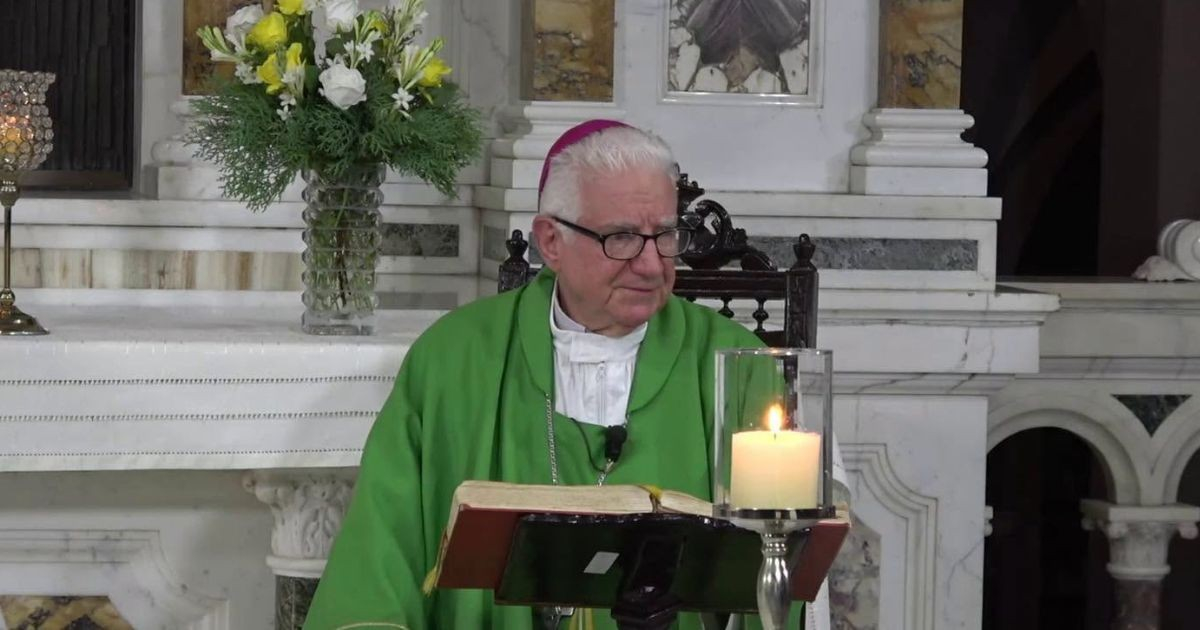
Archbishop Dionisio García Ibáñez of Santiago de Cuba expressed deep concern this Sunday over the mass departure of young people from both rural and urban areas. He painted a picture of a nation grappling with declining productivity and the daily struggles of a populace living "day by day."
His comments were not part of an official homily but were made during the "Intention at the Beginning of the Eucharist," held at the Basilica National Shrine of Our Lady of Charity of El Cobre.
Youth Migration and Its Impact on Cuba
During the opening intention, the archbishop highlighted the dire crisis affecting the Cuban people, focusing on the exodus of young individuals with a poignant question that underscores the demographic and economic challenges the nation faces: "Who will cultivate our fields?"
García Ibáñez painted a grim picture of Cuba's collapsing agricultural sector, reminiscing about a once fertile and productive land that now seems unrecognizable. "Where are those mills that now look like archaeological sites? Where is the coffee we used to enjoy every afternoon? Where are the people who cultivated it?" he questioned from the altar.
The Daily Struggles and Economic Hardship
The archbishop described the everyday challenges faced by millions of Cubans with a stark phrase: "Our people are living day by day. We have to search for food daily as we cannot store it. The same goes for the water we need to use, and the money we must spend each day."
He also highlighted the plight of retirees who have "fought all their lives" but now watch helplessly as their money slips away, unable to cover basic needs.
Calls for Unity and Dialogue Amid Crisis
García Ibáñez also addressed management errors and the absence of solutions, urging the Cuban people to "correct what has brought us to this state of lack, of not knowing how to manage things," emphasizing the need for at least reclaiming what was once had.
During the Eucharist's initial intention, the archbishop called for unity and dialogue, stating, "Differences in opinion—whether educational, political, or philosophical—should not mean division. They should mean we have different ways of thinking and different solutions to the country's problems."
Challenging Power and Seeking Accountability
His remarks on the crisis and exodus were part of the same Eucharist where García Ibáñez later questioned the abuse of power: "When someone does things they shouldn't or abuses their power, who can call them out? Who?"
The prelate's words come against the backdrop of an unprecedented demographic exodus from Cuba, with over a million Cubans leaving the island since 2021. Notably, 50% of these emigrants are under 35, the very demographic that should be supporting the country's agricultural production and economy.
The archbishop's depiction of the declining countryside is corroborated by statistics: rice production plummeted from 304,000 tons in 2018 to 111,000 by 2025. Root crops fell by 44%, eggs by 43%, and milk by 37.6%, while in 2024, the agricultural sector saw a 53% drop in primary production.
Throughout 2026, García Ibáñez has amplified his criticisms from the same platform. In May, he called for tangible changes in Cuba and urged leaders not to see themselves as "masters of the world"; in June, he warned against those who use power to do "anything"; and on July 6, he acknowledged the people's distress with a memorable statement: "So many people are asking for help. And the help is not enough."
Understanding the Cuban Exodus and Economic Crisis
What is causing the youth exodus in Cuba?
The youth exodus in Cuba is primarily driven by declining economic conditions, lack of opportunities, and the inability to meet basic needs, prompting many to seek better prospects abroad.
How is the agricultural sector affected by the population decline?
The agricultural sector in Cuba is severely impacted by the demographic decline, as the loss of young workers reduces the workforce needed to maintain and enhance agricultural productivity.
What role does the Archbishop of Santiago play in addressing these issues?
Archbishop García Ibáñez plays a critical role by voicing concerns, urging for dialogue and unity, and calling for corrective measures to address economic mismanagement and societal divisions in Cuba.