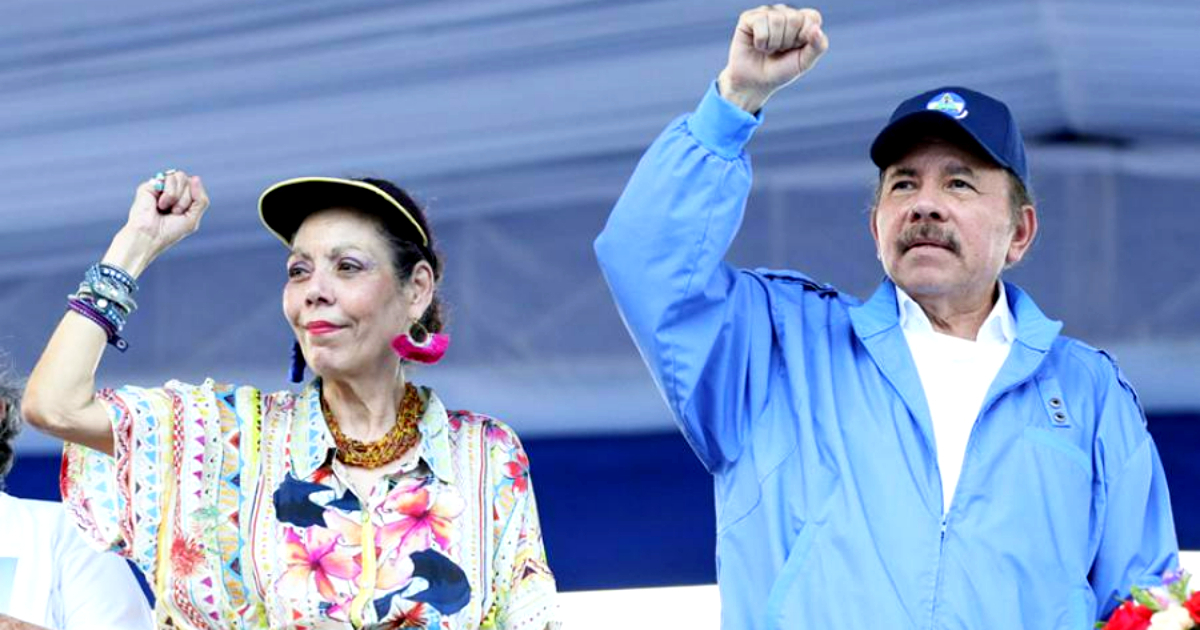
Nicaraguan autocrat Daniel Ortega has made it explicitly clear that elections will no longer be held in Nicaragua, effectively blocking any path for the opposition to gain power. This statement was reported by both CNN Español and the EFE agency.
Ortega's pronouncement came during the 47th anniversary of the Sandinista revolution in Managua. At 80 years old, and having held power since 2007, Ortega addressed a large crowd, decisively ending any hopes for democratic transition in the nation.
“They might wish to win elections to take control of the schools, but they can forget it: there will be no more elections here for them to try to seize the government, to seize power,” Ortega boldly declared, targeting the opposition whom he accused of being “crouched” in exile.
Legislative Barriers Against Opposition
Ortega further announced that the National Assembly, which is entirely under the regime's control, will draft new legislation to “build a wall, a block, against the coup plotters, against those who betray the homeland.” He warned that “no matter how much money the Yankees provide, they will not succeed.”
Constitutional Changes and International Backlash
This declaration is part of a rapid erosion of institutional frameworks. A constitutional amendment passed in January 2025, effective from February that year, altered over 100 articles of the Constitution. It extended the presidential term from five to six years, created a new role for Rosario Murillo—Ortega's wife—as “co-president,” allowed for indefinite re-election, and eradicated the separation of powers within the state.
The reform, criticized by the UN, the OAS, the United States, and the European Parliament, had already postponed the general elections from November 2026 to 2027. Ortega's latest remarks further extinguish any possibilities of future electoral processes.
International Reactions and Accusations
Earlier this year, the U.S. State Department accused Murillo of fabricating the role of co-president “without elections, without mandate, and without legitimacy, because she knows she cannot win.” The Department emphasized that “power rooted in repression and constitutional manipulation is not the will of the Nicaraguan people.”
In the same speech, Ortega also reacted to the capture of Nicolás Maduro by U.S. forces on January 3, describing it as “monstrous.” He claimed, “They stormed the Presidential House where Nicolás was with his wife, killed his mostly Cuban guards, and took him to a prison in the United States.”
Ortega further warned about a perceived threat to Cuba: “There are Cubans in exile urging the U.S. government to militarily invade Cuba and imprison the revolutionary commander, Raúl Castro.”
Nicaragua's Growing Isolation
With Managua's long-time alliances with Caracas and Havana strained, the country finds itself increasingly isolated. Following Maduro's capture and Washington's mounting pressure on the Cuban regime, Ortega had previously referred to Trump as “mentally unhinged” for “kidnapping” Maduro, marking a breakdown of the tacit truce the Sandinista regime had with the U.S. administration.
The OAS demanded the restoration of democracy in Nicaragua and the unconditional release of all political prisoners last June, while Human Rights Watch documented at least 87 political prisoners in the country during 2026.
Frequently Asked Questions About Nicaragua's Political Situation
What did Daniel Ortega announce regarding future elections in Nicaragua?
Daniel Ortega declared that no future elections will be held in Nicaragua, effectively preventing the opposition from accessing power.
How has the international community responded to Ortega's announcement?
The decision has been met with criticism from international bodies such as the United Nations, the OAS, the United States, and the European Parliament, who have demanded a return to democratic processes in Nicaragua.
What changes were made to Nicaragua's Constitution?
The constitutional reform extended the presidential term, introduced the role of co-president for Rosario Murillo, and abolished the independence of state powers, among other changes.