The State Department released a comprehensive 100-page report on Monday entitled "Cuba: The Stronghold of 21st Century Communism," asserting that Cuba's Intelligence Directorate (DI) continues to run an active espionage network within the United States, significantly infiltrating both civilian and military institutions.
While the report does not provide new names or unprecedented evidence of agents, it compiles insights from former counterintelligence officials and documented historical cases to argue that the Cuban threat remains a current issue, not merely a Cold War relic.
Former CIA Counterintelligence Chief James Olson is quoted for his stark assertion: "The Cubans have penetrated our government... we only see the tip of the iceberg. They surpass even the KGB in efficacy."
Additionally, ex-counterintelligence official Christopher Simmons, who was instrumental in dismantling several Cuban networks post-Cold War, has publicly estimated that the DI maintains dozens of unidentified agents operating within U.S. territory, including alleged operatives in high government positions.
The report describes the DI as "one of the most effective human intelligence operations globally," highlighting that, post-Soviet Union, the agency refocused its efforts almost exclusively on the United States, maintaining its agent networks and methods.
Historical Espionage Cases
To illustrate the historical reach of this infiltration, the report reviews notable cases. Victor Manuel Rocha, a former ambassador to Bolivia and a past director of Inter-American Affairs on the National Security Council under President Clinton, spied for Cuba for nearly 50 years before his arrest in December 2023. He was sentenced to 15 years in prison in April 2024.
At the time, then-Attorney General Merrick Garland described Rocha's case as "one of the deepest and most enduring infiltrations of the U.S. government by a foreign agent."
Ana Belén Montes, recruited as a graduate student at Johns Hopkins in 1984, rose to become the lead Cuba analyst at the Pentagon's Defense Intelligence Agency. She exposed the identities of at least four undercover agents and the location of a secret military base in El Salvador. Arrested in 2001, she was released in January 2023.
Walter Kendall Myers and his wife Gwendolyn transmitted classified information from the State Department to Havana over 30 years via shortwave radios. Myers received a life sentence in 2010 and died in prison in March 2026 at age 88, unrepentant.
Geopolitical Dimensions and Current Threats
The report also highlights the current geopolitical dimension: Cuba hosts 18 known signals intelligence facilities, with China actively operating three and Russia two. The intelligence personnel from both powers on the Island has tripled since 2023. The Cuban regime is described as a platform for China, Russia, and Iran to conduct operations against the United States.
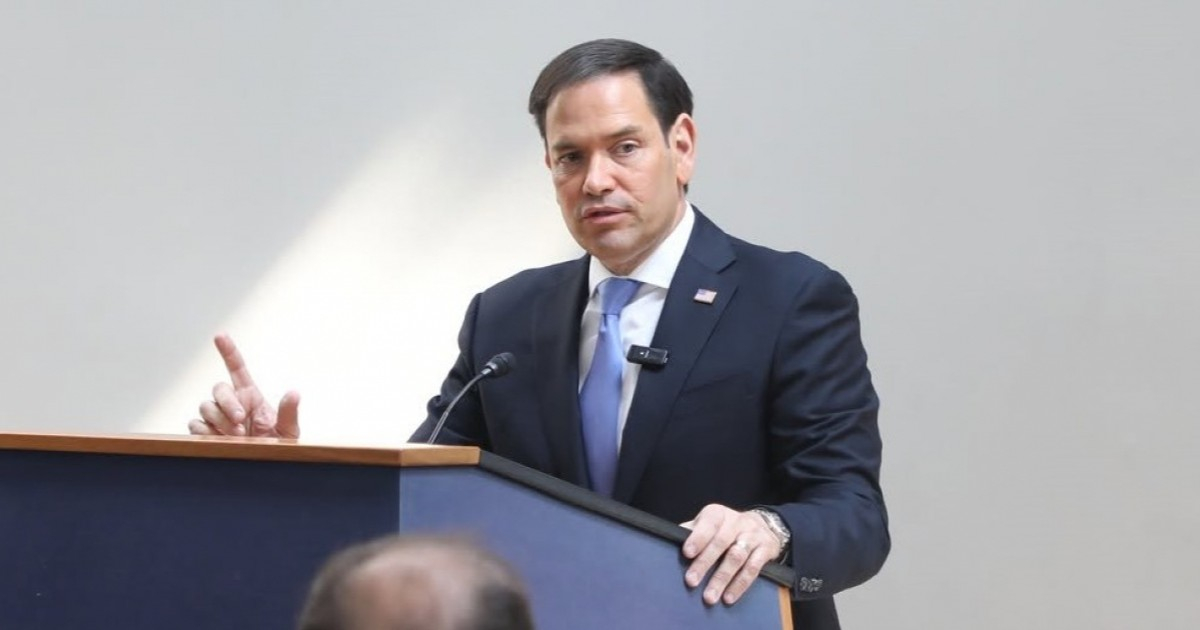
Secretary of State Marco Rubio introduced the report stating, "For over six decades, the Cuban regime has been the primary sponsor of radical leftism and third-worldism in the United States. The American people deserve to know this."
This publication aligns with the Trump administration's policy of maximum pressure, which in June sanctioned the Cuban Institute of Friendship with the Peoples (ICAP) under Executive Order 14404, labeling it as a tool of the Cuban government that "supports Cuban intelligence and counterintelligence activities."
The report concludes by cautioning, "Confusing Cuba's poverty with its harmlessness is to misunderstand the threat entirely."
Understanding Cuban Espionage Activities
What is the focus of the State Department's report on Cuban espionage?
The report highlights that Cuba's Intelligence Directorate continues to operate a network of spies within the United States, infiltrating civilian and military institutions.
Who are some notable figures involved in Cuban espionage against the U.S.?
Notable figures include Victor Manuel Rocha, Ana Belén Montes, and Walter Kendall Myers, all of whom were involved in significant espionage activities for Cuba against the United States.
How has the Cuban espionage threat evolved since the Cold War?
Since the fall of the Soviet Union, the Cuban Intelligence Directorate has refocused its operations almost entirely towards the United States, maintaining its networks and methodologies.