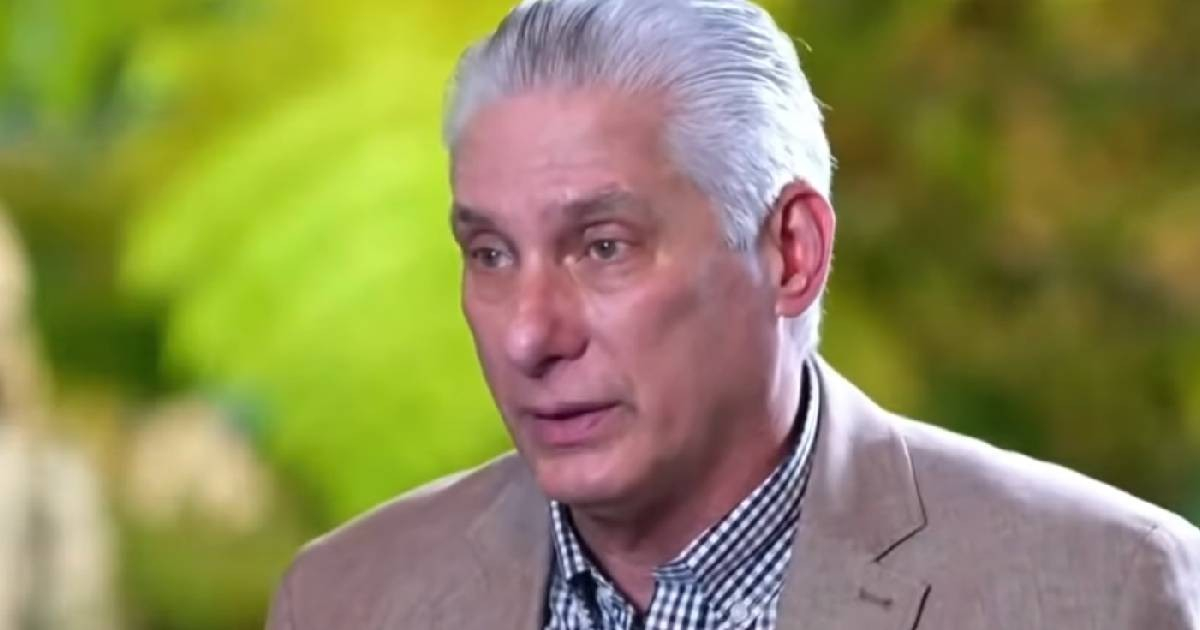
In an exclusive interview with Russian state media outlet RT, Miguel Díaz-Canel proclaimed that numerous businesses and individuals from Latin America, Europe, and Asia are eager to invest in Cuba. This enthusiasm persists despite the continuous attempts by Washington to discourage foreign investments on the island.
The Cuban leader was addressing a question from correspondent Oliver Zamora regarding the feasibility of the new economic reforms that the regime intends to implement shortly.
“There are many people ready to invest in Cuba, scrutinizing the opportunities presented by these transformations in Latin America, the Caribbean, Europe, and Asia. Numerous individuals, companies, and entities are interested in collaborating with Cuba and are determined not to succumb to any dictates imposed by a nation that perceives itself as the world's ruling empire,” he stated.
However, Díaz-Canel admitted that these interactions are often kept under wraps. “Unfortunately, we don't discuss these matters publicly due to a truly aggressive pursuit of anyone wanting to do business with Cuba,” he confessed.
The leader also noted that Cubans residing abroad are exploring "every legal avenue" to engage with the island "honestly, cleanly, and transparently." These remarks come in the wake of the regime's approval in June of a package of 176 economic reforms, which includes opening private banking, allowing foreign investment in small and medium enterprises, and a legal framework for the diaspora to invest in Cuba.
During the same interview, Díaz-Canel vowed that by the end of July, the regime would be ready to implement 121 out of the more than 170 approved reforms, focusing on retirees and vulnerable individuals.
These statements come against the backdrop of an unprecedented energy crisis. Díaz-Canel himself acknowledged to RT that “for six months, no oil tanker has arrived, except for one from Russia.” Cuba requires between 90,000 and 110,000 barrels daily but only produces about 40,000, and the Venezuelan supply collapsed after Nicolás Maduro's capture earlier this year.
Exacerbating the crisis is the exodus of foreign companies triggered by the Trump administration's secondary sanctions against GAESA—the military conglomerate controlling 40% to 70% of Cuba's economy—and related entities. Firms like Sherritt, Meliá, Iberostar, and shipping companies Hapag-Lloyd and CMA CGM exited Cuba before the June 5 deadline set by Washington.
Díaz-Canel criticized the U.S. policy as a “perverse intention,” describing it as a “maximum suffocation, maximum pressure” approach, equating it to “collective punishment” and “an act of genocide.” He compared Cuba's situation to China and Vietnam's reforms to highlight the differences: “When China and Vietnam began their reforms years ago, they weren't blockaded. Hence, no imitation, no replication. We need to create heroically.”
Díaz-Canel's declarations to the Kremlin-friendly media contrast starkly with the reality faced by the Cuban populace: prolonged blackouts, widespread food and fuel shortages, and an ongoing exodus. The regime has spent decades promising reforms that never materialize, and public skepticism about this new set of measures is widespread.
“Even though there is a malicious intent-action by the U.S. Government, trying to limit this, there is great willingness worldwide, and we share that willingness too. The outcome will depend on how we navigate these processes,” the leader concluded.
Frequently Asked Questions About Investment Opportunities in Cuba
What did Díaz-Canel say about foreign investment in Cuba?
Díaz-Canel stated that many businesses and individuals from Latin America, Europe, and Asia are interested in investing in Cuba despite U.S. pressure to deter such investments.
How is the U.S. influencing foreign investments in Cuba?
The U.S. is applying pressure on potential investors to avoid Cuba, implementing secondary sanctions which have led to the withdrawal of several foreign companies from the island.
What economic reforms has the Cuban regime approved?
In June, the Cuban regime approved 176 economic reforms, including the opening of private banking, foreign investment in SMEs, and a legal framework for diaspora investments.
What challenges is Cuba facing in its energy sector?
Cuba is experiencing a severe energy crisis, with a significant shortfall in oil supply, as it produces only 40,000 barrels per day out of the 90,000-110,000 needed, exacerbated by the collapse of Venezuelan supply.