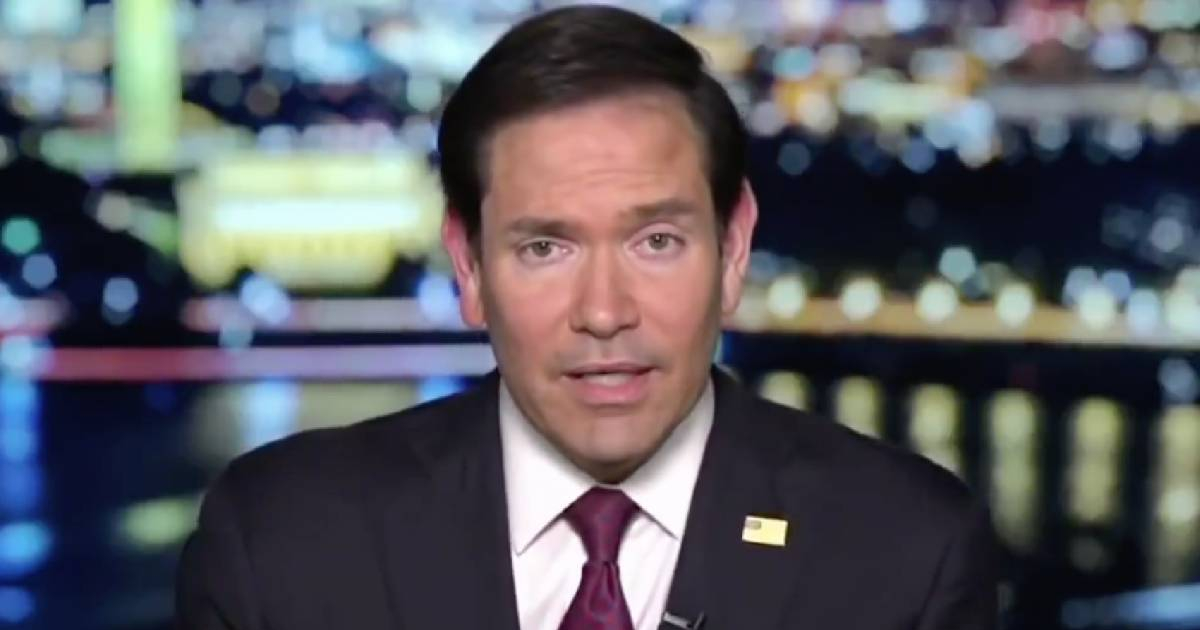
On Monday, the State Department released an approximately 100-page report presented by Secretary of State Marco Rubio, accusing the Cuban regime of being the foremost supporter of radical leftism and third-worldism in the United States for over six decades.
Entitled "Cuba: The Capital of 21st Century Communism," the document is one of the most comprehensive accounts ever published by the U.S. government. It details the ongoing campaign of subversion, espionage, and ideological influence that Havana has waged against Washington since 1959.
“For more than sixty years, the Cuban regime has been the leading sponsor of radical leftism and third-worldism in the United States," wrote Rubio when announcing the report. "The State Department is unveiling the full history of Cuban espionage and subversion in our nation. The American people deserve to know."
The report argues that Cuba developed a unique form of Marxism—distinct from Soviet communism—focused on racial, social, and civilizational grievances. This ideology, which emerged from the 1966 Tricontinental Conference in Havana with over 500 delegates from 82 countries, has fueled the Western radical left, influencing contemporary movements such as Black Lives Matter, Antifa, and anti-ICE networks active in the U.S.
The document provides evidence of how Cuba financed, trained, and directed terrorist groups like the Weather Underground and the Puerto Rican FALN. The FBI recorded around 2,500 bombings in the U.S. between 1971 and 1972—nearly five per day—linked to this influence.
The Shadow of Espionage
Regarding espionage, the report details how Cuban Intelligence infiltrated the highest levels of the U.S. government for decades. Notable cases include Víctor Manuel Rocha, a former ambassador to Bolivia and ex-director of Inter-American Affairs at the National Security Council under Clinton, who was sentenced in April 2024 to 15 years in prison for acting as a Cuban agent for approximately 50 years, and Ana Belén Montes, who was recruited in 1984 as a graduate student at Johns Hopkins and became the top Cuba analyst at the Defense Intelligence Agency.
Active Networks in the U.S.
The report also highlights an active network of organizations operating in the U.S. to advance the regime's interests. The Cuban Institute of Friendship with the Peoples (ICAP), sanctioned by the State Department in June 2026, is described as the central hub of the Cuban intelligence and influence network, with nearly 90% of its staff connected to the island's espionage services.
Another named organization is the Venceremos Brigade, which has transported around 10,000 American activists to Cuba since 1969. A 1975 U.S. Senate report described it as "one of the most extensive and dangerous infiltration operations ever undertaken by a foreign power against the United States."
Geopolitical Threats
The report warns of the geopolitical dimension of the threat: Cuba currently hosts 18 known signal intelligence facilities, including two Russian ones, serving as platforms for Moscow, Beijing, and Tehran to project power against the U.S. just 90 miles from Florida.
The document concludes with a stark warning: "Mistaking Cuba's poverty for harmlessness is a complete misunderstanding of the threat. Its material weakness was never the measure of its danger. Its power has always been ideological, subversive, and parasitic."
This report comes amid heightened pressure from the Trump administration on Havana, including sanctions on the Cuban Intelligence Directorate and the military conglomerate GAESA. While the regime allocates resources to sustain foreign subversion networks, the Cuban people endure blackouts lasting up to 20 hours a day and an unprecedented economic crisis.
Understanding the Cuban Influence
What is the significance of the Tricontinental Conference mentioned in the report?
The Tricontinental Conference of 1966 in Havana was a significant event where Cuba's unique form of Marxism, focused on racial and social grievances, was developed. It became influential in shaping the ideologies of various radical left movements in the West.
How has Cuban intelligence influenced U.S. domestic affairs?
Cuban intelligence has infiltrated high levels of the U.S. government, with operatives like Víctor Manuel Rocha and Ana Belén Montes having served as agents for decades. These infiltrations have significantly influenced U.S. domestic and foreign policy.
What role does ICAP play in Cuba's influence operations?
The Cuban Institute of Friendship with the Peoples (ICAP) operates as the central node of Cuba's intelligence and influence network in the U.S., with a significant portion of its personnel linked to espionage activities.