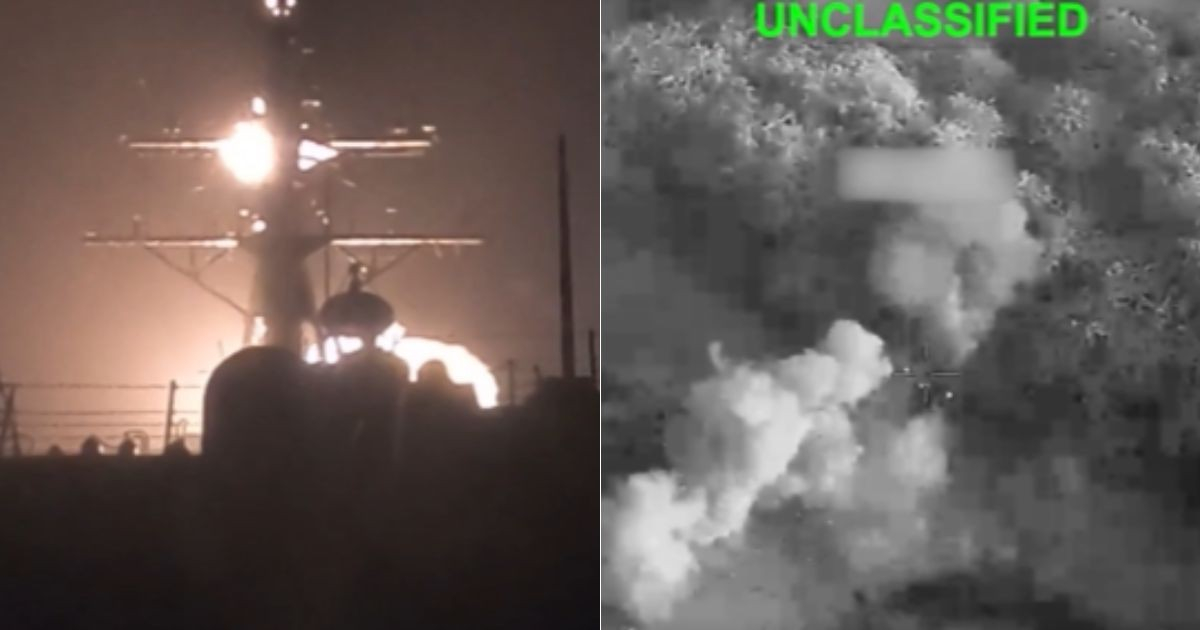
The United States Central Command (CENTCOM) has carried out airstrikes on Iran for the ninth consecutive night, concluding what it called a "weekend surge" on Sunday. This announcement was made in an official statement released from Tampa, Florida.
According to the statement, the airstrikes wrapped up at 10:00 p.m. Eastern Time on July 19, following about three hours of operations. The strikes targeted Iranian military command centers, air defense and coastal surveillance facilities, maritime capabilities, missile and drone launch bases, and communication networks.
CENTCOM's declared aim is to "further diminish Iran's ability to target commercial vessels and civilian sailors transiting the Strait of Hormuz." The statement closes with a stern warning: "The U.S. Armed Forces are holding Iran accountable, following the commander-in-chief's directives. CENTCOM forces remain on high alert, focused, lethal, and ready."
This latest wave is part of the conflict's second phase, which reignited on July 8 when President Donald Trump ended the ceasefire with Iran at the NATO summit in Ankara. This decision followed Iranian attacks on three merchant ships in the Strait of Hormuz on July 6 and 7. "The ceasefire with Iran is over," Trump declared, adding, "We're going to hit them very hard." Since then, the U.S. has struck over 300 Iranian military targets in consecutive night operations.
The conflict has resulted in American casualties. On Friday, July 17, Iran's Islamic Revolutionary Guard Corps launched ballistic missiles and drones at the Al Azraq airbase in Jordan, killing two soldiers and leaving a third missing. The total number of U.S. military casualties in the conflict has reached 16. Earlier, on July 9, Iran fired 10 ballistic missiles at the same base, with Jordan intercepting eight without any reported casualties.
Iran officially suspended its agreement with Washington on July 18 and has framed its actions as part of the "Operation Saeqeh" (Lightning), launched in retaliation for U.S. bombings. Tehran also announced the closure of the Strait of Hormuz, though Washington insists the maritime route remains open. On July 13, the U.S. employed one-way attack maritime drones against Iranian targets for the first time, marking a new technological escalation in the conflict.
On July 15, Trump issued a direct ultimatum to Iranian leaders during a Fox News interview: "You better make a deal. There won't be anyone left," while noting that Iran "is negotiating now." The current military deployment is the largest U.S. air reinforcement in the region since the Gulf Wars, with up to 300 combat aircraft mobilized, including F-16 and F-35 fighters sent to the Middle East from bases in Germany and the United Kingdom.
The roots of this conflict trace back to February 28, 2026, when Trump announced "Operation Epic Fury," a joint offensive with Israel that struck thousands of Iranian targets, destroyed nuclear facilities in Natanz, Isfahan, and Fordow, and resulted in the death of Supreme Leader Ali Khamenei on March 1, 2026. After 38 days of fighting, the Islamabad Memorandum was signed between June 17 and 19, a 60-day ceasefire mediated by Pakistan, Qatar, Saudi Arabia, and Turkey, which Iran broke weeks later with the attacks in the Strait of Hormuz.
FAQs on the U.S.-Iran Conflict
What is the main goal of the U.S. airstrikes on Iran?
The main goal of the U.S. airstrikes is to reduce Iran's capability to target commercial vessels and civilian sailors transiting the Strait of Hormuz.
How has Iran responded to the U.S. bombings?
Iran responded by formally suspending its agreement with Washington and launching "Operation Saeqeh" (Lightning) as a form of retaliation.
What technological advancements have been utilized in the conflict?
The U.S. has employed one-way attack maritime drones against Iranian targets, marking a new technological escalation in the conflict.
What triggered the latest phase of the U.S.-Iran conflict?
The latest phase was triggered when President Trump ended the ceasefire with Iran following attacks on merchant ships in the Strait of Hormuz.