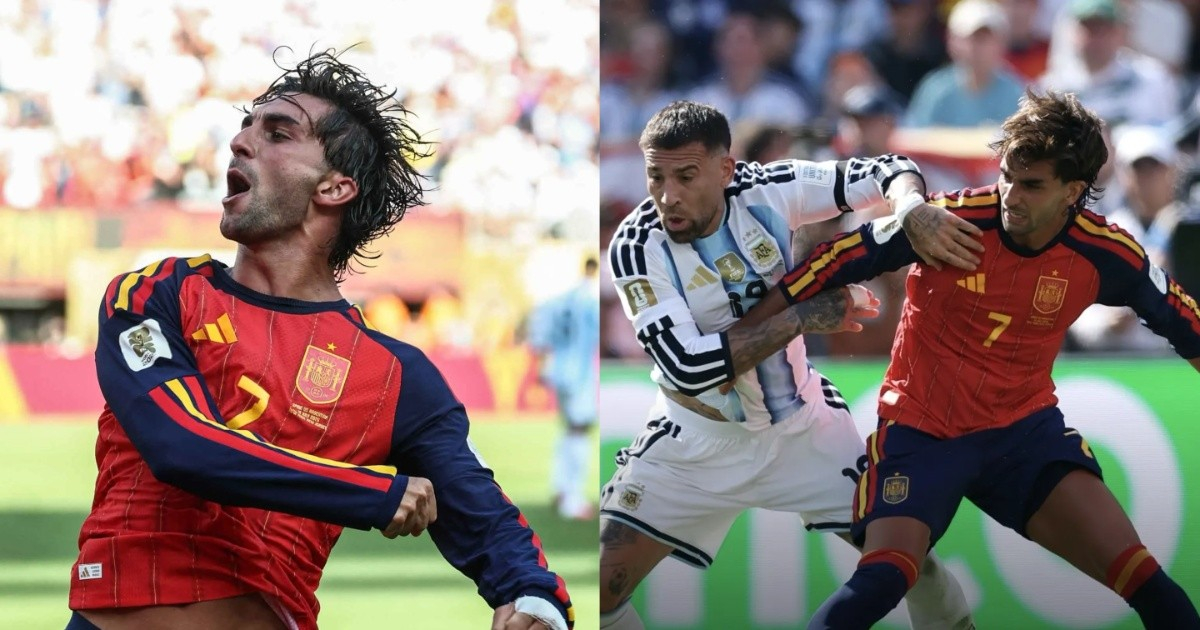
Spain secured their second World Cup victory this past Sunday by defeating Argentina in the final held at MetLife Stadium in New Jersey. The decisive moment came through a goal by Ferrán Torres in the 106th minute of extra time, sealing the championship for La Roja.
As reported by Marca, Torres capitalized on a rebound in the box and delivered a powerful shot over goalkeeper Emiliano "Dibu" Martínez, marking his first goal of the tournament and emerging as Spain's hero, in a fashion reminiscent of Andrés Iniesta's legendary performance in the 2010 South Africa final.
Game Dynamics: Dominance and Discipline
The match extended into extra time following a scoreless draw at the end of the 90 minutes, during which Spain maintained complete control over the reigning champions. Remarkably, Argentina failed to register a single shot during regulation time, becoming the first team in World Cup final history to not attempt a shot on goal in the standard play duration.
The conclusion of normal time brought further complications for Lionel Scaloni's team. Enzo Fernández was sent off in the 93rd minute due to a second yellow card, the first being for dissent in the 82nd minute, and the second for a harsh tackle on Pau Cubarsí. This left Argentina with ten men to face the extra period.
Spain's Tactical Brilliance and Key Performers
With a numerical advantage on the field, Spain leveraged their position to find the winning goal through Torres in the 106th minute. Up until then, Torres had been instrumental in providing crucial assists, such as the setup for Mikel Merino’s goal against Portugal in the round of 16.
Lamine Yamal also emerged as a pivotal figure for Luis de la Fuente's squad throughout the tournament. He led the World Cup in successful dribbles, completing 30, and scored against Saudi Arabia, becoming the second-youngest goal scorer in World Cup history at 18 years and 343 days.
In contrast, Lionel Messi and Julián Álvarez struggled to make an impact in the final, unable to pose any significant threat against Spain's impregnable defense.
A Historic Encounter and Spain's Ascendancy
This triumph marks Spain's second World Cup star, achieved 16 years after their initial victory when the golden generation featuring Xavi, Iniesta, and Villa defeated the Netherlands in Johannesburg.
The final also represented the first-ever World Cup confrontation between these two nations, a match that Spain decisively won through tactical superiority and a touch of luck at a critical juncture.
Argentina, having entered the tournament as the defending champions from their 2022 Qatar victory, was unable to retain their title and now faces a four-year drought without the world's most coveted football trophy.
The match officiated by Slovenian referee Slavko Vinčić will be remembered as the night Ferrán Torres, with a singular shot throughout the tournament, etched his name alongside Spain's football legends.
FAQs about Spain's World Cup Victory
How did Ferrán Torres score the winning goal?
Ferrán Torres scored the winning goal by capitalizing on a rebound in the box and delivering a powerful shot over Argentina's goalkeeper Emiliano Martínez in the 106th minute of extra time.
What was significant about Spain's defense during the final?
Spain's defense was significant as they completely neutralized Argentina's attack, preventing them from making a single shot on goal during the regulation time, a first in World Cup finals history.
Who was a standout performer for Spain in the tournament?
Lamine Yamal was a standout performer, leading the tournament in successful dribbles and becoming the second-youngest goal scorer in World Cup history.