On July 15, Armando Rodríguez Batista, Cuba's Minister of Science, Technology, and Environment, presented "eight guiding proposals on scientific policies for sustainable development" at UNESCO's headquarters in Paris, as reported by Cuba's Ministry of Foreign Affairs.
Rodríguez Batista spoke during the high-level ministerial segment of the World Conference on the International Decade of Sciences for Sustainable Development (2024-2033). This event, launched on that day, gathered government representatives, UN agencies, and universities from around the globe, according to the source.
His address occurred a day after Cuba's National Electric System experienced its fifth total collapse of the year. The blackout on July 14 left the island without power just hours before the minister addressed the international forum.
Mere days before the conference, Cuba recorded an unprecedented electric deficit of 2,341 MW, the highest level ever documented in the country. In July 2026, blackouts averaged between twenty to twenty-four hours daily, with some provinces experiencing outages extending beyond 40 consecutive hours.
In this dire context, the minister invoked Fidel Castro's assertion that the future of the nation should be "a future of people of science" and described a science, technology, and innovation system as a public policy supposedly serving national development.
Among the eight proposals were consolidating national systems of science and innovation, highlighting that Cuba has approximately 50 universities and a vast network of research centers, providing scientific support for environmental decisions, promoting participatory science governance, and enhancing capabilities to protect intellectual property and access international funding.
As an example of "mission-oriented innovation," the minister emphasized the development of Cuban-made COVID-19 vaccines and mentioned the State Plan for Confronting Climate Change, known as Tarea Vida, noting that about 20% of the national territory is under some category of protected area.
The eighth proposal provided a platform to blame the U.S. embargo for Cuba's woes. "The economic, commercial, and financial blockade imposed by the United States Government continues to be the main obstacle to Cuba's sustainable development and a serious limitation for scientific progress and international cooperation," asserted the CITMA head, as per the Minrex note.
To illustrate the impact of sanctions, the minister used a vivid image depicting daily Cuban life: "Imagine having to run a research center or a hospital without electricity," he told the UNESCO audience. However, he avoided discussing the regime's responsibility for the situation scientists, doctors, and students face daily on the island.
The University of Havana suspended in-person classes in February 2026 due to fuel shortages and blackouts, and the Ministry of Higher Education postponed university entrance exams planned for June, aiming for the 2026-2027 academic year.
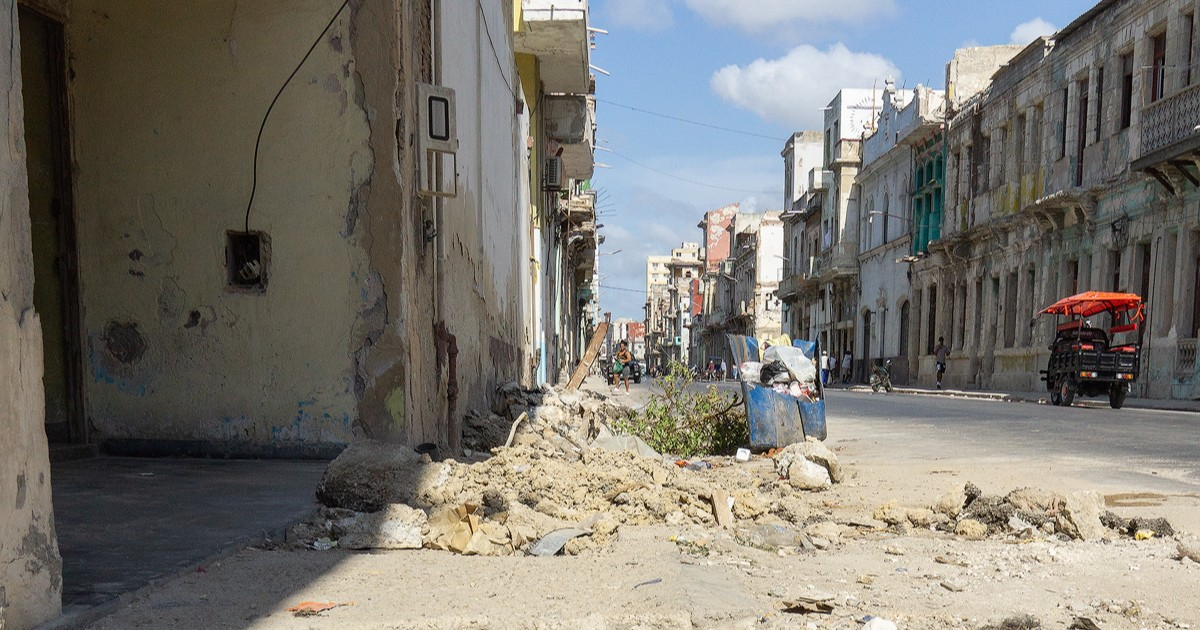
This diplomatic pattern is not new. In April 2026, Cuba's representative to UNESCO, Dulce Buergo, had already echoed the same rhetoric of blaming the embargo while the country endured blackouts lasting up to 25 hours daily. Rodríguez Batista himself acknowledged the waste crisis in the capital in September 2025 with a revealing statement: "That garbage is not contained; it is scattered all over Havana."
Mass emigration has reduced the Cuban population from 11 million to just over 8 million people, food production has dropped by 60%, and medication reserves are at 30% of normal levels. In such a home scenario, a Cuban government official lectured in Paris about "sustainable development."
Frequently Asked Questions about Cuba's Sustainable Development Proposals
What were the main proposals Cuba presented at UNESCO?
Cuba presented eight proposals focusing on consolidating national systems of science and innovation, providing scientific support for environmental decisions, promoting participatory science governance, and enhancing capabilities to protect intellectual property and access international funding.
How did Cuba's energy crisis impact its presentation at UNESCO?
Cuba's energy crisis, marked by a blackout the day before the presentation and a historic electric deficit, highlighted the country's infrastructural challenges, casting doubt on its ability to implement sustainable development policies effectively.
How did Cuba's government address the impact of the U.S. embargo at UNESCO?
Cuba's government blamed the U.S. embargo as the primary obstacle to the country's sustainable development and scientific progress, stating that it severely limits international cooperation.