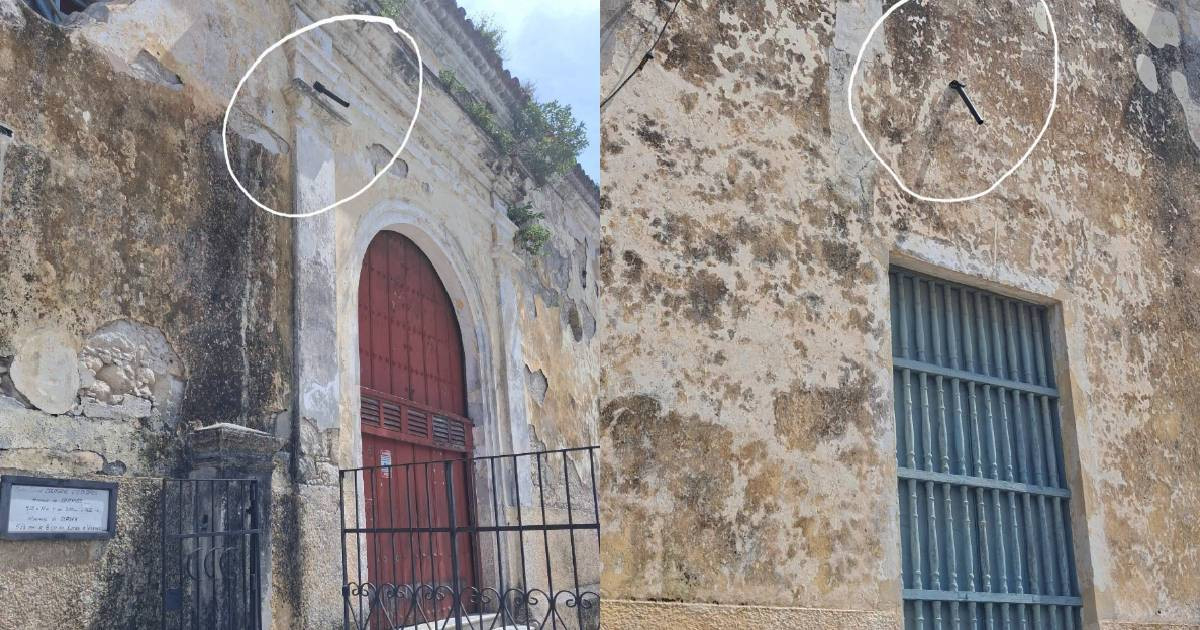
The Piarist community in Havana publicly reported on Friday that solar lamps installed at their parish were stolen. These lamps, which were acquired through donations and collective effort, were meant to keep the religious and educational space well-lit and secure.
In a statement shared on Facebook, the congregation described the theft as the latest in a series of "ongoing robberies" affecting the community. They declared, "We refuse to normalize this situation. We will not remain silent nor will we resign ourselves."
Located at 830 San Nicolás Street in the Los Sitios neighborhood of Centro Habana, the Parish of St. Jude Thaddeus and St. Nicholas of Bari has been the target of repeated material attacks for months.
The Struggle for Community Security
"While we understand we are living in challenging times, that does not grant anyone the right to attack what belongs to everyone," the congregation stated. "Every theft represents not just a material loss—it strikes at the heart of community spirit, the effort we put in, and the respect a place for service and education deserves."
This theft is not an isolated incident. Since 2026 began, the parish has endured at least four fires, caused by burning trash dumped in front of the church, which first destroyed the main door and subsequently the side entrance.
Lack of Official Response
Their repeated complaints to the Cuban Communist Party and the Centro Habana Government have not resulted in any effective action. The Piarists summarized their frustration in a previous communiqué: "We have been heard. Plans have been made. Promises have been given. Yet, action remains absent."
This problem is not unique to this parish. A commenter on the post mentioned that the parish of the Miraculous Medal in Santos Suárez also suffered the theft of similar solar lamps.
Public reactions to the report show a combination of anger and resignation. "There's no respect even for the house of God," a user commented.
Wider Implications and Public Sentiment
Another user linked the issue to the political climate: "This is the government's doing; they don't care. But if there were a protest sign here, they’d act immediately. The police aren't for this; they're for those who demand a better life."
Several comments connected the incident to the broader social collapse. "This is proof of the Cuban regime's social failure," one citizen wrote, adding that similar thefts occurred in his neighborhood, with the perpetrators being young people driven by need and lack of opportunities.
One user bluntly called it a "failed state," accusing the regime of trying to deny the obvious.
Rising Crime Amidst Economic Crisis
The theft of solar equipment has become a nationwide issue, exacerbated by the electrical crisis, with blackouts lasting over 20 hours daily, making these devices highly valuable on the black market.
The Cuban Citizen Audit Observatory reported a 115% increase in crime in 2025 compared to 2024, documenting 1,536 theft cases.
Since March 2023, over 50 thefts and vandalism acts have been reported in 34 parishes and churches across the island, highlighting that churches have become a frequent target in a lawless environment, fueled by impunity and the regime’s institutional collapse.
Understanding the Increase in Theft and Crime in Cuba
What is the significance of the theft of solar lamps from the Piarist parish in Havana?
The theft of solar lamps from the Piarist parish highlights the deteriorating security situation in Cuba, where even community and religious spaces are not spared from criminal activities. It underscores the broader social and economic challenges facing the country.
Why have solar lamps become targets for theft in Cuba?
Solar lamps have become targets for theft due to the ongoing electrical crisis in Cuba, where frequent and prolonged blackouts make these devices extremely valuable on the informal market.
How is the Cuban government responding to the increase in crime?
Despite repeated complaints from victims, the Cuban government has not effectively addressed the rise in crime. Promises have been made, but tangible actions to curb the issue remain lacking.