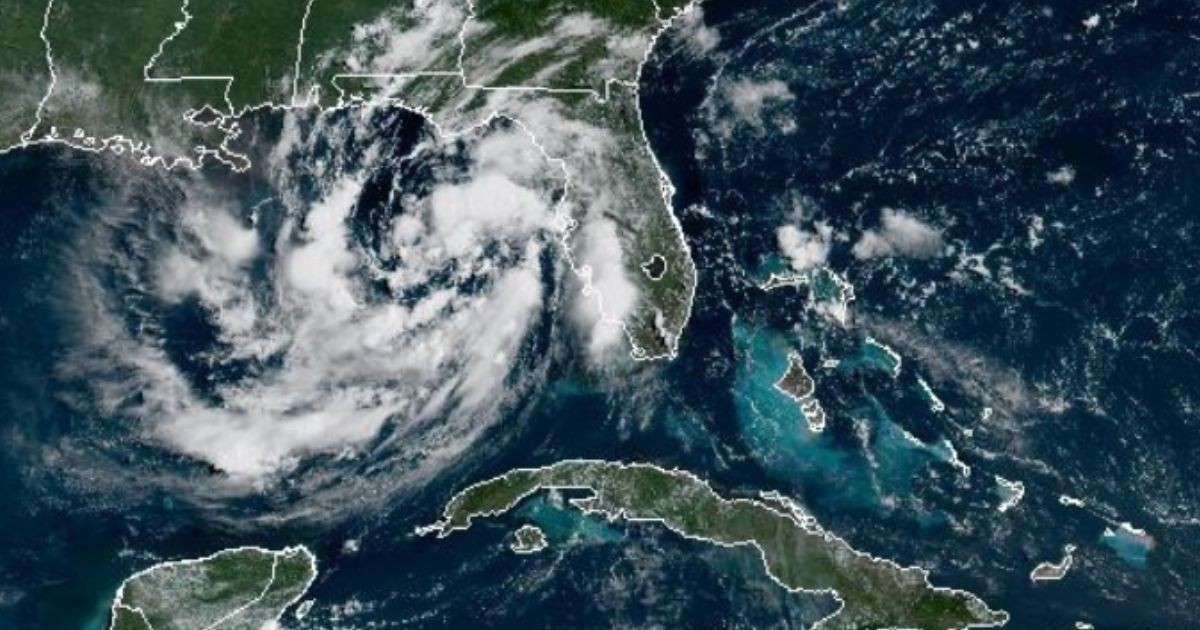
The National Hurricane Center (NHC) issued its initial advisory on Sunday for Tropical Depression Two, a system that has developed in the northeastern Gulf of Mexico approximately 155 miles south of Panama City, Florida. This development has prompted a tropical storm watch for the coastal stretch of northwest Florida, extending from the Ochlockonee River to the Alabama border.
According to the NHC's first advisory, released at 10:00 AM Central Time, the system was exhibiting maximum sustained winds of 30 mph (45 km/h) with higher gusts, and a minimum central pressure of 1,011 millibars.
The depression was moving extremely slowly at just two miles per hour in a north-northwest direction.
Tropical Storm Watch in Effect
The tropical storm watch affects the coastal region from the Ochlockonee River to the Alabama border, covering much of Florida's Panhandle.
The NHC clarified that this alert category indicates that "tropical storm conditions are possible within the watch area, in this instance, within the next 36 to 48 hours."
Expected Intensification
The agency forecasted that the depression will gradually strengthen and is anticipated to become a tropical storm by Sunday night or Monday, potentially being named Bertha as the second named storm of the 2026 season.
The projected path suggests that the system will move slowly northwest or north-northwest for a day or two, then turn westward, skirting the northern Gulf coast in the coming days.
The NHC issued a warning that "additional watches may be required within the next day or two."
Potential Threats and Dangers
Primary hazards identified include storm surges, with levels ranging from one to three feet from Indian Pass to Chassahowitzka, and rainfall, which could accumulate between two and four inches across most of the affected area, with local totals up to eight inches by Thursday along the Gulf's eastern and central coasts, from western Florida to parts of southern Alabama, Mississippi, and Louisiana.
The NHC cautioned that these rains might trigger flash flooding, particularly in urban areas.
Development and Monitoring
The system has been under observation since Wednesday when it was identified as a low-pressure area with only a 20% chance of development.
By Saturday, despite the system lacking a defined circulation, the chances remained low, but by Sunday, they had surged to 80% before the NHC officially classified it as a tropical depression.
From the start of monitoring, meteorologists predicted that rainfall would be the primary threat regardless of its classification.
Meteorologist Matt Devitt described it as a possible rainmaker for Florida, while Alex DaSilva from AccuWeather noted that "warm waters could allow for rapid intensification and the forecast may change quickly."
2026 Hurricane Season Outlook
The 2026 hurricane season is expected to be below the historical average: Colorado State University reduced its forecast in July to only nine named storms, four hurricanes, and one major hurricane for the entire year, partly due to the strengthening of El Niño.
If Tropical Depression Two becomes Bertha, it will be the second named system of the season, following Arthur, which impacted Texas and Louisiana in mid-June without reaching hurricane status.
Frequently Asked Questions About Tropical Storm Bertha
What areas are under the tropical storm watch in Florida?
The tropical storm watch affects the coastal areas from the Ochlockonee River to the Alabama border, covering much of Florida's Panhandle.
What are the potential threats from Tropical Depression Two?
Key threats include storm surges of one to three feet, significant rainfall of two to four inches with local totals up to eight inches, and potential flash flooding, especially in urban areas.
How is the 2026 hurricane season expected to compare to previous years?
The 2026 hurricane season is projected to be below average, with forecasts suggesting only nine named storms, four hurricanes, and one major hurricane, partly due to the influence of El Niño.