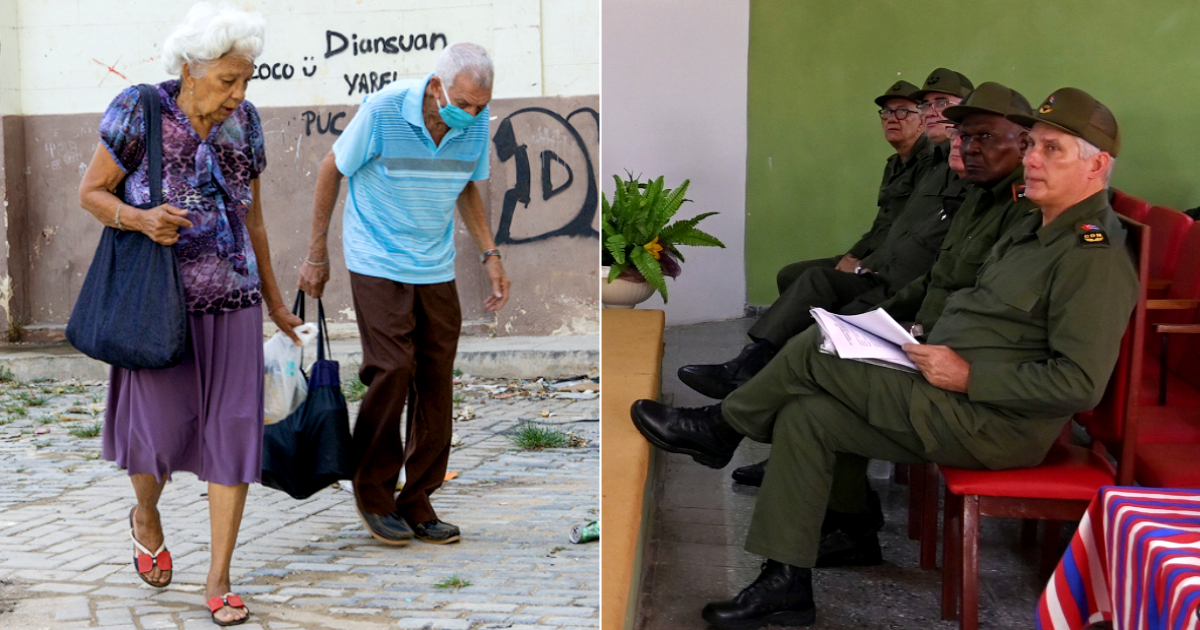
Recent remarks by Miguel Díaz-Canel claiming that the increase in wages and pensions is evidence that the regime's reforms "protect those in the most difficult situations" have sparked a wave of reactions on CiberCuba's Facebook page.
The majority of comments expressed skepticism, frustration, and disbelief, challenging a measure many believe won't alleviate the ongoing economic crisis afflicting the population. Instead of embracing the official narrative, most users voiced their doubts about the efficacy of the increase and its portrayal as a step forward in social protection.
Public Outcry Over Wage Increase
The post, summarizing Díaz-Canel's words during his visit to the Municipal Defense Council in East Havana, garnered hundreds of comments questioning both the extent of the increase and the official narrative. A particularly resonant comment read: "Barely enough to eat poorly for three days." Others described the raise as "a mockery" or "a mere smokescreen to distract the public."
Inflation Concerns Take Center Stage
Inflation was a recurring theme among the reactions. Many argued that raising wages without boosting production or stabilizing the economy would only trigger further price hikes. "Increasing wages with a devalued peso is pointless," one person noted. Another recalled the repercussions of the "Tarea Ordenamiento," warning, "Remember what happened when wages were increased? The currency lost value, and the dollar skyrocketed. Haven't they learned from past mistakes?"
The Real Issue: Purchasing Power
A significant number of respondents insisted that the core problem isn't the nominal wage amount but its purchasing power. Many highlighted that the increase barely covers essential goods. One user remarked, "It only protects you enough to buy a bottle of oil," while another joked that the raise is "enough for a carton of eggs." A pointed comment summed it up: "Nobody in this country can eat and survive a month on these pensions and salaries."
Economic Reality vs. Government Claims
Comparisons to the real cost of living were also abundant. Some commenters asserted that the increase falls far short of meeting a Cuban family's actual needs. "It requires at least twenty times the current raise to survive," one reader claimed. Another noted that the government "lives in a bubble," oblivious to the actual cost of food and essential goods.
Calls for a Shift in Focus
The criticisms extended beyond the wage increase itself. Many participants urged the regime to shift focus from salary hikes to boosting national production. "What you need to increase is production and incentives for agriculture, livestock, pork, and poultry," one user remarked. Another suggested that "instead of raising wages, solutions should be found in agricultural, industrial, and livestock production; otherwise, even a ten-thousand-peso increase won't suffice."
Banking Challenges Highlighted
Another issue repeatedly mentioned was the difficulty accessing money deposited in bank cards. Some users reported that many workers and retirees resort to intermediaries to withdraw cash, losing a significant portion of their income. One reader explained that in Santiago de Cuba, those paid via card "must leave between 40% and 50% to those who secure them cash." Others noted that salaries often don't arrive on time, and checking Transfermóvil is challenging due to poor coverage.
Criticism of Government's Social Claims
Díaz-Canel's promises of protection for vulnerable sectors faced particular scrutiny. "It's clear he knows nothing about this," one user wrote. Another suggested that leaders should "live on a similar salary without any benefits" to understand the daily reality of Cubans. Some interpreted the announcement as a political maneuver to project social concern without addressing the root causes of the economic crisis.
Alternative solutions were proposed by some readers, such as reducing the prices of state-controlled goods and services. "Why don't they lower the prices of products and tariffs controlled by the government so that people can meet their needs with the state-paid salary?" one commenter asked.
The critiques also reflected concerns that the increase might end up like other economic measures from recent years. "Now we're really screwed with this wage increase again," one user commented, convinced that prices will soar once more.
Overall, the responses on CiberCuba's Facebook page reveal a significant disconnect between the official discourse and the perception of many citizens. While the government presents the wage increase as a commitment to vulnerable sectors, the majority of participants in the discussion view it as insufficient to tackle persistent inflation, the depreciation of the Cuban peso, and the high cost of living—issues they believe continue to undermine any announced salary improvements by the regime.
Questions About Díaz-Canel's Wage Increase Announcement
Why are Cubans skeptical about the wage increase?
Many Cubans believe that without increasing production or stabilizing the economy, raising wages will only lead to more inflation and won't alleviate the current economic crisis.
What concerns are being raised regarding inflation?
There is widespread concern that increasing wages without economic stability will lead to further price hikes, worsening inflation and eroding purchasing power.
How do citizens view the purchasing power of the new wages?
Many citizens feel that the wage increase barely covers basic essentials, highlighting the gap between nominal wage amounts and their actual purchasing power.
What alternative solutions are being proposed?
Some propose focusing on increasing production and reducing state-controlled prices to improve the real value of wages and meet the population's needs.