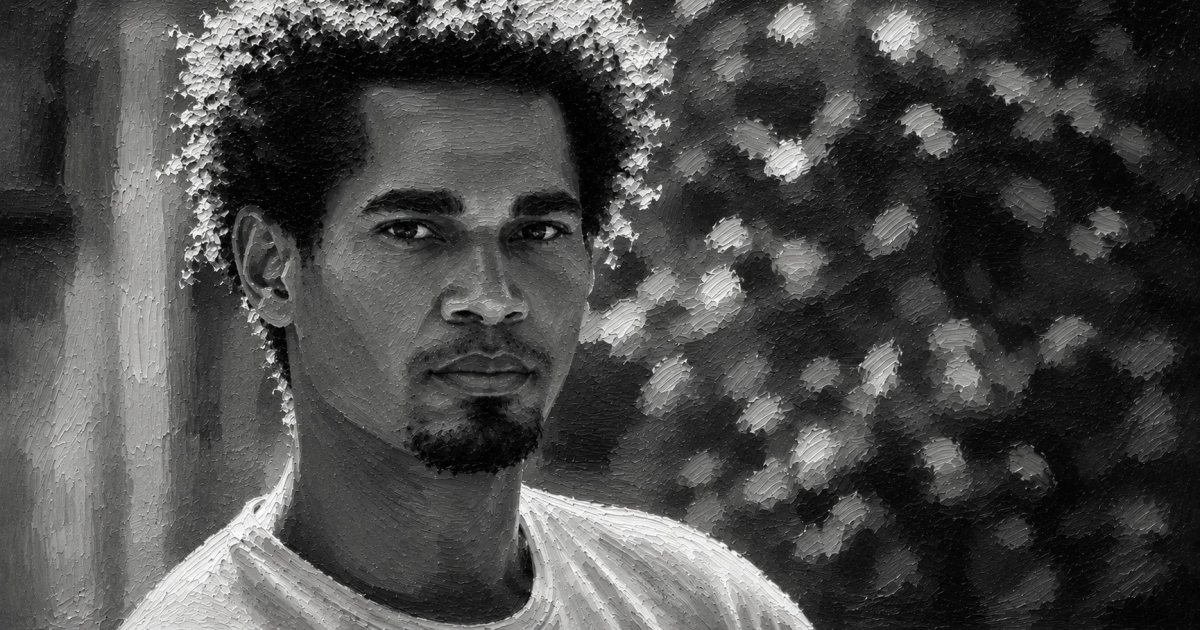
Reflecting on the nights when survival seemed uncertain in a prison cell, I can vividly understand what Luis Manuel Otero Alcántara has endured over the past five years. The mental strain on a political prisoner is relentless. Every move from the guards or fellow inmates could mask a threat, a provocation, or an attack. What seems a kind gesture might be a trap; every relocation could mean a beating, a calculated attempt to break one's health, spirit, honor, and public image. It's a constant battle against those skilled in cruelty.
On November 18, 2024, around 7:30 AM, six members of the "Conduce" squad arrived at my cell, instructing me to get dressed for a transfer to Boniato prison's so-called hospital. I refused. For nearly three years, I'd heard about that place: prisoners suffering from tuberculosis, malnutrition, scabies, and other infections; men who entered sick and left dead. I suspected they might try to infect me.
My refusal led to violence. They assaulted me, twisted my arms behind my back, and subjected me to a torture known as "the bicycle," forcing me to tiptoe forward. They threw me into a cage vehicle for transport. Once at Boniato, refusing to exit, they hurled me onto a rocky ground and dragged me to the hospital with blows. My right arm was injured, and my shorts and parts of my body were bloodied.
Then, a political police major, who goes by Julio Fonseca, arrived, pretending concern over my condition. His message was straightforward: the only way out for me and my family was to leave Cuba. This is how the tyranny operates: first, it beats, tortures, isolates, and buries you alive; then, they send the "friendly" officer to offer exile as salvation. I rejected the offer.
On January 16, 2025, I was released along with Félix Navarro and other prisoners, amidst Vatican negotiations and measures announced by the Biden administration regarding Cuba. Havana framed the releases as a gesture, yet never stopped demanding silence and political inactivity. Upon refusal, we were re-imprisoned, returning to jail on April 29.
This time, I made a decision: if the regime incarcerated me again, I would leave the country to prevent the Patriotic Union of Cuba from remaining trapped in this cycle: upon release, we would rebuild activism; once back in prison, repression would stall nearly everything. The political police, led against me by a colonel known as Ramsés, tried to impose conditions: sending me to Guyana or Nicaragua without my family, extracting favorable statements towards a U.S.-Cuba dialogue orchestrated by the dictatorship, and obtaining manipulable images or audio. I refused. I would leave with my dignity intact.
Thus, learning that Luis Manuel was removed from Guanajay and taken to an undisclosed location made me think of this method. After serving his sentence on July 9, he remained under the regime's captivity; Anamely Ramos received a brief call where he couldn't disclose his whereabouts. Now it is reported that the United States has approved his humanitarian parole and his departure is being arranged, though he remains under Cuban authorities' control while awaiting exit.
I can imagine the psychological pressures, hidden cameras, false politeness, improved meals, and attempts to present him well. The dictatorship needs to create a façade. It aims to expel him while fabricating material to later undermine his resolve and credibility.
If Luis Manuel Otero had capitulated, he would've been expelled years ago to any destination convenient for the regime. He withstood five years of infernal conditions because he defended his right to choose where to rebuild his life and continue his struggle. He doesn't leave Cuba due to lack of love for the homeland. He is exiled because the dictatorship cannot tolerate his art, rebellion, or ability to inspire the youth.
The same is attempted with other political prisoners. We've received reports that, if someone pays the fare and another country accepts them, they can be taken straight from prison to the airport. Among those mentioned is Daniel Moreno de la Peña, imprisoned in Santiago de Cuba.
The aim is not humanitarian. It seeks to dispose of the staunchest, reduce international pressure, and stage a tragicomedy of supposed openness, while maintaining intact the subordinate courts, dark prisons, and the criminal political police that uphold the despotic regime.
Luis Manuel will arrive in exile to begin a new chapter. The regime fears he will continue inspiring artists, the youth, and neighborhoods in Cuba protesting against power outages, hunger, poverty, and oppression. It fears his example will help build a free, democratic, just, and prosperous Cuba; a nation with rights, fair wages, food, medicine, and opportunities; a Cuba for everyone and for the benefit of all, as Martí dreamed.
Let's welcome Luis Manuel Otero Alcántara. Let us rejoice that another good Cuban escapes the hellish prisons of Castro-communism alive. Let's stand by him so his voice continues to reach those on the front lines, where fighting is most perilous.
As poet Henry Longfellow wrote, "Great lives remind us we can ennoble ours and leave footprints on the sands of time."
Luis Manuel has already left his and will continue to do so, just as Félix Navarro, his daughter Saily, and many other political prisoners will continue to demonstrate in the tyranny's jails—individuals we must not forget for a single moment.
Understanding Luis Manuel Otero's Struggle for Freedom
Who is Luis Manuel Otero Alcántara?
Luis Manuel Otero Alcántara is a Cuban artist and activist known for his resistance against the Cuban regime, advocating for freedom of expression and political reform.
Why was Luis Manuel Otero detained?
He was detained due to his activism and art, which the Cuban government deemed as rebellious and a threat to their control.
What is the current status of Luis Manuel Otero?
Luis Manuel Otero is awaiting a humanitarian parole approved by the United States, preparing to leave Cuba while still under regime control.