This past Saturday, Iran officially announced the suspension of its commitments under the Islamabad Memorandum, a precarious ceasefire agreement reached with the United States last month. The decision comes amidst an intensifying conflict that has resulted in numerous fatalities and injuries on both sides.
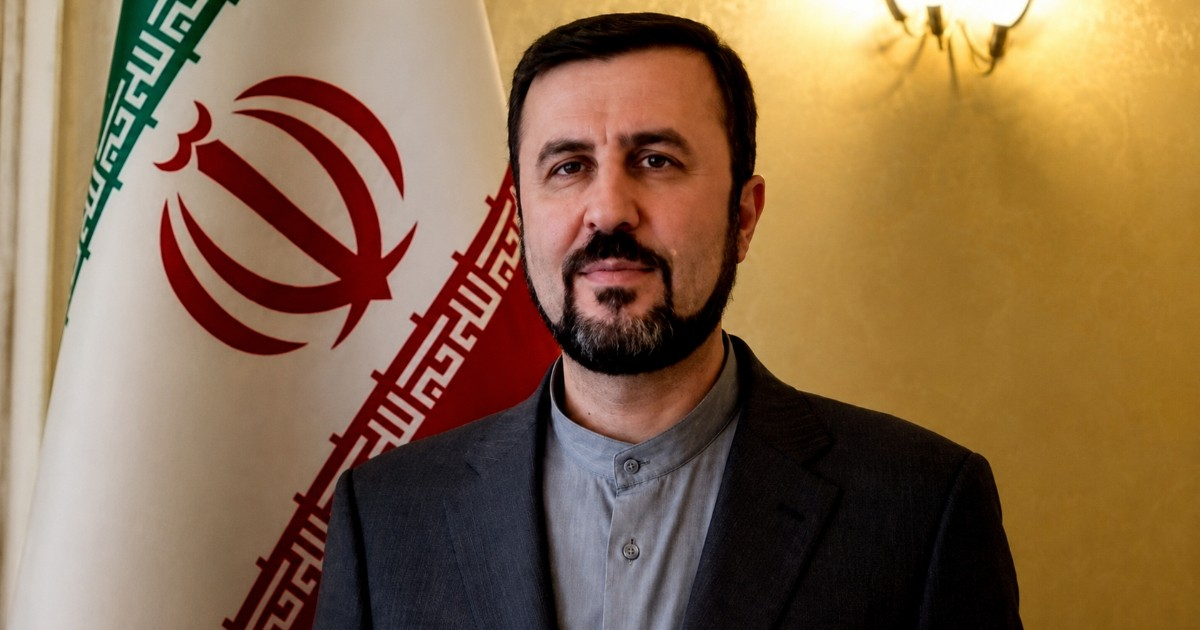
The Times of Israel reported that Iran's Deputy Foreign Minister, Kazem Gharibabadi, conveyed the decision through the Fars news agency, accusing Washington of initially breaching the agreement: "The United States has violated and halted all its obligations under the Islamabad Memorandum."
"We have also suspended our commitments; we are not implementing them, and are focused on defending our nation," Gharibabadi added in his statement.
Collapse of Ceasefire Agreement
The memorandum, facilitated by Pakistan with participation from Qatar, Saudi Arabia, and Turkey, was electronically signed by President Donald Trump on June 17, 2026, and officially ratified in Switzerland by Vice President JD Vance and Iranian Foreign Minister Abbas Araghchi on June 18 and 19.
The agreement had outlined a 60-day truce, the reopening of the Strait of Hormuz, the start of nuclear disarmament talks, and the unfreezing of $12 billion to $25 billion in Iranian assets. However, the brief document left at least eight critical issues unresolved, leading to immediate conflicting interpretations from both parties.
Escalation of Hostilities
The situation deteriorated when the Islamic Revolutionary Guard attacked commercial vessels in the Strait of Hormuz on July 6 and 7. This prompted Trump to declare the deal "terminated" during a NATO summit in Ankara on July 8.
Since then, the U.S. has conducted at least five consecutive waves of bombings on over 300 Iranian military targets, including missile installations, drones, and Revolutionary Guard naval capabilities.
In retaliation, Iran launched ballistic missiles and drones at U.S. bases in Kuwait, Bahrain, Jordan, Oman, and Qatar, resulting in at least one American fatality and 60 injuries. Iran's Health Ministry reported 50 deaths and 500 injuries within Iranian territory over the three-week period of attacks.
Sanctions and Diplomatic Fallout
Tehran also accused the U.S. Treasury Department of reinstating sanctions on Iranian oil sales, calling it a "blatant violation of Article 10" of the memorandum.
The diplomatic climate further deteriorated last Friday when Iran unveiled a mural in Tehran's Palestine Square depicting coffins of Trump, his wife Melania, and their children under the slogan "Blood for blood."
The Institute for the Study of War had already labeled the situation on July 13 as the effective end of the ceasefire, noting that exchanges of fire in the Persian Gulf were more intense than during the truce itself. The fifth wave of U.S. attacks on Iran occurred this past Friday, just a day before Iran announced its suspension of the agreement.
The new Iranian Supreme Leader, Mojtaba Khamenei—appointed in March 2026 following the death of his father Ali Khamenei—had ordered the continuation of attacks on July 11, ruling out any immediate return to negotiations.
Key Questions about the Iran-U.S. Conflict
What led to the suspension of the Islamabad Memorandum?
Iran suspended the Islamabad Memorandum after accusing the United States of violating the agreement, which aimed to establish a ceasefire and initiate nuclear disarmament talks.
What were the main elements of the Islamabad Memorandum?
The memorandum included a 60-day ceasefire, reopening of the Strait of Hormuz, nuclear disarmament negotiations, and unfreezing of Iranian assets. However, it left several critical issues unresolved.
How has the conflict escalated since the memorandum's suspension?
The conflict intensified with U.S. airstrikes on Iranian military targets and Iranian missile and drone attacks on U.S. bases, leading to casualties on both sides.