On Friday, provincial leaders in Guantánamo openly acknowledged the severe cash shortages plaguing local banks, revealing their inability to meet operational demands. In response, they warned both state and private merchants of impending penalties should they refuse electronic transfer payments.
The announcement was made during a crucial meeting on operational and socioeconomic sustainability, led by top officials from the Communist Party and the provincial government. The meeting, which was conducted via audioconference with all municipalities of the province, was reported by the official newspaper, Venceremos.
The figures disclosed at the meeting are alarming: Bandec, a key bank, needs to collect nearly 15 million pesos daily but manages to secure just over 35% of that target.
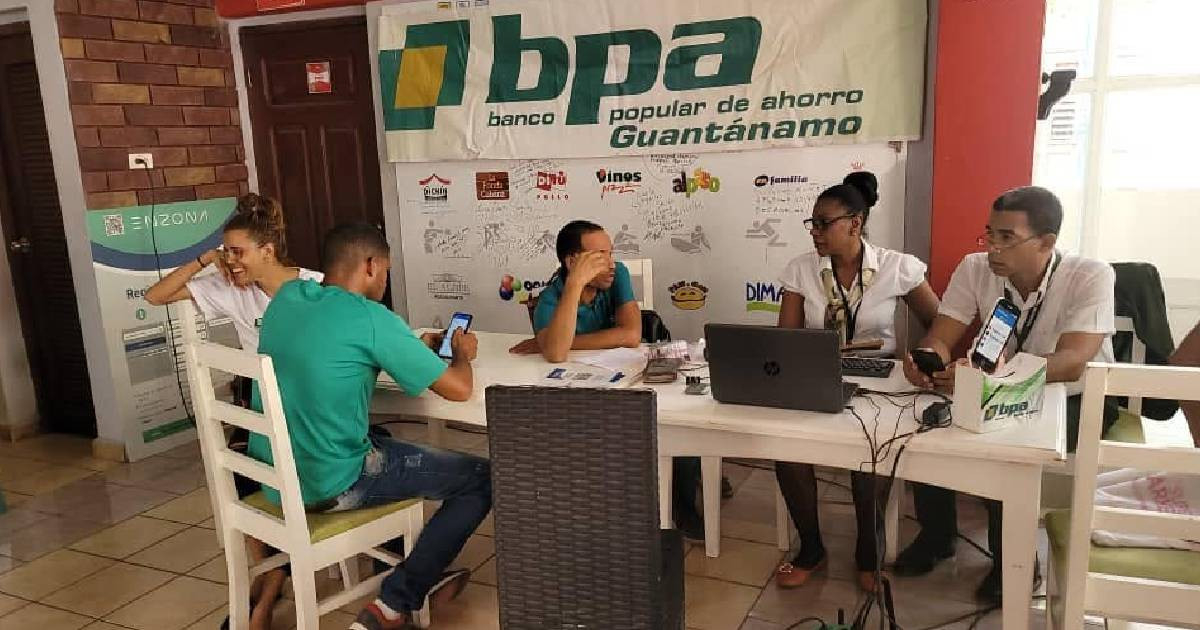
Similarly, BPA bank collects 92% of the over two million pesos it requires each day, a sum still insufficient to meet the actual cash demand in the province.
This cash scarcity directly impacts the most vulnerable sectors, such as public education and healthcare workers, who face delays in receiving their salaries, while retirees struggle to access their pensions.
Escalating Enforcement Actions
The meeting called for intensified efforts from inspection bodies to enforce existing legal obligations. "All state and private establishments are mandated to operate using electronic payment methods and accept digital transfers and payments," the source emphasized.
The threat of sanctions is not a novel approach. Nationwide, the regime has already imposed 15,240 fines and closed 269 establishments for failing to accept electronic payments, yet these measures have not reversed the trend.
The Failure of Mandatory Banking
The compulsory banking policy, launched in August 2023, is widely deemed a failure, even by official media. Merely 3.77% of transactions in Cuba are digital three years after the regime's mandate.
Guantánamo's situation is not unprecedented. Back on July 4, provincial authorities convened an emergency meeting due to the same crisis, with Bandec achieving only 77% of its target. Over 6,000 employees from the Culture, Sports, Education, and Higher Secondary Education sectors had not received their July salaries due to bank liquidity issues.
At that time, Venceremos admitted the crisis "has transitioned from a banking difficulty to a social problem."
New Measures and Public Skepticism
In an effort to address the issue, the Central Bank published Resolution 74/2026 on Friday, abolishing the 5,000-peso cap on cash transactions between economic entities, effective July 20.
However, Cubans met the announcement with skepticism: "Now there's no limit to paying cash, but the issue remains—there’s still no cash available in the banks."
Frequently Asked Questions about Guantánamo's Cash Crisis
Why are Guantánamo's banks experiencing cash shortages?
Guantánamo's banks are struggling to meet their daily cash collection targets, resulting in an insufficient supply to satisfy operational needs and customer withdrawals.
What measures are authorities taking to address the crisis?
Authorities are intensifying enforcement of electronic payment use and have removed cash transaction caps between economic entities to alleviate the crisis.
How are the cash shortages affecting Guantánamo's residents?
The shortage impacts vulnerable groups, delaying salaries for public sector workers and complicating pension collection for retirees.