Every authoritarian regime relies on the enforcement of law through police, controlled courts, and intelligence networks. Yet, these mechanisms alone do not ensure their survival. A much more effective tool is the complicity of those who, despite not being part of the power structure, end up defending or justifying it. This is a significant tragedy in modern-day Cuba.
It's easy to see why leaders remain loyal to the system. Power brings privileges, immunity, access to resources unavailable to the general populace, and a status that would vanish with the advent of freedom. Often, defending the regime is driven by a calculation of personal benefit.
The true enigma lies outside this elite circle. How can one explain a citizen, struggling with a wage that cannot feed their family, yet still supporting the very system that impoverishes them?
The Paradox of Loyalty Amid Hardship
How do we make sense of someone who endures long lines for food, daily blackouts, watches their children leave for exile, and yet continues to echo official slogans as if they were undeniable truths? This is not theoretical.
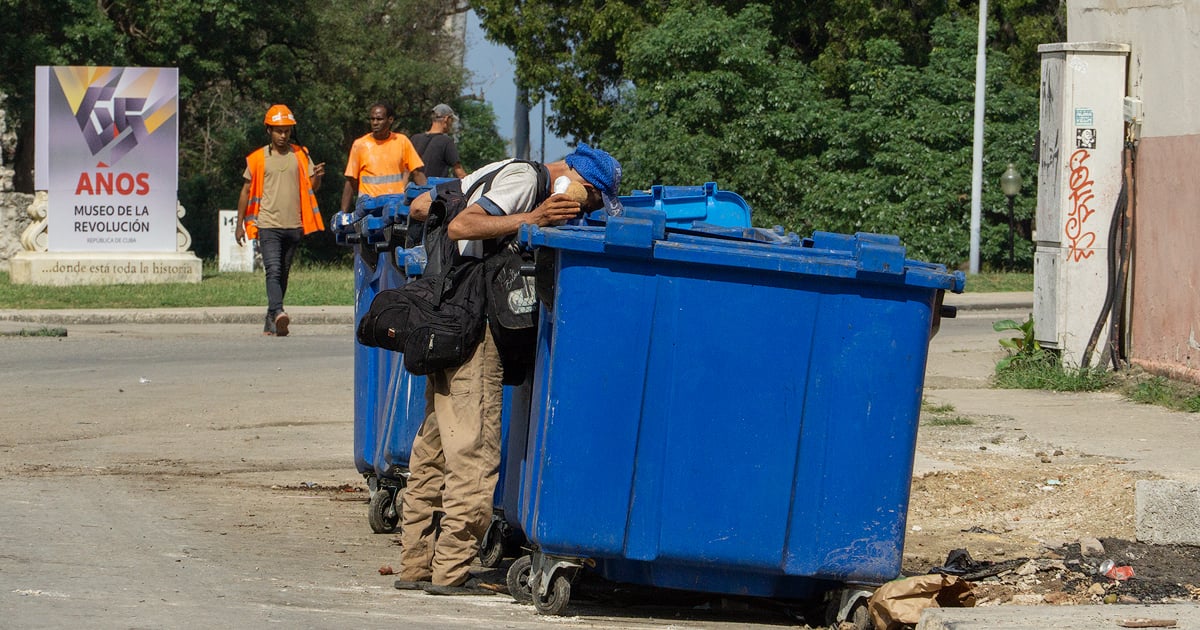
Not long ago, I witnessed a man scavenging for food in a trash bin. His clothes were worn, he could barely stand, and his hunger was apparent even before he spoke.
As he rummaged through the garbage, he remarked, "Fidel was the greatest politician of the 20th century." Those words struck me more profoundly than the material poverty before me. It became clear that the greatest triumph of totalitarianism isn't merely in controlling institutions; it's in conquering the minds of some of its victims.
The Power of Indoctrination and Fear
For over six decades, the Cuban regime has meticulously built a vast indoctrination machine. Schools, media, mass organizations, and official propaganda have relentlessly promoted a singular narrative, systematically eradicating any alternatives.
Through sheer repetition, propaganda ceased to appear as propaganda. For many, it became a lens through which to interpret the world. But indoctrination alone doesn't tell the whole story.
There's also fear. Not just fear of imprisonment or physical repression. There's a deeper, quieter fear: the fear of isolation, of losing one's job, of jeopardizing one's children's future, of becoming a target of surveillance or social rejection.
Over time, this fear no longer requires external enforcers. Individuals begin to police themselves. Yet, there's another uncomfortable component seldom discussed: personal responsibility.
The Courage to Face Reality
Not all complicity is born from terror. There is also the convenience of choosing not to think, the indifference of looking the other way, and the complacency of repeating a narrative because it is easier than confronting the truth.
Accepting that one has lived deceived for decades demands immense moral courage. It requires acknowledging that many sacrifices were futile, countless lives were spent chasing an unfulfilled promise, and that reality ultimately debunked the official narrative.
Not everyone is willing to take that path. That's why some cling to the myth even when evidence has dismantled it. History, however, teaches an unvarying lesson. Dictatorships don't fall solely due to the erosion of power. They also collapse when citizens stop cooperating with them, when fear loses its grip, and when conscience reclaims its rightful place.
The future Cuba will need to rebuild its economy, institutions, and rule of law. But none of these endeavors will suffice unless there's also a reconstruction of civic culture and individual responsibility.
Democracy isn't just about holding elections. It relies on each citizen understanding that justifying oppression, remaining silent in the face of injustice, or collaborating with abuse has moral repercussions. Because no dictatorship survives solely on its enforcers. It always requires the passivity, silence, or complicity of those who, given the choice of dignity, end up supporting the very system that victimizes them.
Understanding Complicity in Authoritarian Regimes
What role does indoctrination play in sustaining a dictatorship?
Indoctrination is critical as it shapes people's perceptions and beliefs, making propaganda seem like truth, and eliminates alternative viewpoints, thus maintaining control over the populace.
How does fear contribute to the endurance of a regime?
Fear, especially the fear of isolation, job loss, or becoming a target, compels individuals to self-censor and comply, which in turn perpetuates the regime's power without the need for constant enforcement.
Why is personal responsibility important in dismantling authoritarian systems?
Personal responsibility is crucial because it involves acknowledging complicity and taking a stand against oppression. It empowers individuals to break free from the cycle of compliance and fear that sustains dictatorships.