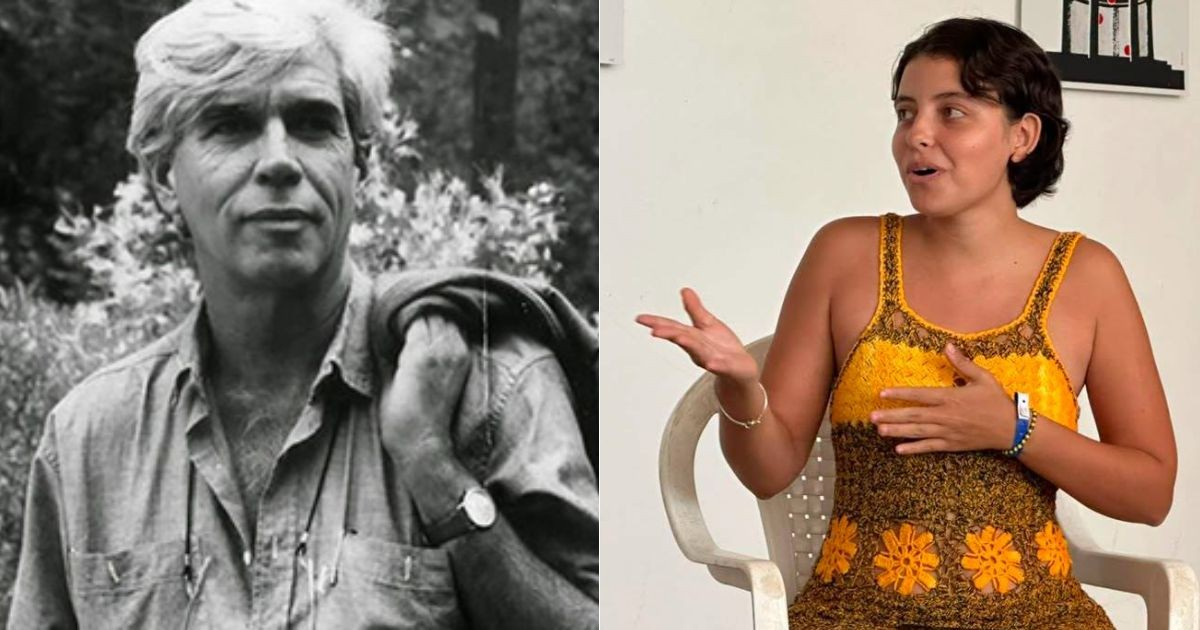
The lobby of Gibara's Cine Jibá became the backdrop for the unveiling of "A Mass for Solás," a fresh publication by journalist Lorena Massip, which provides an unprecedented glimpse into the life of Cuban filmmaker Humberto Solás (1941-2008). This event was part of the theoretical program marking the 20th edition of the International Festival of Low-Budget Cinema.
Massip's book, launched on Tuesday, the 15th, began as her academic graduation thesis. According to La Luz Cultural Communication Center, she aimed to delve deeper into the life of the man behind the legendary Solás.
To piece together this narrative, Massip conducted 30 interviews with actors and filmmakers who collaborated with Solás, crafting a collective account that highlights anecdotes, contradictions, and the filmmaker's passionate moments, steering clear of a purely technical analysis of his filmography.
Preceded by a prologue from critic and writer Rafael Grillo, the book is praised for its testimonial value, offering a crucial perspective for understanding the intricate nature of an artist who holds a significant place in Cuban culture.
During the same gathering, Sergio Benvenuto Solás, Humberto Solás' nephew and director of the festival, showcased a collection of screen-printed posters inspired by scripts that the filmmaker never had the chance to bring to life.
The event attracted filmmakers, critics, and audiences, all drawn to a publication that strips away the mythic solemnity to reveal the individual behind the public persona. It is a fitting tribute to Solás, who founded this festival in April 2003 on the belief that cinema could be "poor in resources, but rich in ideas."
Solás joined the Cuban Institute of Cinematographic Art and Industry (ICAIC) in 1959 at the age of 17 and went on to create over twenty films throughout his career. His most acclaimed work, "Lucía" (1968), is hailed as one of the most significant films in Ibero-American cinema. He passed away in September 2008, three years after being honored with Cuba's National Film Award.
The urgency for initiatives like this book is underscored by an April 2025 report, which noted that only "Lucía" has been digitally restored, leaving the remainder of Solás' extensive work at risk of disappearing due to physical deterioration and the lack of digitization.
The festival's 20th edition, running from July 14 to 18, 2026, takes place amid a severe energy crisis on the island, with power outages lasting over 50 consecutive hours in Holguín province. This forced organizers to rely on their own generators and outdoor screens to ensure screenings. While the festival, drawing creators from nearly 20 countries, shifted from its usual April schedule due to fuel and energy shortages, it retained its focus on reflection and remembrance, with Solás at the heart of its programming.
Exploring Humberto Solás' Legacy
Why is Humberto Solás significant in Cuban cinema?
Humberto Solás is a pivotal figure in Cuban cinema due to his influential works, particularly "Lucía," which is considered one of the most important films in Ibero-American cinema. His contributions have shaped the artistic landscape in Cuba.
What challenges does the preservation of Solás' films face?
The main challenge is the physical deterioration of the original films and the lack of digital restoration, which puts much of Solás' work at risk of being lost forever.
How did the energy crisis affect the Festival of Low-Budget Cinema?
The festival had to adapt to the ongoing energy crisis in Cuba by utilizing private generators and outdoor screens to ensure the continuation of film screenings despite prolonged power outages.