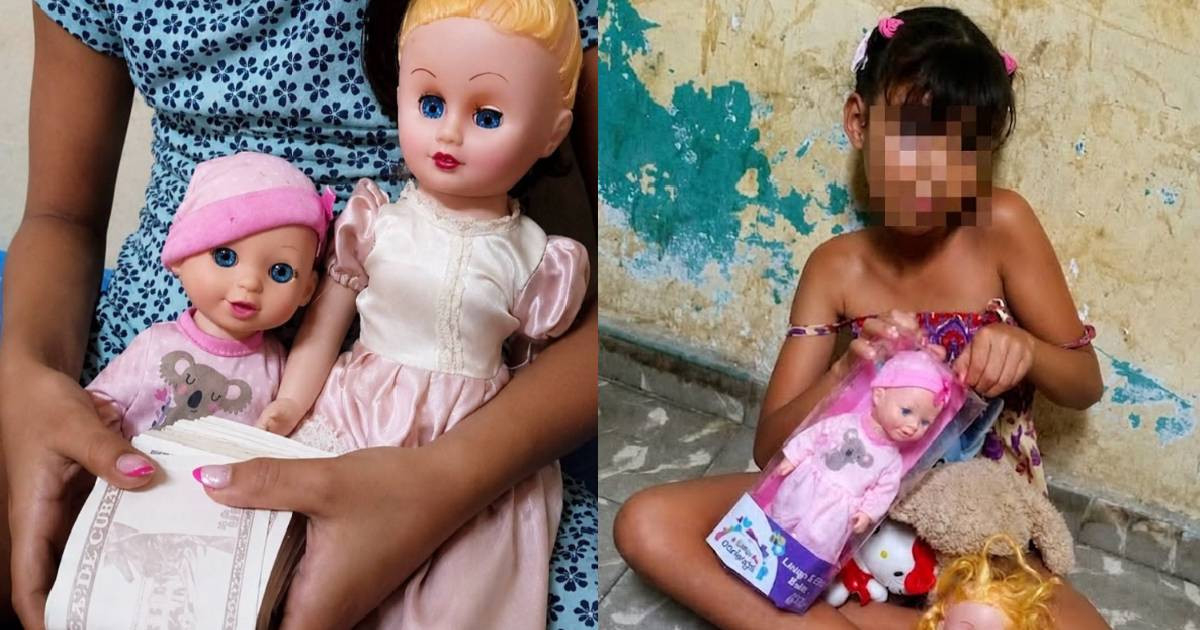
A fundraising initiative aimed at helping Lía Isabel García Torres, an eight-year-old living in dire poverty in Bayamo, Granma province, concluded on Friday with results far exceeding expectations, collecting 401,000 Cuban pesos in just two days thanks to the generosity of hundreds of donors from both inside and outside the island.
Guillermo Rodríguez Sánchez, a Cuban activist and journalist who orchestrated the campaign via his Facebook profile, announced the campaign's closure with a detailed account of the funds received by the family.
"In two days, Lía and her family received 401,000 pesos through transfers, cash delivery I just made, and money personally brought to their home by supporters," he stated.
To safeguard the funds, Lía's mother immediately deposited the money in the safe of a trusted local business in Bayamo. "She will withdraw it as needed," explained Rodríguez, who assured that the process is being carefully managed.
Community Support Extends Beyond Financial Aid
The assistance extended beyond financial donations. Numerous children and families in Bayamo visited Lía's home to hand-deliver dolls and toys, and several shipments containing clothing, shoes, school supplies, and vitamins purchased from abroad are on their way and expected to arrive in about 15 days.
A group of young people, who provide water delivery services in the city, also contributed by filling five tanks for the family, charging only 400 pesos instead of the usual 1,500, demonstrating the widespread solidarity inspired by Lía's situation.
The Catalyst for Change
Lía's plight became public on July 15th, not through her mother, but due to a neighbor who occasionally provided them with food. The child had been without access to potable water for over 50 days, her refrigerator was empty and rusted, and her sole toys were discarded dolls she dressed with handmade clothes.
By the next day, donations had already exceeded 270,000 pesos, with Bayamo mothers bringing toys to her home and supporters nationwide contributing through transfers.
A Broader Context of Poverty
Rodríguez highlighted the efforts of Yaniurbys Reynaldo Oms, who has been aiding the family for months through her foundation "Amar es el Milagro," which assists over 100 families in Cuba each month.
He also expressed gratitude to his colleague Verona Bonce for handling the transactions "with absolute reliability and transparency."
One of the most poignant moments of the campaign's conclusion was Lía's own gesture: she wished to donate part of the funds and toys to other children in need whom she learned about through the activist's profile.
"I was the first to commend her selflessness, but then I kindly convinced her that this is her time to enjoy. Her moment has come, and she deserves it," Rodríguez wrote.
Lía's story is not an isolated incident. According to the Cuban Observatory for Human Rights, 89% of Cuban households live in extreme poverty, with an average salary of just $13 a month.
In Granma, over 67,000 residents lack piped water service, exacerbated by power outages that in June 2026 resulted in more than 45 consecutive hours without electricity in some areas, as reported by the provincial Electric Company.
This isn't the first successful campaign led by the activist. In April, they raised one million pesos to build a home for a family in Júcaro, Ciego de Ávila.
FAQs About Lía's Story and Cuban Poverty
What inspired the fundraising campaign for Lía?
The campaign was initiated following the revelation of Lía's severe living conditions by a neighbor, highlighting the lack of basic necessities like potable water and toys.
How was the donated money managed to ensure safety?
Lía's mother deposited the collected funds in the safe of a trusted local business in Bayamo to manage withdrawals responsibly as needed.
What broader issues does Lía's situation reflect in Cuba?
Lía's case reflects widespread poverty in Cuba, where a significant portion of the population faces extreme financial hardship, limited access to utilities, and low wages.
Who were some key figures in organizing the campaign for Lía?
The campaign was organized by activist Guillermo Rodríguez Sánchez and supported by Yaniurbys Reynaldo Oms and Verona Bonce, who helped with managing funds and logistics.