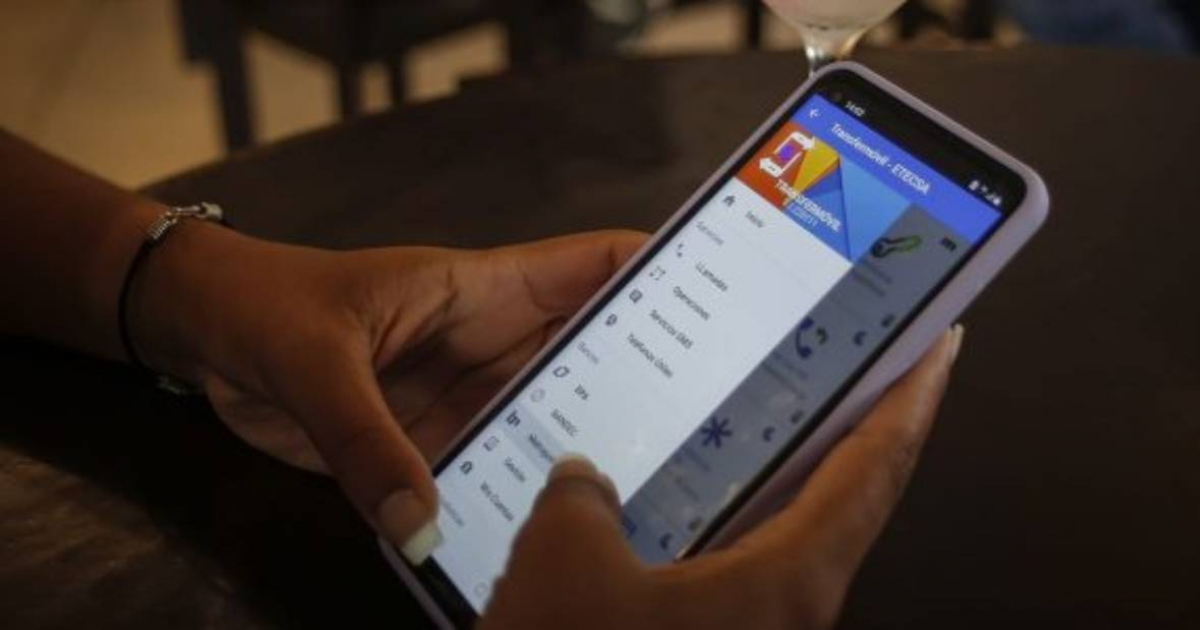
The Central Bank of Cuba (BCC) announced on Friday that businesses accepting digital payments will receive funds immediately, as part of a series of new measures unveiled to promote digital transactions, according to state media reports.
The BCC stated that real-time crediting for online payments will commence on August 1 for transactions within the same bank, with plans for gradual expansion. The institution acknowledged that delays in crediting had been "one of the main objections to the digital channel."
This announcement comes three years after the regime enforced mandatory banking through Resolution 111/2023, a policy now deemed a complete failure even by official media: a mere 3.77% of transactions in Cuba are digital, and less than 10% of private businesses regularly accept transfers.
In addition to the promise of immediate crediting, the BCC announced changes in fees: the fee charged to merchants for online payments will decrease from 1.5% to 0.8%; the cash deposit fee will be eliminated; and a new 0.2% fee for cash withdrawals will be introduced, citing the production, transportation, and custody costs associated with physical currency.
Regarding bonuses, consumers will receive a 4% reward for online payments, capped at 210 Cuban pesos (CUP) for transactions exceeding 5,250 CUP, while merchants will receive a 2% bonus for payments received through this method, capped at 105 CUP.
The package also revises the thresholds for transfers between individuals: the limit per individual transaction is removed, and a monthly threshold of 2.5 million CUP is set, beyond which physical presence will be required to declare the purpose of the funds.
Simultaneously, Resolution 74/2026, signed on July 10 by BCC president Juana Lilia Delgado Portal and published on Friday in the Official Gazette, indefinitely suspends the 5,000 CUP limit for cash transactions between economic actors, leaving negotiations case-by-case to individual banks and their clients.
The failure of this coercive policy is hard to hide: the regime imposed more than 15,240 fines and ordered 269 business closures for not accepting electronic payments, failing to achieve the digitalization goal.
Meanwhile, the structural cash shortage has led to a parallel market for converting transfers to physical bills, with commission rates skyrocketing from 15% in September 2025 to 40% in Santiago de Cuba last Thursday, where transferring 1,000 pesos equated to receiving only 600 in cash.
Cubans have reacted to the new measures with widespread skepticism: "Now there are no limits for cash payments, but the problem is that there's no cash in the banks," they summarized on social media.
The official newspaper Venceremos admitted on July 3 that the banking crisis "has ceased to be a banking difficulty to become a social problem," a statement that contrasts with the optimistic tone with which the BCC presented its new promises on Friday.
FAQs on Cuba's Digital Payment System
What changes has the Central Bank of Cuba announced for digital payments?
The Central Bank of Cuba has announced immediate funds for digital payments, reduced fees for merchants, and new bonus incentives for both consumers and businesses.
Why are Cubans skeptical about the new digital payment measures?
Cubans are skeptical because despite the new measures, there is still a severe cash shortage in banks, making it difficult to rely solely on digital transactions.
How did the regime's previous banking policy fare?
The previous banking policy, enforced through Resolution 111/2023, has largely been considered a failure, with only a small percentage of transactions being digital and limited acceptance among private businesses.