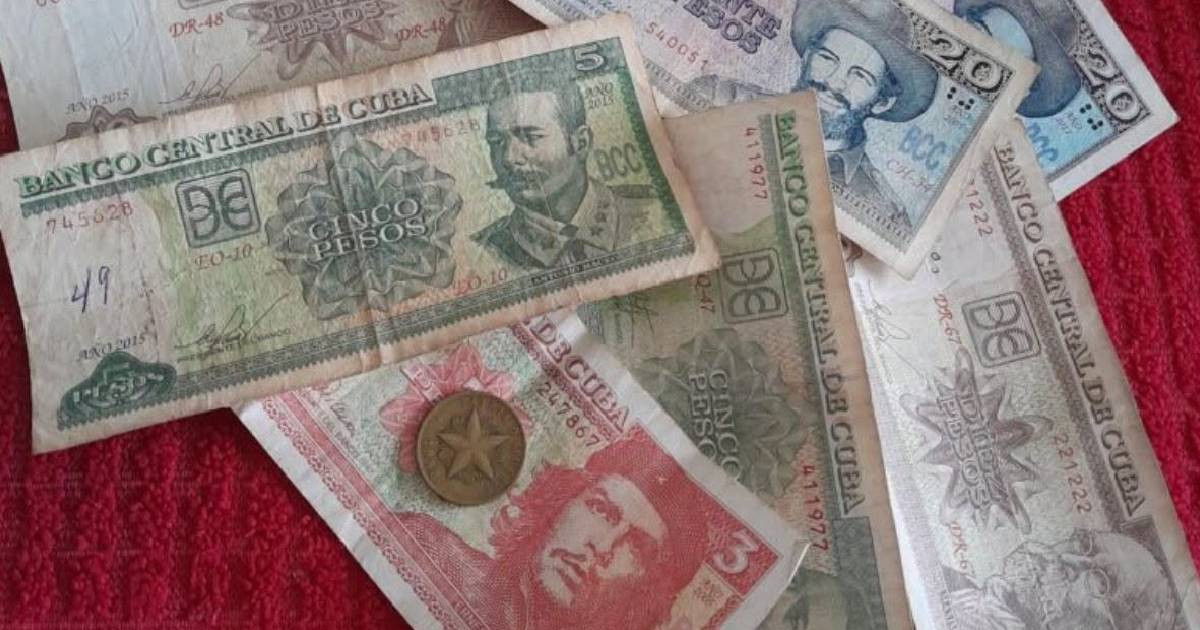
In Santiago de Cuba, a growing number of private businesses are turning away one, five, 10, and 20 peso bills. Complaints from both customers and merchants highlight this issue, exacerbating the challenges of everyday shopping.
The situation was brought to light on Friday by journalist Yosmany Mayeta Labrada, who shared reports from affected citizens on his Facebook page. These individuals report that the practice is rapidly spreading across various outlets in the city.
Customers Facing Payment Rejections
A resident of Santiago recounted her experience trying to purchase soap and seasonings, only to be informed by the shopkeeper that a 100 peso bill was required. "She told me they didn't accept 20 peso notes, as if they were worthless," she explained.
Merchants Struggle with Supplier Demands
Business owners argue that the issue originates not at the retail level but with wholesalers who also refuse these small bills. A small enterprise owner on Trocha Street noted that accepting such bills from customers leaves them with cash that becomes difficult to spend.
"If we take those bills from a customer, nobody wants to accept them from us later. We end up stuck with money we can't use," he said.
Impact on Employees and Seniors
Employees are caught in the crossfire as well. One store worker shared that her boss criticized her for having 600 pesos in 10 and 20 peso bills, instructing her to avoid accepting them in the future.
The uncertainty over the true value of the Cuban peso is mounting among citizens. Ernesto, a private driver, voiced this concern by noting that today it's the 20 peso bill being rejected, and tomorrow it could be the 50 peso bill.
Those reliant on cash payments are particularly affected. María Elena, a 68-year-old retiree, expressed her frustration that her pension is paid in low denomination bills, which are now being refused. "Does my money suddenly have no value? It's disrespectful to retirees," she lamented.
Legal Tender Yet Unaccepted
Despite retaining their legal status, the small bills are increasingly being turned away by private businesses. This scenario highlights a new distortion in the monetary system, pushing the economic crisis's effects squarely onto consumers, who find even state-issued money losing its usability in everyday transactions.
Social media comments confirm this is not confined to Santiago but is a nationwide issue. "It's happening all over the country," one user commented.
Another user recalled similar instances in Havana years ago, with signs at business entrances rejecting these denominations. A third pointed out the systemic contradiction: "The bank issues 20 peso bills, yet they're not accepted on the streets."
One of the more striking accounts involved a woman witnessing an elderly lady, who had collected her pension entirely in five peso bills, being unable to buy spaghetti at a small business because she hadn't eaten the day before. The shop assistant refused the money, citing the boss's orders. "Our elders are starving, for heaven's sake," the eyewitness wrote.
Another citizen identified the root of the problem: "If they refuse to accept bank transfers as mandated by law, the cash I get from the bank is in those denominations. If they're breaking the law, they shouldn't create further obstacles."
Banking System Under Pressure
This troubling scenario unfolded as the Central Bank of Cuba announced Resolution 74/2026, lifting the 5,000 peso cap on cash transactions between economic entities, implicitly acknowledging the failure of the mandatory banking system enforced in 2023. This new regulation will be effective starting July 20.
Public reaction was skeptical. One Cuban summarized on social media: "There are no longer limits on cash payments, but the problem is there's no cash in the banks."
Earlier in July, the Bandec in Ciego de Ávila labeled the rejection of low denomination bills a "flagrant violation of citizens' rights," reiterating that all bills retain full legal tender status according to current regulations. Despite the official warning, no practical changes have occurred.
Understanding the Monetary Crisis in Cuba
Why are small denomination bills being rejected in Cuba?
Small denomination bills are being rejected because wholesalers and businesses find it challenging to use them, leading to a buildup of cash that is difficult to spend or exchange.
What impact does this rejection have on Cuban citizens?
The rejection of small bills affects citizens, particularly those relying on cash payments, by making it difficult to conduct everyday transactions and diminishing the perceived value of their money.
Is there a legal basis for businesses to refuse small bills?
No, small denomination bills remain legal tender in Cuba. The refusal by businesses to accept them is a violation of current regulations.