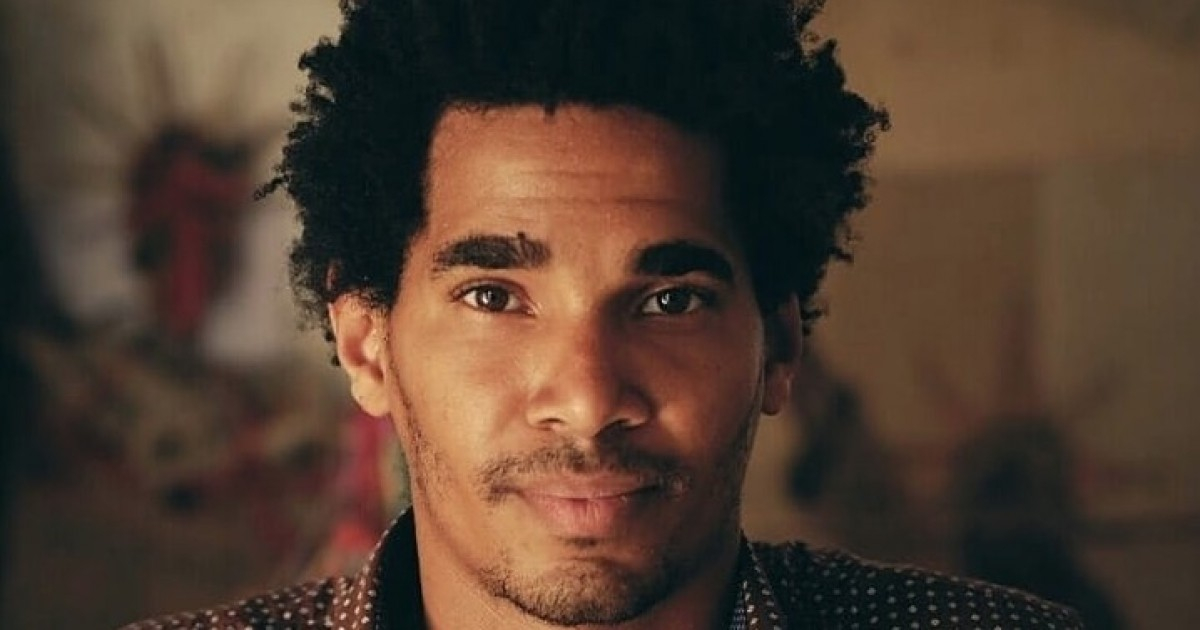
The circle surrounding Cuban artist and activist Luis Manuel Otero Alcántara announced on Friday that his humanitarian parole request to enter the United States has been approved, following several weeks of persistent efforts.
This announcement, made on the artist's official Facebook profile, clarified that despite the approval, Otero Alcántara's situation remains dire. He is currently missing, having been detained by Cuba's State Security.
"Luis was supposed to be free since July 9, when his unjust five-year sentence expired, yet he remains in the custody of the political police, at an undisclosed location," the statement revealed.
"As soon as we obtain any clear information about his potential departure from Cuba, we will share it through this channel," the message concluded.
Continued Detention Despite Sentence Completion
On July 7, State Security agents removed the artist from Guanajay prison in the province of Artemisa without notifying his family or disclosing his whereabouts. His sentence officially concluded two days later, but he was not returned home.
Activist and professor Anamely Ramos managed a brief conversation with him that day using a State Security phone, confirming: "He is not free, he is not released, he is in the hands of State Security somewhere in Havana."
Parole as the Sole Option for Freedom
The statement explained that the parole approval represents the only viable escape for the artist: "Since early 2023, Luis accepted exile as the sole path to continue his work as an artist and activist, after enduring relentless repression. State Security left him no other choice for release from prison."
The request was processed using the I-131 form with the U.S. Citizenship and Immigration Services (USCIS) as an individual humanitarian parole, the only immigration route available since the Trump administration terminated the collective program for Cubans, Haitians, Nicaraguans, and Venezuelans in March 2025.
International Response to the Case
The case has sparked growing international reactions. On July 12, the UN Committee on Enforced Disappearances initiated an Urgent Action under file AU No. 2357/2026 at the request of Cubalex, demanding the Cuban regime disclose the artist's whereabouts by July 25.
Amnesty International has labeled the situation as enforced disappearance, demanding his immediate and unconditional release. The organization has recognized Otero Alcántara as a prisoner of conscience since 2021.
Additionally, on July 13, a habeas corpus petition was filed on his behalf. An activist attempting to deliver it was detained for two days by Cuban authorities.
Recurrent Detentions and International Advocacy
This is not the first instance of Otero Alcántara enduring enforced disappearance. In July 2021, prior to the historic 11J protests, he was detained without notifying his family, a case documented by the UN Committee under file AU 1208/2021.
Otero Alcántara, leader of the San Isidro Movement, was sentenced in June 2022 to five years in prison on charges of "insulting national symbols," "contempt," and "public disorder," which international organizations view as direct retaliation for his cultural and political activism.
Frequently Asked Questions About Luis Manuel Otero Alcántara's Situation
What is the current status of Luis Manuel Otero Alcántara?
Luis Manuel Otero Alcántara remains detained by the Cuban State Security at an undisclosed location, despite his sentence having officially ended.
What action has the international community taken regarding his case?
The international community, including the UN and Amnesty International, has called for his immediate release, labeling his detention as enforced disappearance.
How did Luis Manuel Otero Alcántara's parole request get processed?
His parole request was submitted via the I-131 form to the U.S. Citizenship and Immigration Services as an individual humanitarian parole application.