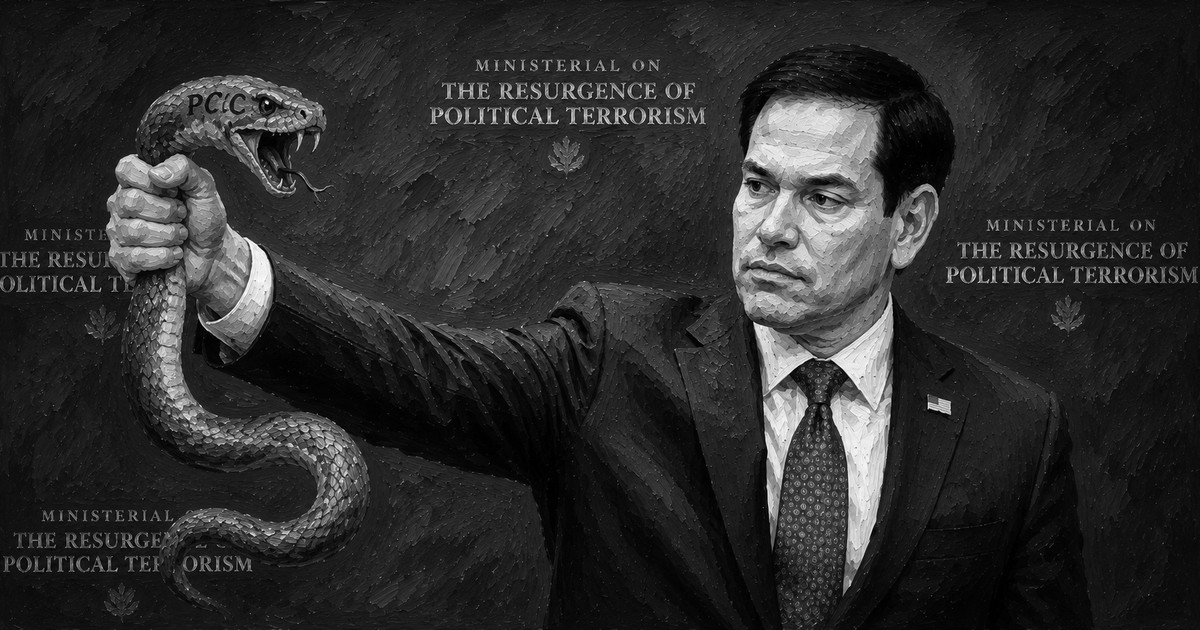
When discussing the Cuban 'revolution,' attention often gravitates towards economic failures, political repression, or the mass exodus of its population. However, a crucial yet often overlooked aspect is Cuba's transformation into a central hub for revolutionary activities across Latin America during much of the Cold War.
No other Latin American nation invested as heavily in political, military, and ideological resources aimed at influencing internal affairs of other countries. From the early 1960s, Fidel Castro's regime made it clear that their 'revolution' would not be confined to the Island's borders. Their goal was to spread the 'revolutionary' model throughout the continent.
International Revolutionary Ambitions
This strategy was formalized with the 1966 Tricontinental Conference and the subsequent formation of the Latin American Solidarity Organization (OLAS) in 1967. These platforms fostered collaboration among revolutionary movements across Latin America, Africa, and Asia, endorsing armed struggle as a means to seize power in numerous nations.
During those years, hundreds of Latin American militants received training in Cuba. Historical research and firsthand accounts reveal varying levels of support for insurgent organizations in Venezuela, Guatemala, Nicaragua, El Salvador, Colombia, and Bolivia, as well as ties to groups like the Tupamaros in Uruguay and the Bolivian ELN.
A Global Reach
Cuba's influence extended beyond the Americas. In the 1970s and 1980s, tens of thousands of Cuban troops were involved in wars in Angola and Ethiopia. The regime touted these campaigns as expressions of revolutionary internationalism, while others viewed them as part of the Soviet Union's geopolitical strategy in Africa. Regardless, they represented one of the most significant military interventions by a Latin American country outside its region.
Controversial Political Asylum
Another hallmark of Cuban foreign policy was granting asylum to individuals wanted by other countries' justice systems. The most notable case is Assata Shakur, who has resided in Cuba since 1984 after being convicted in the U.S. for the murder of a police officer. Havana justified these decisions as acts of political solidarity, whereas Washington saw them as shielding individuals linked to violent actions.
The Aftermath of Soviet Collapse
The late 1980s saw the eruption of the so-called Ochoa Affair, culminating in the execution of General Arnaldo Ochoa Sánchez and other top officials on charges of drug trafficking and other crimes. Although the government claimed to dismantle a criminal network, the case remains a topic of debate among scholars, raising questions about Cuba's internal power dynamics.
The Soviet Union's collapse forced the regime to revise its tactics. The era of armed insurgency transitioned to a strategy centered on regional political integration. In this context, the São Paulo Forum was established in 1990 by Fidel Castro and Luiz Inácio Lula da Silva to regroup Latin American leftist forces after the fall of the socialist bloc.
Changing Political Landscape
The rise of Hugo Chávez ushered in a new phase of regional influence. The close alliance between Caracas and Havana led to political, economic, and security cooperation that bolstered the Cuban regime for over a decade, aiding the spread of the so-called 21st Century Socialism.
Today, the scenario has shifted dramatically.
Venezuela is mired in a severe crisis. Nicaragua is internationally isolated. Several governments that championed this project have lost power or are grappling with significant political wear. Simultaneously, Cuba faces the most severe economic and demographic crisis in its recent history, characterized by a productive collapse, mass emigration, and deteriorating public services.
The irony is hard to miss.
The regime that for decades aimed to decisively influence Latin America's political fate now struggles to address its society's own pressing issues.
The historical narrative shows that the Cuban 'revolution' was far more than an internal process. Its foreign policy left a profound mark on the ideological and armed conflicts of the latter half of the 20th century and the subsequent reorganization of much of Latin America's left.
Understanding this dimension doesn't mean ignoring the nuances or controversies still surrounding those events. It means acknowledging that Cuba's history and Latin America's political history remain intricately intertwined.
And perhaps that's the greatest irony of the process that began in 1959: the regime that dreamed of transforming the continent now faces the much more daunting task of explaining the failure of the model it implemented in its own country.
Understanding Cuba's Revolutionary Influence
Why did Cuba become a revolutionary hub during the Cold War?
Cuba dedicated significant political, military, and ideological resources to influence the internal affairs of other nations, aiming to spread its revolutionary model across Latin America.
What was the significance of the Tricontinental Conference and OLAS?
The Tricontinental Conference and OLAS institutionalized Cuba's strategy to support revolutionary movements and armed struggle in Latin America, Africa, and Asia.
How did the Soviet Union's collapse impact Cuba's foreign strategy?
The collapse led to a shift from armed insurgency to regional political integration, exemplified by the creation of the São Paulo Forum to regroup leftist forces in Latin America.