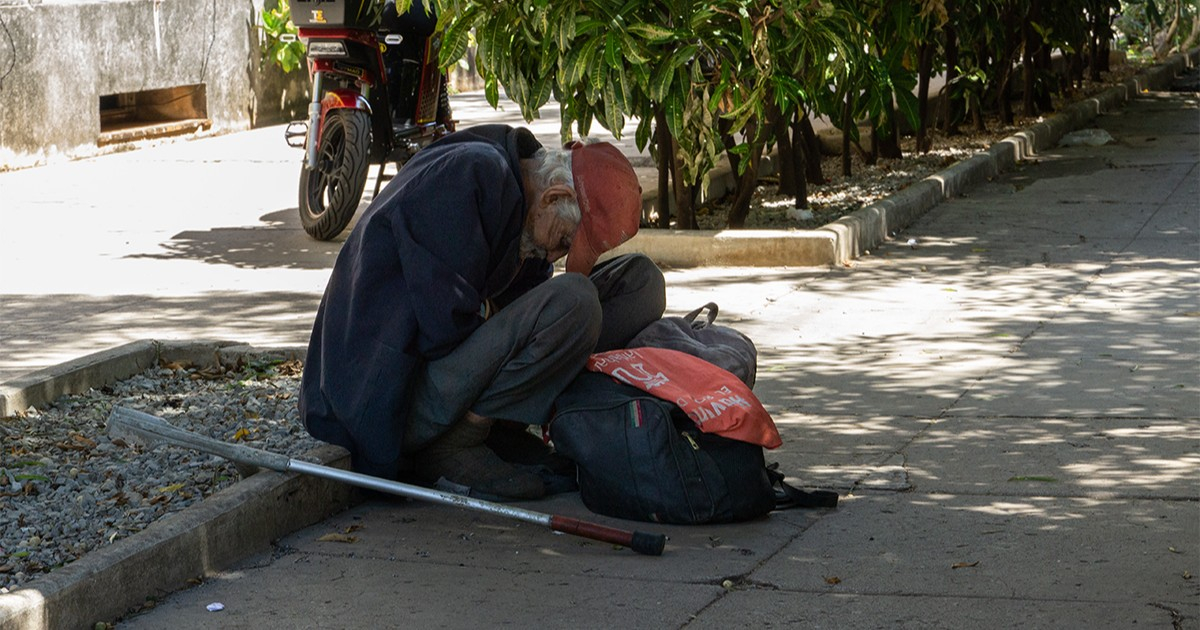
The swift aging of Cuba's population, coupled with the declining purchasing power of pensions, food and medicine shortages, and the mass emigration of family members, is severely impacting the living conditions of hundreds of thousands of elderly people on the island.
The regime can no longer hide the dire vulnerability faced by seniors, a situation now catching the attention of international media. A recent photo report by DW highlights how elderly individuals crowd into Havana churches just to receive a single meal a day.
According to the National Office of Statistics and Information (ONEI), by the end of 2024, 25.7% of the Cuban population was 60 years or older, positioning Cuba among the most aged countries in Latin America.
Official projections suggest that this demographic will continue to expand in the coming years, driven by low birth rates and the ongoing departure of young people from the country.
Economic Struggles and Family Support Breakdown
Despite the government increasing the minimum pension to 4,000 Cuban pesos in September 2025, this rise has not kept pace with inflation or the ever-escalating prices in the informal market, where much of the food and essential goods are sold at prices far beyond the reach of most retirees.
Adding to the economic woes is the weakening of family support networks. The emigration of millions of Cubans in recent years has left many elderly people living alone or relying on neighbors, friends, and religious organizations for basic needs such as food and companionship.
Geriatric Care and Community Support
The inadequacy of geriatric care services further exacerbates the vulnerability of this demographic. Various experts and organizations have warned that the infrastructure for elderly care is insufficient to meet the needs of the rapidly aging population, and many families lack the resources to take on this responsibility.
In response, churches and faith-based organizations have expanded their community assistance programs, offering soup kitchens, food distribution, and support to those in vulnerable situations. These efforts have become an essential lifeline for many seniors, though organizers acknowledge that the demand far outstrips their capacity.
The shortage of medications presents another significant challenge for Cuba's elderly, particularly those with chronic illnesses requiring ongoing treatment.
The combination of low incomes, supply chain issues, and an inadequate care system underscores one of the most pressing social challenges facing Cuba today: ensuring a dignified quality of life for a growing number of elderly individuals living in poverty, loneliness, and neglect.
Challenges Facing Elderly in Cuba
What factors are contributing to the deteriorating conditions for the elderly in Cuba?
The worsening conditions for Cuba's elderly are due to rapid population aging, diminished pension values, food and medicine shortages, and the mass emigration of younger family members.
How is the government responding to the needs of the elderly population?
The government raised the minimum pension in September 2025, but this increase has not kept up with inflation and rising prices in the informal market, leaving many elderly unable to afford basic necessities.
What role do churches and community organizations play in supporting Cuba's elderly?
Churches and community groups have expanded their support programs, providing essential services like soup kitchens and food distribution, becoming crucial support systems for many seniors.