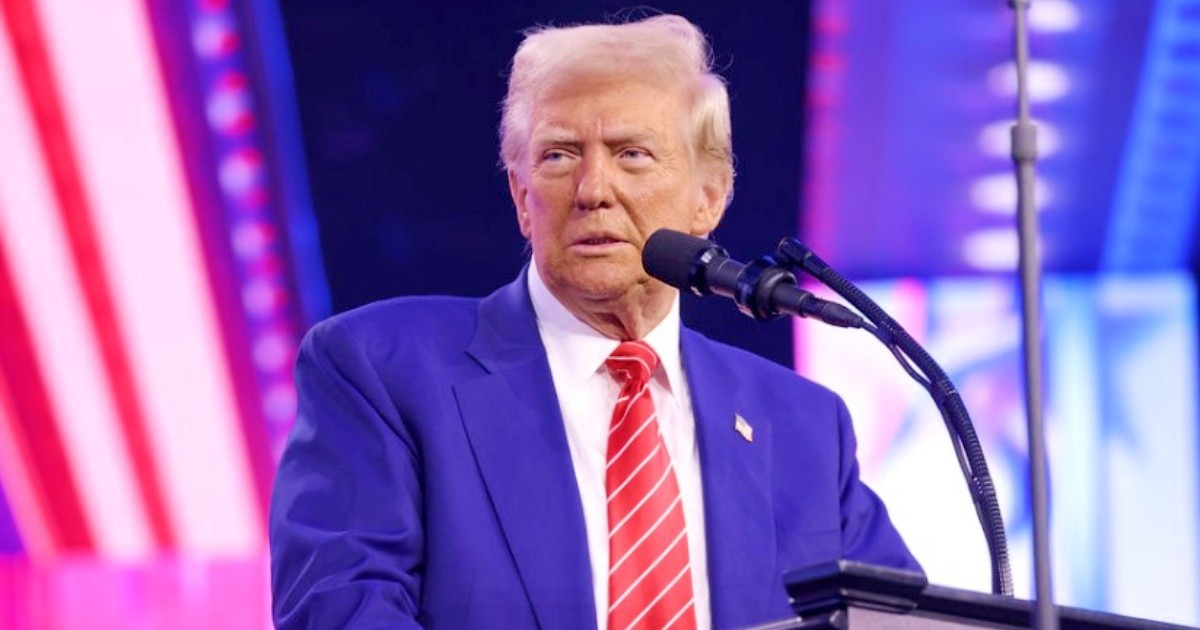
On Thursday evening, President Donald Trump delivered a high-profile speech from the White House's East Room, unveiling declassified intelligence documents related to election security. He declared that the American electoral system falls "catastrophically short" of being accurate and fair.
Alongside his address, the White House made public a collection of documents on their official site, detailing issues ranging from vulnerabilities in voting machines to alleged Chinese attempts to access and exploit American voter data.
The most striking claim from Trump's speech was that China executed "the largest data breach in election history," illegally obtaining 220 million voter records, including names, addresses, phone numbers, and political affiliations.
Trump further asserted that an analysis by the Department of Homeland Security identified 278,000 non-citizens registered to vote in federal elections, suggesting that the actual number is likely higher due to Democratic states' refusal to share their voter files.
Additionally, Trump accused members of the intelligence community and the so-called "Deep State" of concealing evidence of Chinese interference.
"They actively worked to suppress and downplay the information regarding China's sinister election interference, hiding it from both the president and the American people in a way that seemed unimaginable," he claimed.
As a result, Trump directed the Office of the Director of National Intelligence, the FBI, and the CIA to investigate—and potentially prosecute—any officials who attempted to hide election-related intelligence.
He also instructed the FBI to reopen investigations into allegations of fraudulent voter registrations in Muskegon, Michigan, a case previously reviewed under the Biden administration.
However, the US intelligence community concluded in 2021 that China did not attempt to influence the 2020 elections to alter the outcome.
A 2020 report, partially declassified in 2022, documented that Chinese intelligence officials analyzed voter registration data from several states for "public opinion analysis," but did not alter records or electoral systems.
The Chinese embassy in Washington dismissed the accusations outright. Spokesperson Liu Chang stated, "China has never interfered and will never interfere in U.S. presidential elections. China consistently adheres to the principle of non-interference in other countries' internal affairs. U.S. elections are an internal matter, and their results are determined by the votes of the American people."
On the legislative front, Trump urged the Senate to pass the Save America Act, contending that it would "secure the midterm elections" for Republicans. However, some GOP senators acknowledged that the bill stands little chance of passing the Senate, having been blocked in March 2026. The Supreme Court also obstructed part of Trump's electoral push by allowing late mail-in ballots in June.
Networks ABC and NBC declined to interrupt their regular programming to broadcast the speech live, inciting frustration from the White House.
The speech comes just under four months before the November 3, 2026, midterm elections, where all 435 House seats and about 35 Senate seats are up for grabs. Polls indicate a challenging environment for Republicans, with 50% of Americans favoring a Democratic Congress compared to 42% supporting a Republican one, according to NBC News.
Understanding U.S. Election Security and Allegations
What documents did Trump present regarding election vulnerabilities?
Trump presented declassified intelligence documents detailing vulnerabilities in voting machines and alleged attempts by China to exploit U.S. voter data.
How did the Chinese embassy respond to the allegations?
The Chinese embassy in Washington categorically rejected the allegations, asserting that China has never and will never interfere in U.S. presidential elections.
What impact could the Save America Act have on U.S. elections?
Trump claims that the Save America Act would secure midterm elections for Republicans, but the bill faces significant opposition in the Senate, making its passage unlikely.