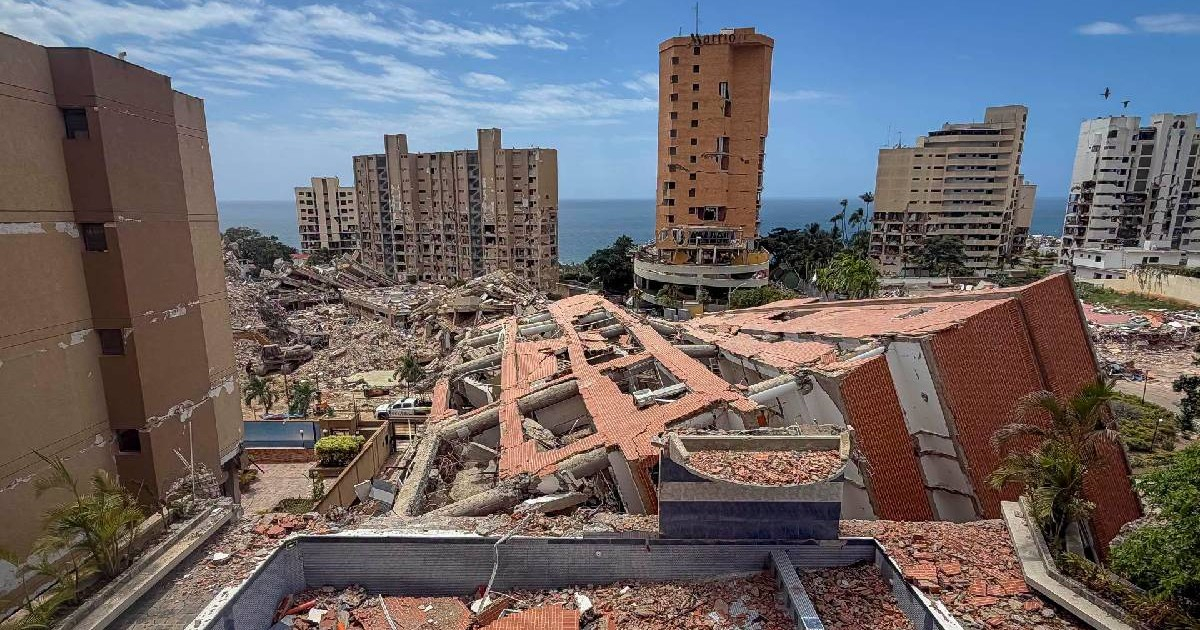
The Venezuelan government announced on Thursday that the death toll from the twin earthquakes that struck on June 24 has risen to 4,930. This update was provided by Jorge Rodríguez, the president of the National Assembly. In addition to the fatalities, there are reports of 16,740 individuals injured and 6,462 people successfully rescued.
The disaster unfolded on June 24 when two powerful earthquakes, measuring 7.2 and 7.5 in magnitude and occurring just 39 seconds apart, hit northern Venezuela. The epicenters were located in the states of Yaracuy and Carabobo.
The United States Geological Survey (USGS) labeled this event as the strongest earthquake to impact Venezuela since 1900, issuing a red alert with potential fatality estimates ranging from 10,000 to 100,000.
Rising Death Toll and Ongoing Challenges
The official death toll has steadily increased since the disaster: 164 on June 25, 920 on June 26, 1,430 on June 27, 1,943 on June 30, 2,645 on July 3, 3,535 on July 6, 4,490 on July 12, and 4,829 by Wednesday. Thursday's report added 101 more fatalities within 24 hours.
According to the official report, 128,324 families have been assisted, while 21,210 people are sheltered in 107 temporary camps, and 17,907 remain homeless.
Widespread Infrastructure Damage
The regime of Nicolás Maduro has reported that 856 buildings have been affected, with 190 completely collapsed. The most severely impacted areas include La Guaira—declared a Disaster Zone—along with the Capital District, Carabobo, Yaracuy, Miranda, Aragua, and Falcón.
The humanitarian response involves 30,989 deployed personnel, 31,745 volunteers, and 2,278 international rescuers from over 30 countries. In total, 10,063 tons of food and 26,738,575 liters of water have been distributed, with 35,781 patients receiving medical care.
Aftershocks and Missing Persons Controversy
The seismic activity has not ceased, with the official report noting 1,308 aftershocks since the main quake, highlighting the ongoing geological instability in the region, which is situated at the boundary of the Caribbean and South American tectonic plates.
A significant controversy surrounding the disaster is the absence of official figures on the missing persons. The Maduro government has not released these numbers, while the UN estimates up to 50,000 people remain unaccounted for, and the citizen platform "Encuéntralos" recorded more than 71,000 missing as of June 29.
The gap between the official death toll of 4,930 and the USGS's projection of up to 100,000 fatalities raises questions about potential underreporting, a situation international organizations and independent media have pointed out since the crisis began.
Among the confirmed victims are at least seven Cuban nationals who died, with 21 more reported missing, primarily located in La Guaira buildings such as Coral Park, Oasis Beach, and Coral Beach.
Cuba's Ministry of Foreign Affairs stated on June 27 and 29 that they had no official confirmation of Cuban casualties, a stance that drew criticism in light of citizen reports documenting specific cases.
The death toll of 4,930 makes the June 24 twin earthquakes the deadliest natural disaster in Venezuela in over a century. Experts caution that the number is expected to rise as search efforts continue amidst the rubble.
Key Questions About the Venezuelan Earthquakes
What caused the earthquakes in Venezuela?
The earthquakes were caused by seismic activity at the boundary between the Caribbean and South American tectonic plates.
How many people are still missing after the earthquakes?
Official figures on missing persons have not been released, but the UN estimates up to 50,000, and the "Encuéntralos" platform reported over 71,000 missing as of June 29.
Which areas in Venezuela were most affected by the earthquakes?
The most affected areas include La Guaira, declared a Disaster Zone, along with the Capital District, Carabobo, Yaracuy, Miranda, Aragua, and Falcón.