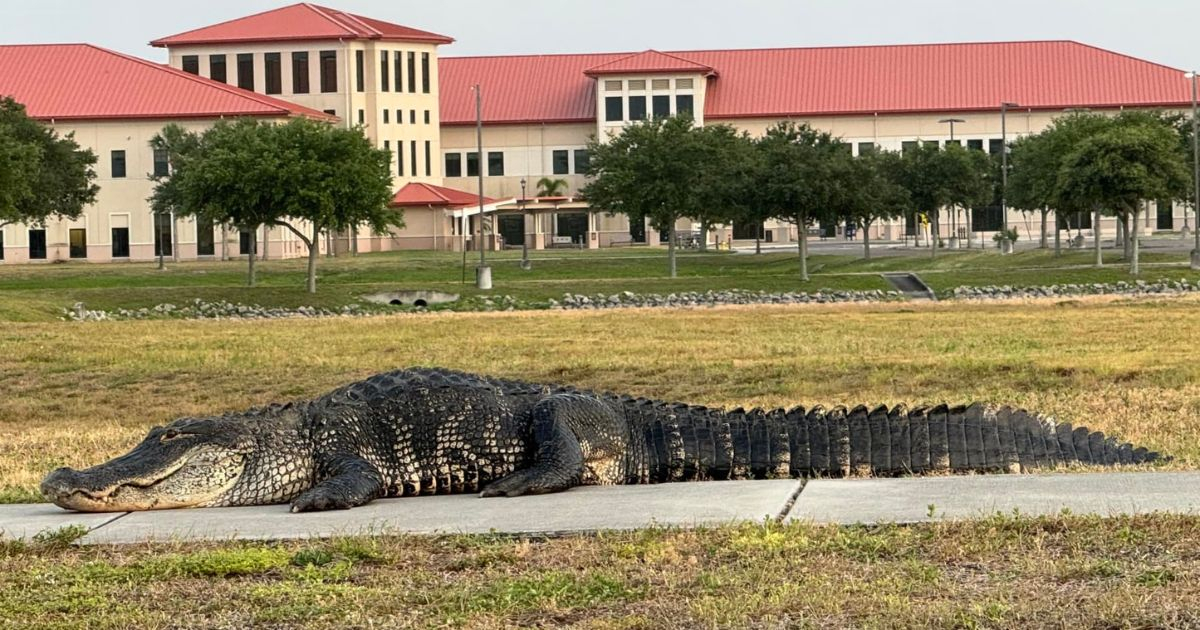
In central Florida, a troubling series of three alligator attacks within just two weeks has sparked renewed discussions about prevention. This follows the tragic death of a 31-year-old woman and a child losing a hand, with these incidents occurring only a day apart.
On June 28, Brittany Clark, an Orlando resident, tragically lost her life after a nearly four-meter-long alligator attacked her while she was swimming in the Econlockhatchee River, located within the Little Big Econ State Forest in Seminole County.
Her boyfriend, Chance Allison, made a frantic attempt to rescue her from the alligator’s jaws and performed CPR on the riverbank. Unfortunately, Clark succumbed to massive bleeding before she could be transported to a hospital.
The emergency caller described the injuries as "horrific."
Clark suffered bites on both her arms; this was the first fatal attack recorded in Seminole County and the 33rd in Florida’s history since 1948.
Allison expressed to NBC News that they were unaware of the danger in the area: "No one warned us to stay out. We spoke to someone who just mentioned they used to walk their dogs there, but nothing else."
Just a day earlier, on June 27, Brodie Terry, an 11-year-old visiting from Pennsylvania, lost his right hand when a 2.62-meter alligator attacked him as he returned a fish to the water at Nelson Fish Camp in Marion County.
His father bravely tackled the alligator and tried to pry its mouth open, but the reptile executed a notorious "death roll," severing the boy’s hand.
Brodie underwent several emergency surgeries and returned to Pennsylvania for rehabilitation after being discharged.
The first incident in this sequence happened on June 21, when a 19-year-old was bitten while snorkeling in the Rainbow River, also in Marion County.
Authorities temporarily closed the river and captured the responsible alligator.
Human Behavior and Alligator Encounters
Dr. Frank Mazzotti, a wildlife ecology professor at the University of Florida, emphasized to CNN that the majority of these encounters could be avoided.
"Many bites can be prevented if people are aware of their surroundings and avoid risky behaviors," cautioned Mazzotti, co-author of a 2025 study published in Human–Wildlife Interactions. The study found that 96% of alligator attacks in Florida are linked to risky human behavior.
The research, conducted with experts from Centre College, Kentucky, revealed that swimming in known alligator habitats accounts for 48% of the incidents, and deliberately entering waters inhabited by these reptiles leads to the highest proportion of fatal attacks.
"Situational awareness and informed decisions, especially during recreational activities in alligator territory, can help protect both humans and wildlife," Mazzotti concluded.
Florida is home to approximately 1.3 million alligators and averages around eight unprovoked bites annually, according to the Florida Fish and Wildlife Conservation Commission (FWC).
In 2025, there were 13 recorded attacks, two of which were fatal, CNN noted.
Authorities attribute the increased sightings in 2026 to a severe drought affecting the state, the worst in the Everglades in 25 years, which diminishes available habitat and forces reptiles into populated areas.
The FWC advises maintaining a minimum distance of six meters from alligators, swimming only in designated areas during daylight hours, and reporting dangerous animals to 866-FWC-GATOR.
Preventing Alligator Attacks: Key Questions Answered
What are the main causes of alligator attacks in Florida?
The main causes are linked to risky human behaviors such as swimming in known alligator habitats and entering waters where these reptiles are present.
How can people avoid alligator attacks?
Awareness of surroundings, avoiding risky behaviors, and following guidelines like maintaining a safe distance from alligators and swimming only in designated areas can help prevent attacks.
What is the role of the FWC in managing alligator-related incidents?
The Florida Fish and Wildlife Conservation Commission provides guidelines for safety, manages reported incidents, and captures dangerous alligators if necessary.