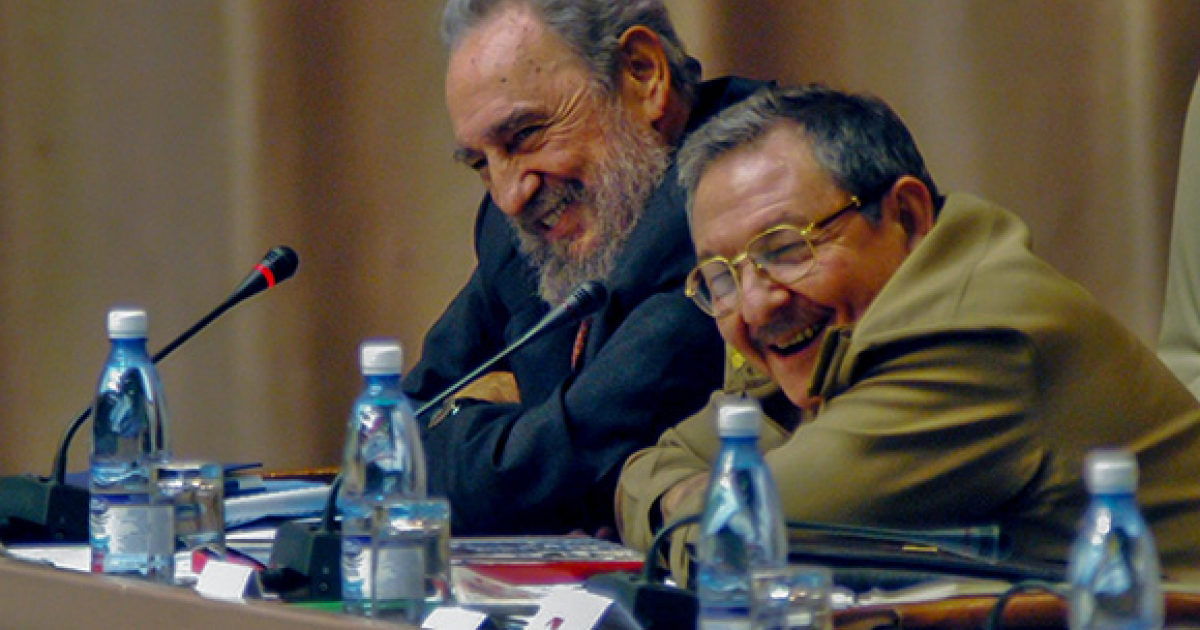
When examining Cuba's political landscape from 1959 to today, one glaring conclusion emerges: a true transition of power never occurred. Instead, there has been a continuous hold on the political framework established by Fidel Castro, passed down to Raúl Castro, and maintained by leaders handpicked by the system.
For decades, the regime has attempted to project an image of a 'revolution' that evolved through institutional changes, new constitutions, legislative bodies, periodic elections, and leadership renewal. However, this legal facade masked the dictatorship's core element: absolute power concentration.
The Erosion of Republican Institutions
Starting January 1, 1959, Fidel Castro systematically dismantled existing republican institutions. Political parties vanished, independent press outlets were shuttered, civil organizations fell under state control, and the judiciary lost its autonomy.
In 1965, the Communist Party of Cuba was established as the sole political party, cementing a principle that no political organization could legally challenge the regime. The 1976 Constitution solidified this model, explicitly recognizing the Communist Party as the leading force of society and the state, effectively eliminating any chance for political pluralism.
Illusion of Democratic Processes
Subsequent elections never offered the populace a choice between different political projects. Citizens could only endorse candidates pre-selected by the system. In modern democracies, alternation is crucial to limiting power; Cuba has never experienced this possibility.
For 49 years, Fidel Castro held multiple powerful positions, including head of government, leader of the Communist Party, supreme commander of the Armed Forces, and wielded total control over national and international policy. No major decision escaped his command.
Raúl Castro's Continuation of Control
In 2006, a serious illness forced Fidel Castro to temporarily hand over his duties. Two years later, Raúl Castro officially took over the presidency, sparking talk of a transition among international analysts. However, events proved otherwise.
Raúl Castro retained his brother's structures, preserving the one-party rule, state media monopoly, social control mechanisms, State Security's dominance, and the military's political supremacy. While he enacted limited economic reforms, authorized small private businesses, and eased some migration regulations, these changes did not alter the regime's essence. True power remained concentrated as it always had been.
The Illusion of New Leadership
In 2018, Miguel Díaz-Canel was appointed president, seen by some Western governments as the start of a new political generation. Yet, the constitutional reality was different. Raúl Castro remained the Communist Party's First Secretary until 2021, a role defined by the 2019 Constitution as the state's and society's supreme guiding force. Even after formally relinquishing this role, his influence within the political and military apparatus was unmistakable.
In essence, the face of the government changed, but the power's owner did not. A commonly overlooked aspect is the Revolutionary Armed Forces' role, not just as a military institution but as administrators of key economic sectors through business conglomerates tied to tourism, trade, construction, transportation, and other services. This economic concentration further strengthened the regime's political power.
Meanwhile, State Security honed one of Latin America's most effective internal surveillance systems, employing informant networks, mass organizations, digital surveillance, and constant opposition monitoring.
Enduring Repression Amidst Crisis
The nationwide protests on July 11, 2021, tested this structure. Thousands peacefully demanded freedom, food, medicine, and political change. The response was swift: hundreds were arrested, subjected to speedy trials, and given lengthy sentences, confirming the state's continued use of the same repressive mechanisms developed during the early 'revolution' years.
Simultaneously, Cuba faces its worst economic crisis since the "Special Period." Inflation, energy collapse, healthcare deterioration, shortages, and the exodus of hundreds of thousands of Cubans underscore a profound structural exhaustion.
Nevertheless, none of these crises have led to significant political openness. The Communist Party's monopoly remains unchallenged. Media stays under state control. Independent organizations face ongoing restrictions. Free unions are still banned. Competitive elections do not exist. Power separation remains absent.
Those claiming Cuba has had different governments often focus solely on presidential names. Yet, political science teaches that a regime is defined not by the individual in office but by the rules governing power exercise. As long as these rules remain unchanged, the system stays the same.
History provides numerous examples of dictatorships outliving their founders without altering their nature. In Cuba, that is precisely what happened. Fidel Castro established a highly centralized political model. Raúl Castro ensured its continuity. Subsequent leaders have managed this legacy without changing its core principles.
Therefore, it can be argued that Cuba has not experienced a democratic succession but rather the continuation of the same regime for nearly seven decades. Names changed. Speeches evolved. Economic reforms appeared and disappeared. Constitutions were modified. Positions were replaced. But the system's core remained unchanged. No political pluralism. No free elections. No judicial independence. No press freedom. No power alternation.
History shows that dictatorships don't survive solely due to a leader. They persist when institutions are designed to prevent power from being replaced by the citizens' free will. This has been the most consistent feature of Cuba's political system from 1959 to the present.
Understanding the Cuban Political System
What has been the main reason for the lack of political transition in Cuba?
The main reason for the lack of political transition in Cuba is the entrenched political framework established by Fidel Castro, maintained by the Communist Party, and supported by the military and state-controlled institutions, which prevent any legitimate political pluralism or power change.
How has the Cuban regime maintained control over the media and civil organizations?
The Cuban regime has maintained control over the media and civil organizations by monopolizing state media outlets, suppressing independent press, subordinating civil organizations to state control, and employing a robust State Security apparatus to monitor and suppress dissent.
Why did the 11th of July 2021 protests occur, and what was the government's response?
The 11th of July 2021 protests occurred as citizens demanded freedom, better living conditions, and political change. The government's response was swift and harsh, involving mass arrests, expedited trials, and long sentences, demonstrating the regime's continued use of repressive tactics.